
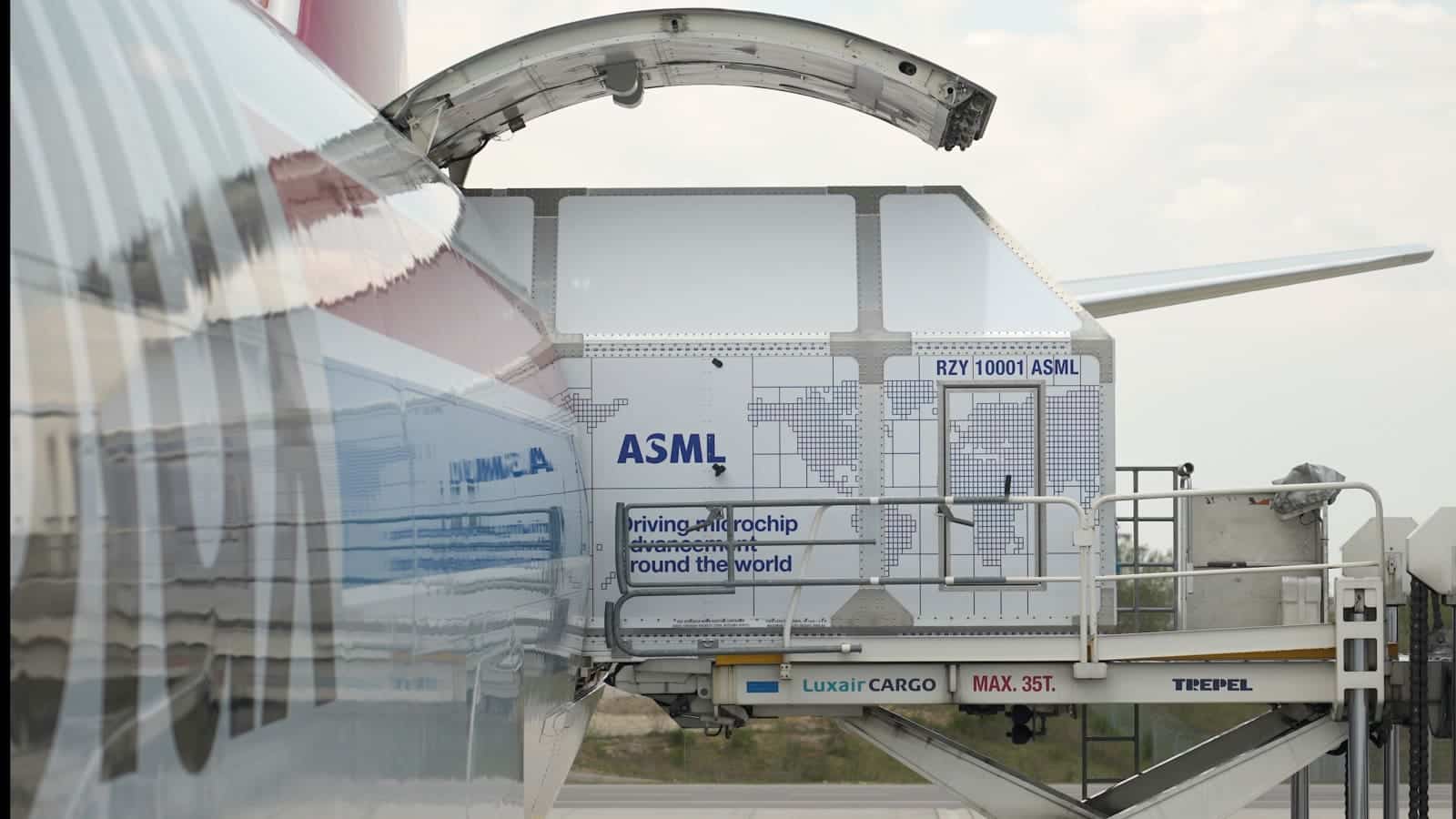
China has once again brought to the table one of the most complex aspirations of its entire technological strategy: to build a domestic alternative to ASML within five years, the Dutch company dominating advanced lithography and remaining a critical player in the manufacturing of cutting-edge chips. This request didn’t come from external analysts or generic political speeches, but from some of the most influential figures in China’s semiconductor ecosystem, calling for a coordinated response, with national resources, to move beyond a development they still consider too scattered.
The idea of a “Chinese ASML” should not be interpreted as a simple copy of a specific company, but rather as the creation of an integrated capability. ASML doesn’t just sell machines: it acts as an integrator of optics, light sources, software, mechatronics, metrology, and a highly sophisticated network of suppliers. That’s precisely where the challenge lies. Leaders in China’s sector admit that the country has made progress in certain parts of the supply chain, but that a common architecture is still missing—one capable of transforming isolated advances into complete, operational lithography systems.
This debate is occurring at a particularly sensitive moment. Export restrictions imposed by the United States and its allies have limited China’s access to key technologies, especially in advanced manufacturing equipment and EUV lithography, a segment where ASML maintains a dominant position. External pressure has accelerated China’s self-sufficiency narrative—a message Pekin has promoted for years—and now it reappears in the new phase of the 2026-2030 Five-Year Plan, emphasizing the reinforcement of emerging industries, strategic scientific projects, and public funding for critical sectors.
The scale of this challenge becomes clearer when considering ASML’s size. The Dutch company closed 2025 with €32.7 billion in sales, €9.6 billion in net profit, and an order backlog of €38.8 billion. Moreover, it forecasts revenues between €34 billion and €39 billion for 2026, driven largely by EUV system demand and the momentum of artificial intelligence. The goal isn’t just to catch up with a stagnant player but to narrow the gap with a company that continues to grow and reinvest on a massive scale.
More than a machine: the real challenge is integration
A key point in this debate is that China isn’t starting from zero, but it also doesn’t yet have a national champion comparable to ASML. The country has competitive manufacturers across various parts of the process—from EDA software to memory, wafers, etching, and deposition—but the leap to an advanced lithography system requires coordinating very different disciplines and suppliers of extremely high precision. Chinese executives have described the current sector as “small, fragmented, and weak,” reflecting both industrial dispersal and the difficulty in concentrating resources toward a shared goal.
This diagnosis aligns with recent sector developments. China has invested for years to strengthen its local semiconductor supply chain, yet the bottleneck remains heavily in equipment. An analysis of semiconductor machinery imports based on Chinese official statistics placed these purchases at $51.1 billion in 2025—a historic high. This paradox highlights a growing discourse on self-sufficiency, even as the industry continues to rely heavily on foreign machinery to expand capacity and sustain growth.
Chinese champions are advancing, but the ecosystem remains incomplete
The push to build a “Chinese ASML” coincides with a period of strength for several local companies. SMIC, the country’s leading foundry, closed 2025 with $8.1 billion in capital expenditure and announced further capacity expansion for 2026, though it warned of margin pressures due to increased depreciation. In the fourth quarter, capacity utilization was around 95.7%, signaling strong domestic demand.
At the same time, ASML remains heavily exposed to the Chinese market, though with a downward trend. According to the company’s own data and sector analyses, China accounted for about 33% of its sales in 2025, down from 41% the previous year, and the company expects this to decrease toward 20% in 2026. This suggests two simultaneous realities: China remains a very important customer, but export restrictions are noticeably altering the global lithography trade map.
Comparison table: ASML versus the Chinese industrial challenge
| Key Element | ASML | Current Situation in China |
|---|---|---|
| Industrial Model | Complete lithography system integrator | Ecosystem dispersed among multiple actors |
| EUUV Lithography | Global leadership consolidated | No regular access to ASML’s EUV equipment |
| Financial Scale | €32.7 billion in revenue in 2025 | Large public and private investment, but distributed |
| Order Backlog | €38.8 billion at end of 2025 | Strong domestic demand but persistent technological dependency |
| 2026 Outlook | Forecasted revenues of €34–€39 billion | Policy and industrial goal to accelerate national substitution |
Based on publicly available information from ASML and recent statements by Chinese sector leaders.
An industrial, geopolitical, and symbolic objective
The ambition to create a “Chinese ASML” isn’t solely driven by business logic. It carries substantial geopolitical weight. In practice, mastering advanced lithography means controlling one of the most critical bottlenecks in the global tech industry. Without this capability, any power aspiring to lead in AI, supercomputing, defense, automotive, or telecommunications will remain vulnerable to external restrictions.
That’s why the Chinese executives’ message transcends corporate claims. They are proposing a reorganization of national efforts: more public validation platforms, better coordination among materials, equipment, and software, and a roadmap for 2026-2030 that moves beyond partial progress. The challenge won’t be only technological; it will also involve industrial governance, capital allocation, and building a supply chain as precise as it is resilient.
Ultimately, China isn’t just saying it wants to make more chips. It’s acknowledging that, until it overcomes dependence on advanced lithography, it will have a structural vulnerability at the heart of its technological strategy. This is likely to be one of the most significant industrial issues of this decade.
Frequently Asked Questions
What does creating a “Chinese ASML” really mean?
It means developing an integrated domestic capability in advanced lithography, not just creating a company that copies ASML. This involves combining optics, software, light sources, mechatronics, metrology, and a supplier network capable of producing complex systems for chip manufacturing.
Why is ASML so important for the semiconductor industry?
Because its lithography equipment, especially EUV, is essential for manufacturing advanced chips. The company closed 2025 with €32.7 billion in revenue and a backlog of €38.8 billion, reflecting its strategic importance in the global chip supply chain.
Does China already have competitive companies in semiconductor equipment?
Yes, China has strong players in several segments of the semiconductor ecosystem and equipment manufacturers that have grown rapidly. However, they still haven’t integrated all the necessary pieces into a platform equivalent to ASML, especially in advanced lithography.
Can China stop relying on foreign equipment within five years?
This is a politically understandable goal but technically very challenging. China has made progress and has enormous domestic demand, but advanced lithography remains one of the industry’s most complex segments. Five years is more a goal of national mobilization than a guarantee of total convergence with the global leader.
