
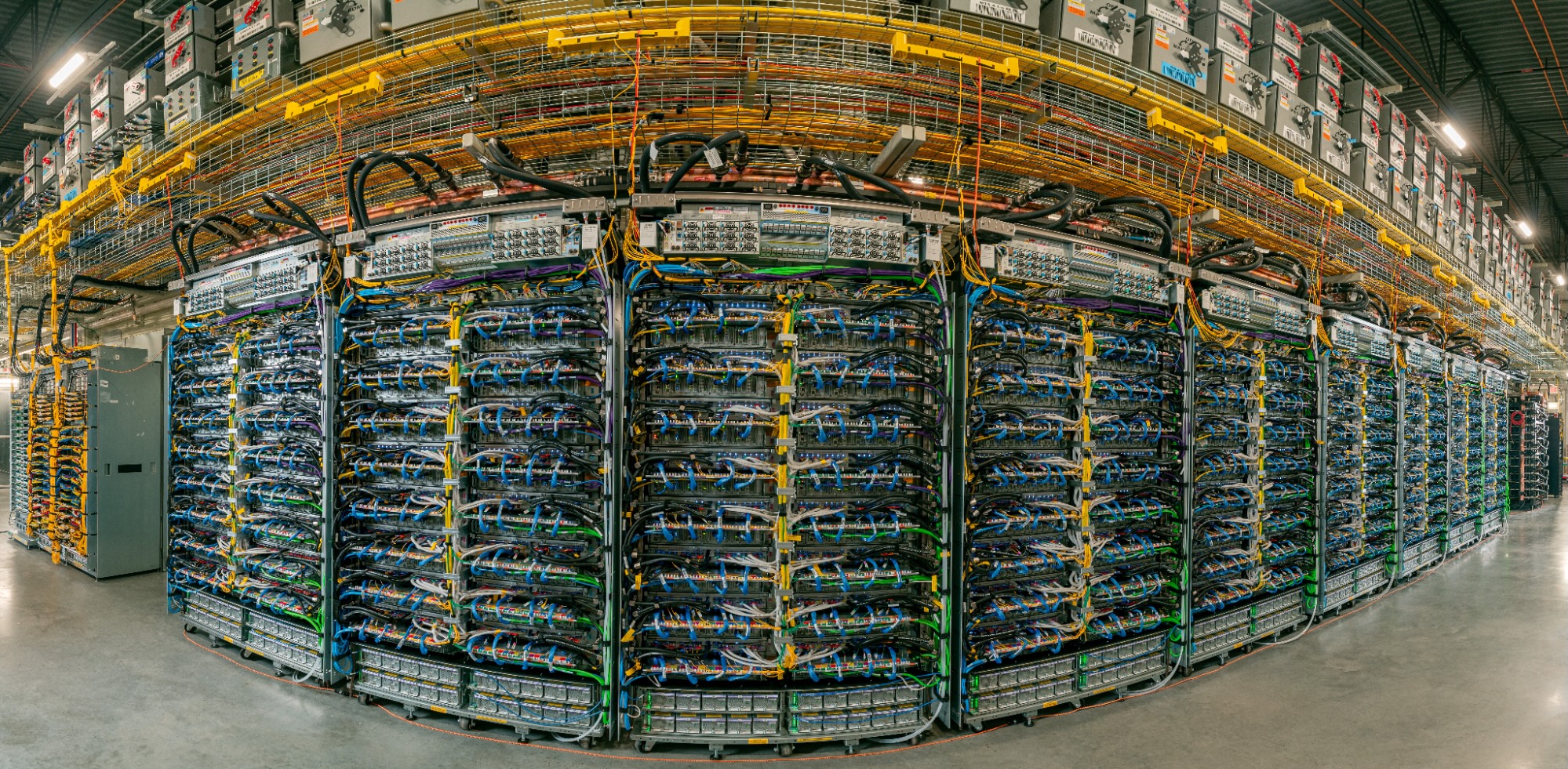
Google is once again turning to Northern Europe for growth. The company has acquired approximately 900 hectares of land in Vaala, in central Finland, with potential plans to develop a data center. The operation, announced by the municipality itself, adds to a string of recent moves indicating a clear trend: Finland is becoming an increasingly attractive hub for large-scale digital infrastructure, driven by rising demand for computing and storage linked to Artificial Intelligence.
The chosen location is about 6 kilometers from Vaala’s town center, near the Nuojua substation operated by Fingrid, and on both sides of Ouluntie (Highway 22). For now, Google has not disclosed project details or timelines, but the size of the land and its proximity to electrical infrastructure reflect a common industry pattern: without guaranteed power and grid connectivity, a viable data center cannot be established.
A move with local impact… and “fine print” yet to be defined
Vaala’s mayor, Minna Kärkkäinen, has welcomed Google’s arrival and emphasized what is most apparent in municipalities like this: jobs and economic activity. According to her, a potential data center area could be “significant” for both Vaala and the region, with many jobs during construction and permanent employment once operational. The municipality affirms that it is working to move plans forward “on schedule.”
However, caution is inevitable. The announcement does not confirm that the data center has been approved or built: it refers to a possible development. In such projects, the timeline depends on permits, environmental studies, actual electrical availability, residual heating agreements, and overall economic feasibility.
How the land was divided: municipality, forestry fund, and a changing market
The acquisition involves multiple parties. Around 380 hectares were purchased from the municipality itself, while another 327 hectares came from the UB Timberland Fund (AIF), a forestry fund managed by United Bankers. The fund publicly confirmed the sale and acknowledged a broader trend across Northern Europe: forests—historically bought for logging—are increasingly competing with new uses like renewable energy and data centers.
Kari Kangas, the forestry investment director at United Bankers, stated clearly that these opportunities represent new revenue streams for investors at a time when energy and digital projects are gaining significance in land economics.
Table: Known land distribution for Vaala operation
| Land origin | Land sold to Google |
|---|---|
| Vaala municipality | 380 hectares |
| UB Timberland Fund (United Bankers) | 327 hectares |
| Total announced | ~900 hectares |
Vaala in the Finnish landscape: proximity to Kajaani and Oulu
Located in North Ostrobothnia, Vaala may be far from the capital, but it holds strategic value for this type of infrastructure: ample space, a cold climate, and electrical connectivity. The municipality is roughly 68 km northwest of Kajaani and 91 km southeast of Oulu, two cities increasingly mentioned in Finland’s data center conversations.
This geography is no accident. Operators seek climates conducive to cooling and regions where the combination of electrical grid, industrial land, and permits make construction feasible without lengthy delays.
Finland accelerates: from 285 MW to 1.5 GW in five years
The land acquisition can be better understood with this context: the Finnish Data Center Association estimates that the “active” capacity of data centers in Finland could grow from 285 MW in 2025 to 1.5 GW by 2030. Industry-wide, this represents a significant leap, highlighting Finland’s appeal as an investment destination.
While much of the country’s historical capacity centers around Helsinki, growth is shifting to other regions, largely due to the availability of land, favorable environments, and competitive green energy.
The ecosystem now hosts both established operators and new entrants. Companies such as Verne, Equinix, and atNorth are present or have plans in Finland, alongside new players like Polarnode, FCDC, Arcem, and Hyperco. Additionally, international operators are exploring developments in the country.
Google in Finland: Hamina as a case study and new land acquisitions
Google’s presence isn’t new. It has operated in Finland for over a decade, notably with its Hamina data center, renowned for its design: cooled with seawater and built in an old paper mill purchased by Google in 2009. Since then, the site has been expanded and upgraded multiple times.
In 2022, Google bought 50 hectares of adjacent land in Hamina for €4.3 million, a typical move for operators planning phased expansion. In 2024, the company acquired 1,400 hectares in Kajaani and Muhos from the state forestry agency Metsähallitus, with development details remaining mostly undisclosed.
The new parcel in Vaala aligns with this “land reserve” strategy to secure future options. By 2026, having land and electrical infrastructure nearby can provide a competitive advantage—projects with available land and power are often the first to advance when demand surges.
Institutional support: “Potential for innovation and investment”
From the public sector, Business Finland has long promoted Finland as a data center hub and continues emphasizing the “great potential” for innovation and investment within the Finnish ecosystem. They collaborate with operators, local companies, and municipalities to bolster this appeal.
In Vaala, such collaboration now translates into concrete expectations: jobs, civil works investment, related services, and, if successful, a new source of regional income and activity. This is vital as the region aims to retain population and strengthen its economic fabric.
Frequently Asked Questions
Where is the new land Google purchased for a data center in Finland?
In Vaala, about 6 km from the town center, near the Nuojua substation operated by Fingrid, adjacent to Highway 22.
How many hectares did Google acquire in Vaala, and from whom?
Approximately 900 hectares; at least 380 hectares were bought from the municipality, and 327 hectares from the UB Timberland Fund.
Why is Finland attracting so many data center projects in 2026?
Due to the combination of green energy, land availability, favorable cooling climate, and an industrial ecosystem projected to grow from 285 MW in 2025 to 1.5 GW in 2030.
What is Vaala’s relation to Google’s data centers in Hamina, Kajaani, and Muhos?
Vaala complements Google’s strategy of acquiring land and expanding its presence in Finland: Hamina has operated for over a decade; Kajaani/Muhos and now Vaala are seen as reserves for future projects.
