
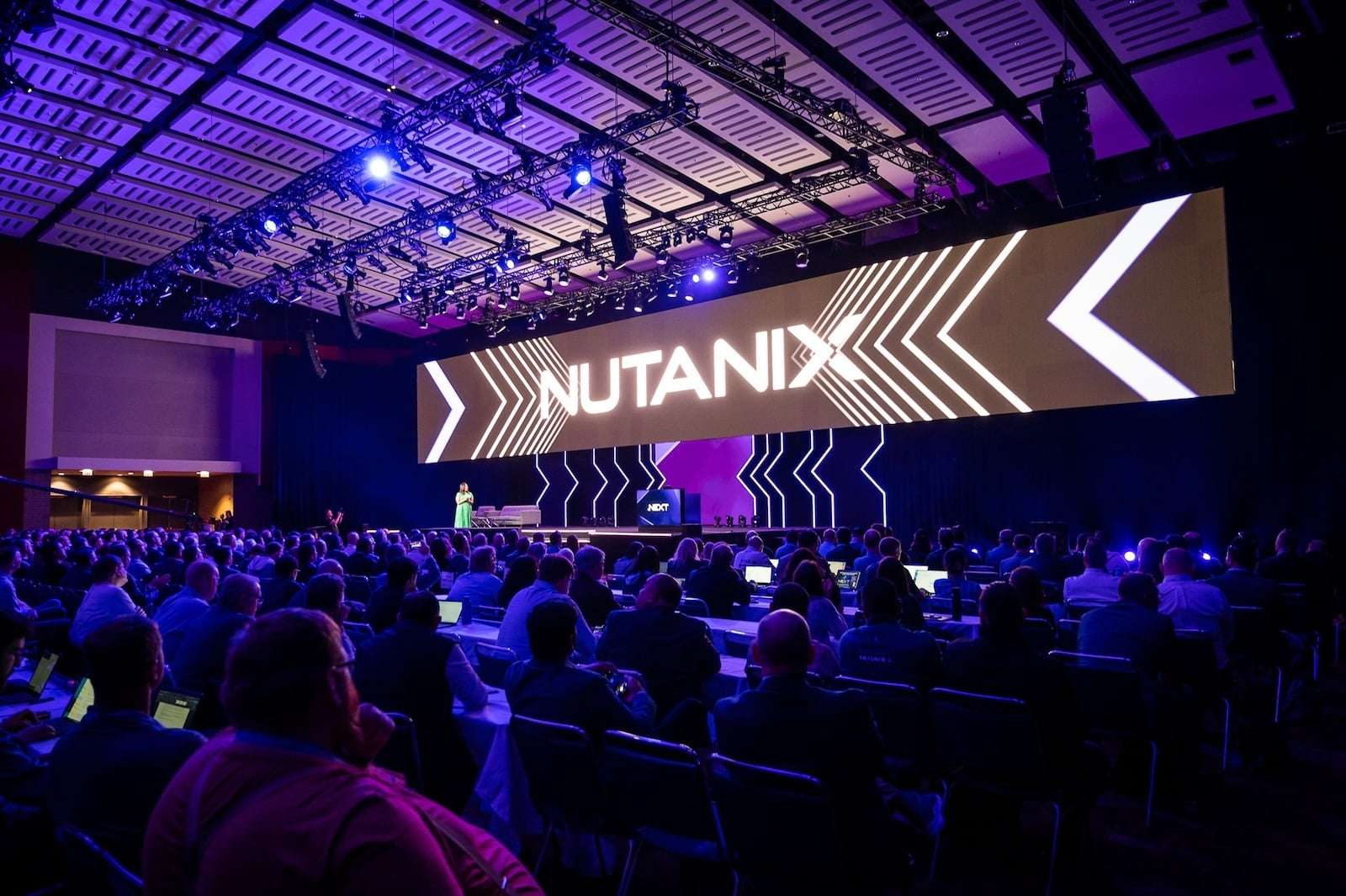
The AI infrastructure within the company is entering a more pragmatic phase: fewer isolated tests and greater pressure to deploy services that work, scale, and can be managed. In this context, AMD and Nutanix announced a multi-year strategic partnership to jointly develop a full-stack, open, production-ready AI infrastructure platform, with a special focus on agentic applications and the hybrid reality of enterprise environments (data centers, edge, and cloud).
The agreement is accompanied by a financial commitment that clearly reflects the ambition behind the initiative. AMD will invest $150 million in Nutanix shares at a price of $36.26 per share, and will also contribute up to $100 million for joint engineering initiatives and go-to-market activities. In total, the collaboration envisions up to $250 million in capital investment and funding to accelerate the development and deployment of integrated solutions. The stock investment is expected to close in the second quarter of 2026, subject to regulatory approvals and usual conditions.
A message to the market: “openness” as an antidote to AI lock-in
Beyond the figures, the announcement is filled with positioning. Both AMD and Nutanix emphasize the same point: the future of enterprise AI should not depend on “closed stacks” that are vertically integrated and difficult to integrate with existing infrastructure. The alliance is presented precisely as a defense of choice: enabling organizations to run the models and workloads they’re interested in without being trapped in a single stack.
Dan McNamara, head of Compute and Enterprise AI at AMD, frames the issue with a phrase that hits the core of many architecture committees: customers need “freedom” to run relevant models and workloads “without compromises.” From Nutanix, Tarkan Maner (President and Chief Commercial Officer) describes the agreement as a shared bet on scalable, production-ready infrastructure optimized for inference and agentic applications in hybrid environments.
In practice, this addresses a growing tension. Enterprise AI is moving towards inference as the dominant workload: serving models, orchestrating agents, exposing internal APIs, integrating data, and governing the lifecycle. In this landscape, the “system” matters as much as the model: acceleration, cluster management, networking, observability, security, costs, and, most importantly, frictionless daily operations.
What they are building: EPYC, Instinct, and ROCm within the Nutanix ecosystem
The agreement outlines a concrete technical roadmap. Both companies will work to optimize the Nutanix Cloud Platform and the Nutanix Kubernetes Platform on AMD EPYC (CPU) and AMD Instinct (GPU), integrating the AMD ROCm software ecosystem and the AMD Enterprise AI platform within Nutanix’s “AI full-stack” solutions.
For platform teams, the key takeaway is that this isn’t just about a “compatibility certification” but a deeper integration between:
- Silicon (CPU/GPU) designed for intensive workloads.
- Open runtime and acceleration ecosystem (ROCm).
- Orchestration and operation in hybrid environments (Nutanix Cloud and Kubernetes).
Additionally, both companies mention support from a “broad set” of OEM server manufacturers, an important detail: adoption accelerates when designs fit existing catalogs and don’t require betting on hardware from a single supplier.
The “agentic platform” they aim to market by late 2026
AMD and Nutanix identify the first tangible result of the alliance on the horizon: the first jointly developed agentic platform is expected “by the end of 2026.” That emphasis on speed of execution is intentional. In AI, cycles are measured in quarters; and in infrastructure, integrating software and hardware for production is often where many projects stall.
The declared goal is to deliver an infrastructure that combines performance and efficiency with operational simplicity: a platform that enables deployment of open-source and commercial models without relying on closed stacks, with unified lifecycle management and consistent orchestration across hybrid environments.
Why Nutanix is an attractive partner for AMD in enterprise AI
Nutanix arrives at this partnership with a strong position in many companies: its software is used to run both traditional and modern workloads with unified operation across hybrid environments. Currently, this “installed base” becomes strategic: if enterprise AI integrates into daily workflows (internal services, agents, automation), companies prefer it to be close to where their applications, data, and policies already operate.
For AMD, the partnership provides a way to push Instinct and ROCm into a domain where compatibility, deployment experience, and management are as important as raw performance. For Nutanix, it’s a lever to reinforce its narrative of “everywhere” agentic AI, relying on CPU and GPU platforms optimized for efficiency and density, with an open ecosystem that reduces friction with existing tools.
The financial backdrop: stock investment and funding for engineering and sales
The economic aspect of the deal goes beyond marketing. The $150 million investment at $36.26 per share signals long-term alignment, while the up to $100 million dedicated to engineering and go-to-market initiatives aims at a clear goal: preventing the partnership from remaining just a statement and accelerating integrations, validations, certifications, and ready-for-market capabilities.
This move also follows the usual timetable and precautions for such agreements: the investment is scheduled to close in the second quarter of 2026, subject to regulatory approvals and closing conditions.
A 2026 signal: enterprise AI’s fate hinges on “operation” mastery
Fundamentally, this announcement reflects market maturity. Enterprise AI conversations are moving out of labs and into production, where tough questions arise: how to orchestrate, how to update, how to govern, how to control costs, how to integrate with Kubernetes and legacy systems, and how to avoid lock-in.
AMD and Nutanix are betting on answering these questions with a core idea: open platform, end-to-end, with genuine integration between acceleration and hybrid operation. If the market validates this approach, the alliance could become a bridge enabling more companies to deploy agents and inference services without rewriting their architecture from scratch.
Frequently Asked Questions (FAQ)
What does the AMD and Nutanix partnership mean for deploying agentic AI in enterprises with hybrid infrastructure?
It involves developing a “full-stack” platform optimized for inference and agents, designed to operate across data centers, edge, and cloud with unified orchestration and management within the Nutanix ecosystem.
How much is AMD investing in Nutanix, and what will the additional funds be used for?
AMD will invest $150 million in Nutanix shares and contribute up to $100 million for joint engineering and go-to-market initiatives, aiming to accelerate integrated solutions for enterprise AI.
What role do AMD EPYC, AMD Instinct, and ROCm play in this enterprise AI platform?
The plan includes optimizing Nutanix Cloud Platform and Nutanix Kubernetes Platform on EPYC (CPU) and Instinct (GPU), integrating ROCm and AMD Enterprise AI to provide acceleration and an open runtime oriented toward production deployment.
When is the first joint platform expected to be market-ready, and what does “open AI infrastructure” mean?
The companies aim to start bringing the first result to market by the end of 2026. “Open” refers to prioritizing standards and interoperability to run open-source and commercial models without relying on a closed or vertically integrated stack.
