
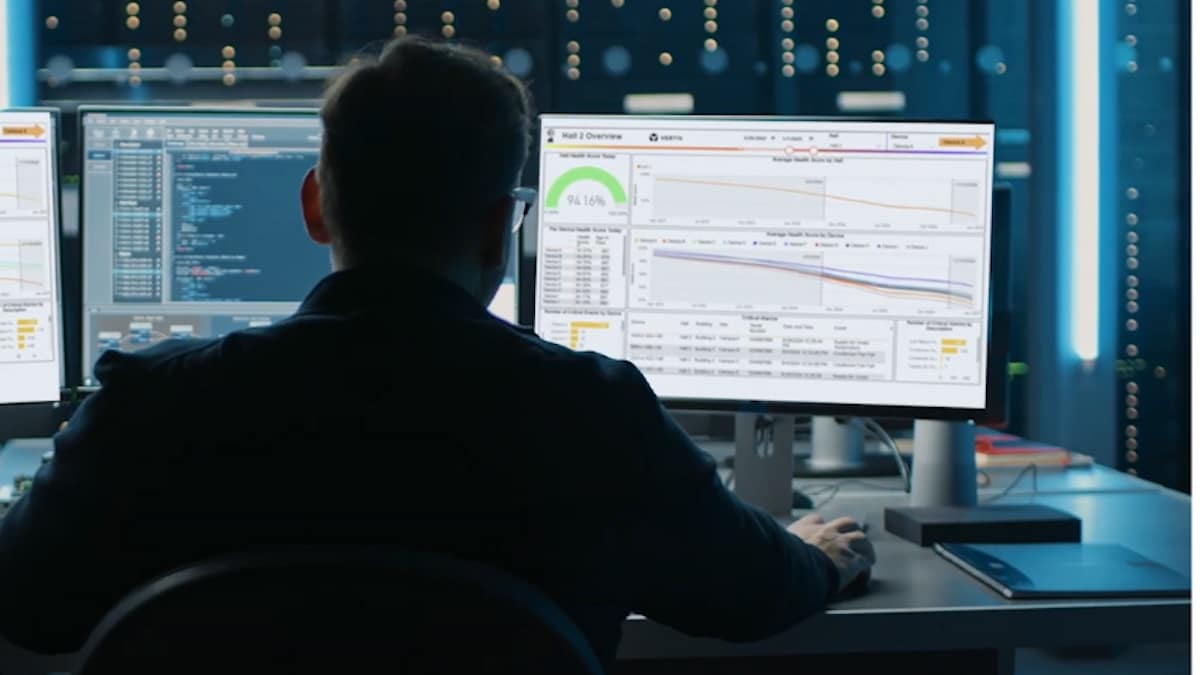
Managing a data center is no longer solely determined by design or installed capacity. With increasingly intensive loads—especially those associated with Artificial Intelligence—error margins tighten, and maintenance shifts from routine scheduled tasks to continuous monitoring and prioritization exercises. In this context, Vertiv has announced Vertiv™ Next Predict, an AI-powered managed service aiming to “industrialize” critical infrastructure maintenance, transitioning from traditional reactive or preventive models to a condition-based and predictive approach.
The idea is straightforward: if infrastructure can be observed with sufficient resolution (telemetry, sensors, operational metrics) and analytics can detect deviations, failures or degradations can be anticipated before they become actual issues. The declared goal is to reduce the risk of unplanned outages, enhance reliability, and optimize overall performance—especially in high-density environments where power and cooling are as critical as the computing hardware itself.
From Calendar-Based Maintenance to Behavior-Based Maintenance
For years, many facilities have balanced between scheduled inspections, preventive replacements, and reactive actions when something breaks. The problem is that this model tends to become inefficient as complexity increases: more sensors, more equipment, more sites, more dependencies, and less tolerance for disruption.
Next Predict presents itself as a “managed digital service” that combines sensors, high-resolution telemetry, and AI/ML analytics to generate actionable insights. Vertiv describes it as a layer that monitors asset conditions, detects anomalies, and applies automated logic for condition-based and predictive maintenance to help operations teams move beyond calendar-based upkeep.
Practically, the approach involves five steps: capturing telemetry from assets, securely transmitting data to the cloud, cloud analytics to contextualize and identify early indicators, defining prescriptive actions, and finally, delivering a service response “when and where” necessary.
This last point is critical: AI here is not envisioned as a billboard of fancy metrics but as a decision-making mechanism. The promise is to reduce uncertainty: fewer assumptions and more evidence-based actions, prioritized by severity and risk.
What Changes for Operators: Increased Visibility, Prioritization, and Fewer “Blind” Visits
One hidden cost of operating critical infrastructure isn’t just failures, but also everything done “just in case”: visits that detect nothing, premature interventions, unnecessary replacements, or diagnoses arrived at too late. Vertiv emphasizes benefits like maximizing uptime through continuous monitoring, reducing unplanned outages by predicting failures with algorithms, and improving efficiency with real-time operational metric-based recommendations.
On the daily operational level, the service incorporates features designed for teams managing multiple locations: from a centralized digital dashboard (asset health, alerts, recommendations, lifecycle planning) to “fleet benchmarking,” comparing performance across equipment and sites to identify best practices.
Another critical component in a high-density AI environment is reducing the time to diagnose and repair issues. The documentation mentions improvements in MTTR (mean time to repair), remote diagnostics, and on-site time optimization—all pointing to physical interventions becoming more guided by clear signals rather than routine rounds.
Designed for Power and Cooling, Including Batteries and Liquid Cooling
A growing consensus in the industry is that increased rack power density and advanced cooling have made non-IT infrastructure a key differentiator. Vertiv positions Next Predict within its portfolio targeting AI data centers and highlights compatibility with power and cooling platforms, including energy storage in batteries (BESS) and liquid cooling components, with an architecture designed to evolve “from network to chip.”
The technical sheet lists concrete examples of compatible areas and families: thermal management (including liquid cooling solutions like CoolChip CDU), batteries (EnergyCore), UPS systems (Liebert, PowerUPS, Trinergy Cube), and power distribution (STS, PPC), among others.
This approach aims at a cultural shift: as infrastructure density and cooling costs increase, predictive maintenance ceases to be just “nice to have” and becomes a vital tool to sustain performance and availability without escalating operational costs.
The Human Angle: Less Guesswork in a Zero-Tolerance Environment
Vertiv frames this innovation within a reality familiar to many teams: as computational intensity rises, so does the pressure to maintain operational continuity and performance at scale. The corporate message emphasizes that advanced analytics enable proactive risk management and a shift from calendar-based strategies to informed decisions driven by continuous monitoring.
In control room language: fewer surprises, enhanced prioritization, and operations less reliant on intuition or generic rules. In the era of “AI factories,” where downtime costs multiply, this transition becomes almost inevitable.
Frequently Asked Questions
What is the difference between preventive maintenance and AI-powered predictive maintenance in a data center?
Preventive maintenance relies on schedules (inspections and replacements), while predictive maintenance focuses on the real condition of equipment, detecting anomalies and early indicators to intervene before failures occur, prioritized by risk.
What types of infrastructure are covered by Vertiv Next Predict?
It targets power and cooling assets, including UPS, batteries, electrical distribution, and thermal management solutions such as liquid cooling systems.
How does a managed service like this help reduce unplanned outages?
It combines telemetry, secure cloud data transmission, analytics for early warning signals, and prescriptive actions interpreted by service teams, enabling targeted responses to prevent operational impacts.
Why is this approach increasingly important for AI data centers?
Because rising density and complexity (more demanding power and cooling, greater dependencies) reduce fault tolerance. Data-driven maintenance aims to provide continuous visibility and control to sustain performance and operational continuity.
via: vertiv
