
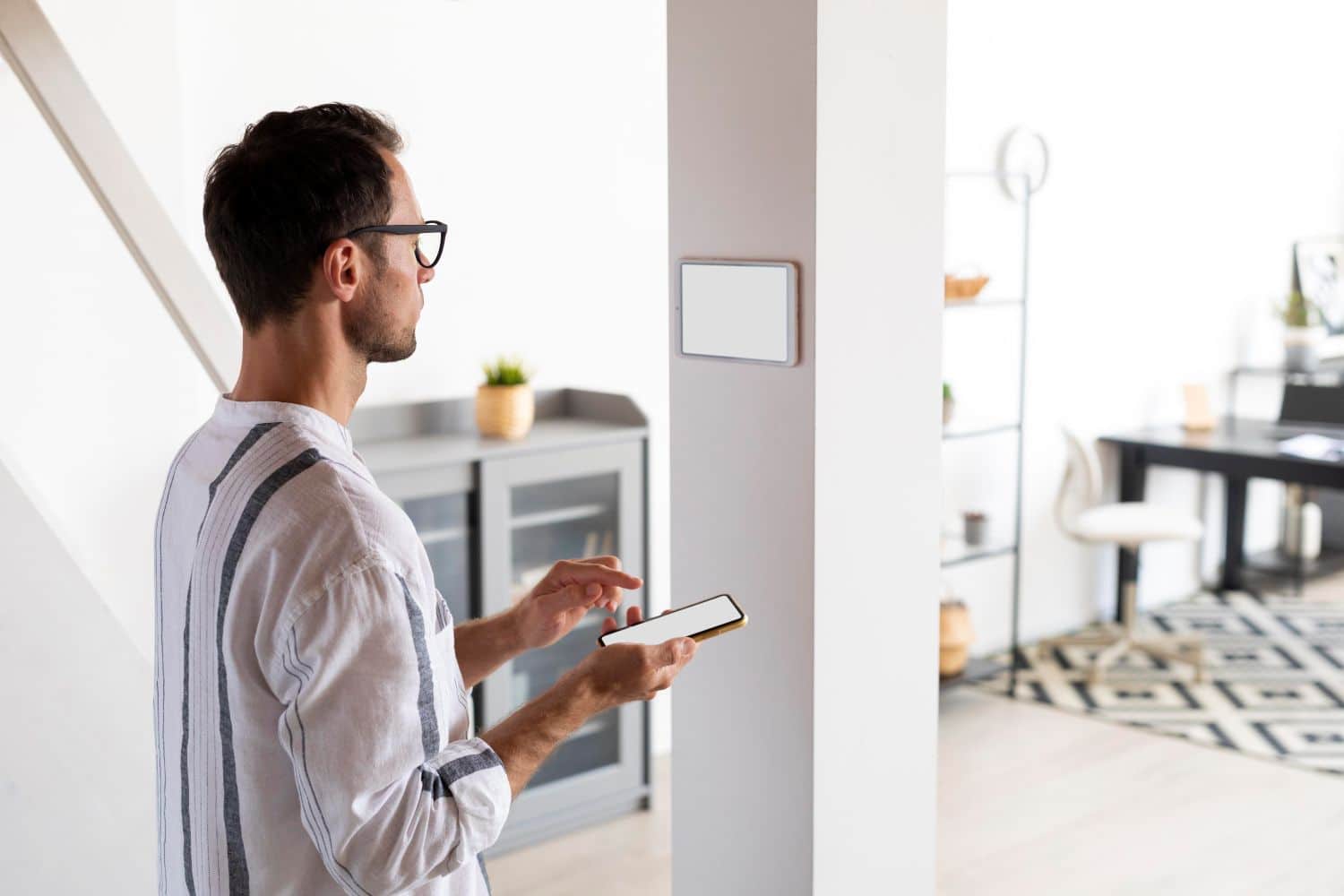
The home digitalization has become firmly established in Spain, where residential connectivity has made significant advances. This progress places the country at the forefront of Europe in adopting Internet of Things (IoT) technologies. According to the latest report from the National Technology and Society Observatory (ONTSI), 43.4% of the Spanish population already uses some type of smart device in their home, a figure that exceeds the EU average by eleven percentage points.
In this tech environment, smart security systems — such as alarms, surveillance cameras, or smoke detectors — are emerging as one of the main drivers of this growth. Currently, 14.5% of citizens in Spain use these solutions, above the European average of 11.8%, and ahead of countries like France, Finland, and Italy.
The report also paints the profile of the user leading this trend: individuals aged 35 to 44, with an adoption rate of 17.6%, and higher education, who are most frequently integrating these smart technologies into their daily lives.
“The data confirms the trend. We’ve moved from asking ‘How do I protect myself from theft?’ to ‘How do I achieve total peace of mind?’,” says José González Osma, CEO of ADT. “The current consumer understands that technology should serve to make their lives easier and safer in a much broader sense. It’s not just about protecting belongings, but about caring for their family and safeguarding the home against any unforeseen event. Security has become the foundation upon which trust in a smart home is built.”
The concept of security evolves into “total peace of mind”
The rise of the connected home reflects this shift in consumer mindset. The idea of “security” has expanded beyond intrusion protection to encompass a 360° safety net that addresses everyday concerns. This new “total peace of mind” is realized through an ecosystem of intelligent functionalities working in coordination from a single platform:
- Proactive protection against unforeseen events. The current systems shield the home from common dangers. Smoke and carbon monoxide detectors connected to a central unit save lives, while flood sensors send immediate alerts at the first sign of a leak, enabling quick response to prevent serious damage.
- Video surveillance provides an intelligent view of the home. Cameras have evolved from simple recording devices to become the “eyes” of the connected home, addressing concerns not only about whether something is happening but precisely what is happening. While smart security systems learn routines, smart cameras distinguish between people, vehicles, and animals. If unexpected activity occurs, the system sends a precise alert with a video clip for instant verification and action, offering absolute certainty and control from a mobile device. Some cameras even alert intruders upon detection, discouraging them and encouraging them to leave.
- Constant connection to what matters most. The concern for caring for family and managing daily chaos finds a solution in smart access management. For example, utilizing cameras to detect and notify when children return from school. Similarly, it allows attending to a delivery person or someone calling at the door, with the ability to see and communicate remotely. Ultimately, it consolidates home management, addressing the need for flexibility and peace of mind knowing loved ones and the home are always safe and accessible.
- Unified and simple management: All this security intelligence is managed intuitively through a single application. From the mobile, users can arm the alarm, view live cameras, adjust the thermostat to save energy, and even control lighting, creating a connected home that adapts to their needs.
- The importance of professional response: The most advanced IoT technology is complemented by 24/7 monitoring by a team of professionals. In case of a real emergency, connection to an Alarm Receiving Center ensures an immediate and coordinated response from police, firefighters, or emergency services.
“The key is not just in the technology itself but in how it’s integrated to serve people,” adds José González Osma, CEO of ADT. “Our role at ADT is precisely that: to be the experts designing tailored solutions for each home, ensuring that technology is not only smart but also reliable. It’s about providing the peace of mind that, whatever happens, someone is always on the other end to respond.”
