
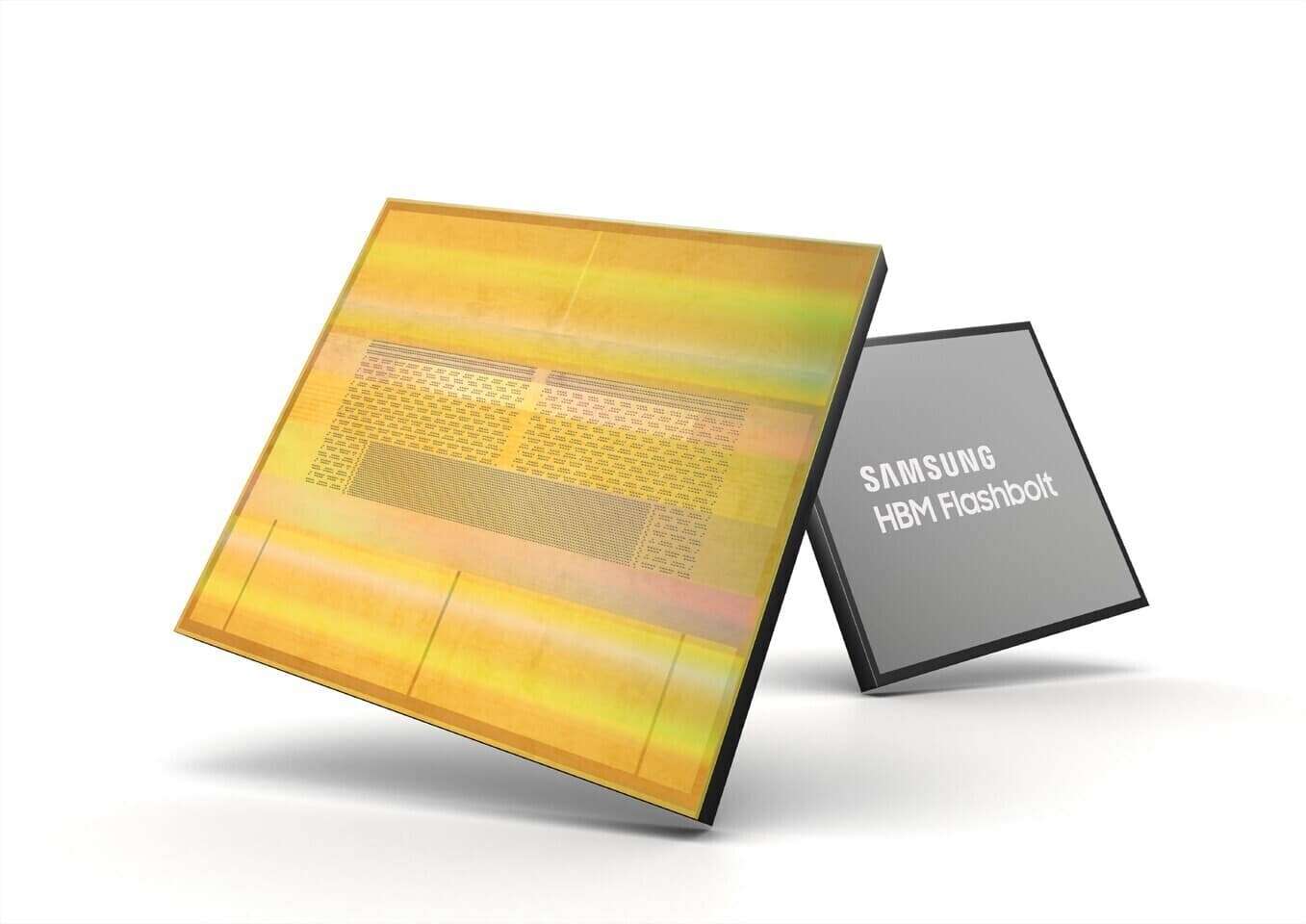
The race for High Bandwidth Memory (HBM) is becoming the most awkward—and costly—bottleneck of the new Artificial Intelligence (AI) era. In this scene, NVIDIA needs to secure supplies for its upcoming platforms, while Samsung sees a strategic opportunity: closing the gap against its major HBM rival, SK hynix, just as the market begins to accept that shortages won’t be a short-term hiccup but rather a prolonged cycle.
In recent weeks, clear signals of this pressure have emerged. On one hand, Samsung is preparing to begin production of HBM4 with NVIDIA in mind, a move interpreted as an attempt to finally break into the front line of advanced memory supply for AI accelerators. On the other, the broader message is even more significant: memory manufacturers warn that supply tension could persist through 2026 and 2027, driving up prices and forcing companies to make tough decisions regarding capacity, priorities, and margins.
Why HBM4 matters so much (and why it’s not just “another memory”)
HBM isn’t the traditional DRAM installed in a desktop or standard server. Its approach is different: stacking memory chips and positioning them very close to the processor/accelerator to achieve massive bandwidths with more efficient power consumption per bit transferred. In large-scale AI workloads—training and inference—this combination boils down to a simple truth: without HBM, useful GPUs are in short supply.
Additionally, HBM4 represents the next generational leap in a market that already faced tension with HBM3/3E. The problem isn’t just manufacturing but also validation: passing tests, integrating with advanced packaging, and maintaining stable industrial yields. This process explains why timelines matter so much—and why each month gained or lost makes headlines and influences stock markets.
Samsung is aiming to carve out a niche with NVIDIA as the “supply squeeze” tightens
According to recent reports, Samsung is preparing to start production of HBM4 to supply NVIDIA. In parallel, references circulated indicating that the company has passed qualification tests for HBM4 with NVIDIA (and also with AMD), a critical milestone: in advanced memory, being a validated supplier is more valuable than marketing campaigns because it opens the door to long-term contracts and collaborative planning.
For NVIDIA, the message is clear: in a context of explosive demand, securing early supplies reduces the risk of a high-performance platform being held back by memory shortages. For Samsung, the incentive is just as compelling: entering a premium client like NVIDIA with HBM4 not only means sales but also technological credibility and a ripple effect attracting other buyers.
Samsung’s paradox: profits from memory but struggles in smartphones
The scarcity has a less visible side: internal costs. Samsung has acknowledged that the price cycle and chip shortages are impacting other divisions, especially mobile. Rising component costs could dampen demand or squeeze margins. This illustrates the conglomerate paradox: memory boosts profits on one hand while raising the final product’s cost on the other.
In this context, Samsung has signaled that memory prices will continue rising and that supply tensions could persist through 2026-2027. Industry experts listen closely, as this signals a deeper trend: part of the industrial capacity is shifting towards higher-value memories (like HBM), potentially constraining supply in traditional segments (standard DRAM, certain NAND) and increasing costs across multiple product chains.
“Domino effect”: when AI drives up the cost of other electronics
The narrative no longer focuses solely on “chip shortages for AI.” The emerging domino effect includes:
- More capacity for HBM → less industrial margin for other memory types.
- Rising prices → increased pressure on smartphone, PC, and device manufacturers.
- More rigid planning → long-term contracts, production allocations, and less flexibility for rapid changes.
In other words: although HBM4 might seem like a “data center” issue, its supply constraints are spilling over into the broader market through costs and availability. That’s why discussions about HBM4 also involve mobile market health and price alignment in mid-range and entry-level segments.
What might happen from here
In the short term, focus centers on timelines and ramp-up: when sustained production will begin, volume shipments, and how well it fits NVIDIA’s platform schedules. Mid-term, the strategic question is whether there will be enough “top-tier” suppliers to avoid recurrent bottlenecks.
If Samsung successfully consolidates HBM4 supply for NVIDIA, the market benefits from greater diversity and less dependence on a single dominant supplier. Conversely, if industrialization delays or volumes fall short, memory will continue acting as the quiet brake on AI infrastructure expansion.
Frequently Asked Questions
What is HBM4 and why is it critical for Artificial Intelligence?
HBM4 is a next-generation high-bandwidth memory designed to power accelerators and GPUs with vast data throughput at high speeds. In AI, real performance hinges on this throughput: without sufficient memory, compute power can’t be fully utilized.
Why does NVIDIA want multiple HBM suppliers instead of relying on just one?
Because HBM has become a critical and scarce component. Diversification reduces delay risks, enhances negotiating power, and helps maintain product schedules even under supply stress.
Can HBM shortages also drive up prices for smartphones and PCs?
Indirectly, yes. If manufacturing capacity concentrates on premium memories like HBM, other memory segments may face tighter supply, pushing up prices and costs in consumer electronics.
When will HBM4 clearly appear in market products?
It depends on industrialization speed and major accelerator vendors’ adoption timelines. The key isn’t just to have it available but to ship in volume with full validation and stable yields.
