
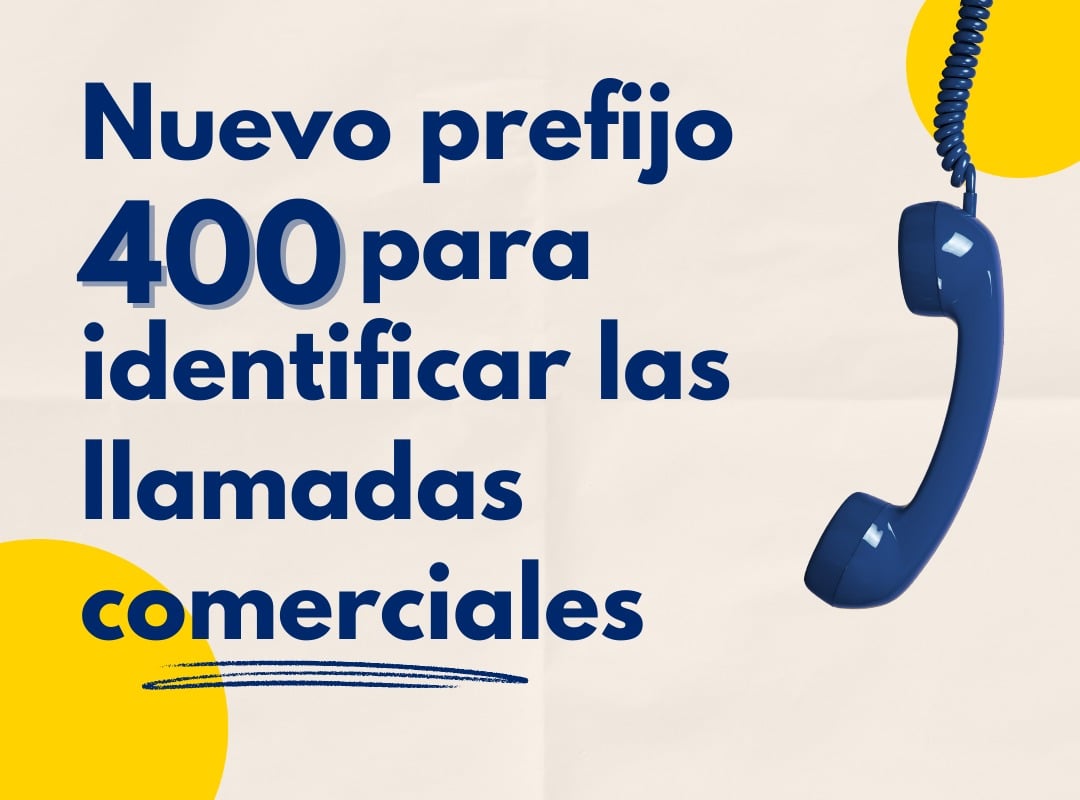
In Spain, phone calls have become an everyday battleground. For many citizens, ringing no longer signifies an important call but rather an interruption: persistent offers, changing providers, supposed bank “alerts,” or impersonation attempts seeking a slip-up. Against this backdrop, the Ministry for Digital Transformation and Public Functions has taken a further step to curb telemarketing and, in doing so, close doors to some fraud: it proposes that commercial calls only originate from numbers starting with 400.
The measure was announced on February 4, 2026 through two resolutions submitted for public consultation. The core idea is simple: if a company calls to sell, the user will recognize it. And if they don’t want to answer such calls, they can filter or block them more easily.
A specific number range for consumer recognition of “spam”
According to the proposal, commercial calls must use a nine-digit range starting with 400. That is, numbers like 400XXXXXX, designed so anyone can immediately recognize that it’s a promotional communication. The declared goal is to “enhance protection for users” against fraudulent or unwanted commercial calls and texts, reducing inconvenience and risk.
Moreover, this numbering will be bidirectional: it will serve both for receiving and making calls. And it will have a key condition for consumers: costs cannot exceed those of a regular call, preventing it from turning into a “special number” in disguise.
In practice, the change aims to give users a clear tool: to decide with information. Answer or not answer. And for those who prefer, to activate a systematic block on all calls starting with 400.
Customer service: short numbers, 800/900 or geographic, and no selling
The second resolution, presented by the Secretary of State for Telecommunications and Digital Infrastructures, defines another major category of business calls: customer service, meaning calls companies make to contact users or manage existing contracts.
The government proposes a stricter rule here: these calls can only be made from:
- Numbers specifically assigned (like the well-known 1004),
- free ranges 800 and 900, or
- geographic numbers (area codes).
The aim is to prevent a common issue: a “customer service” call coming from a mobile number or an unrecognizable source, which facilitates confusion, fraud, and a feeling of helplessness.
And importantly, when calling from these customer service numbers, no products or services can be offered. This separation aims to cut a frequent practice: using an incident or transaction to “pitch” an offer at the first opportunity.
Automatic blocking: once the regulation is in effect, out-of-range calls will be declined
The plan isn’t just a label. The Ministry expects that, once the new numbering is fully operational, operators will block calls identified as commercial or customer service if they do not use the established ranges.
The official statement mentions a four-month timeframe from the implementation of the resolutions for companies to adapt their systems. According to press reports, the enforcement of the 400 prefix could begin at the end of summer 2026, if the legislative process proceeds as planned.
If a user receives a sales or customer service call from an unauthorized number, the official note reminds that they can report it to the Telecommunications User Assistance Office (OAUT) or the CNMC.
The SAC Law and the “lock” on consent: renew it every two years or the contract may be nullified
These resolutions don’t come out of nowhere. They comply with the Customer Service Law (SAC), approved in December 2025, which already introduced a key principle: clearly differentiate the phone line for customer service from that for commercial activities.
The law also tightens the rules around consent. For consumer contracts, it presumes that no intent to contract exists —and therefore the contract may be null— if the rules on unsolicited calls aren’t followed. It also specifies: consent is considered invalid if not obtained or renewed explicitly within the past two years.
In plain language: the user’s “yes” expires. Companies will need to obtain it again periodically if they want to keep making commercial calls.
An ongoing initiative: millions of calls and texts blocked since 2025
The 400 prefix complements a broader strategy. The Ministry frames this measure within the anti-fraud plan for phone and SMS scams, active since March 2025, involving blocking obligations and numbering restrictions to prevent identity theft.
Official data show the scale of the issue (and the filtering efforts): since the plan’s launch, operators have blocked 169.5 million calls and 10.4 million texts flagged as fraudulent.
As part of this package, the use of mobile numbers for customer service calls or unsolicited commercial calls had already been prohibited, and ranges 800 and 900 were allowed to make calls, not just receive them. The addition of the 400 prefix is an extra step: providing a unique, easily recognizable identifier for telemarketing.
Sources:
- Ministry for Digital Transformation and Public Functions (SETID), press release “The Government proposes a new numbering prefix 400…” (02/04/2026).
- BOE, Law 10/2025, of December 26, regulating customer service (SAC).
- BOE, Order TDF/149/2025, of February 12, against identity theft scams and for identifying numbering in customer service and unsolicited calls.
- Ministry for Digital Transformation and Public Functions, notes “Today the first measures of the Plan take effect…” (03/07/2025) and “Starting tomorrow…” (06/06/2025).
- Newtral, information on the public consultation until March 5 (02/05/2026).
Frequently Asked Questions
When will commercial calls be required to start with 400 in Spain?
The 400 prefix is part of a proposal in public consultation. The communicated roadmap indicates that, after legislative approval and entry into force, there will be a four-month adaptation period; some media expect implementation towards late summer 2026, if the timeline proceeds as planned.
What happens if a company calls to sell from a number that doesn’t start with 400?
When fully operational, operators are expected to block such calls if they are considered commercial and don’t use the approved numbering. If such calls still occur, consumers can report them to the OAUT or the CNMC.
Will customer service calls also adopt the 400 prefix?
No. For customer service, the approach is that calls only originate from short numbers, 800/900 ranges, or geographic numbers. The commercial (400) range will be reserved for sales or promotional calls.
How does the SAC Law affect consent for receiving commercial calls?
The law mandates that consent must be explicit and renewed: if it isn’t obtained or renewed in the past two years, it’s considered invalid for that call. Contracts made in breach of these rules can be deemed null.
