
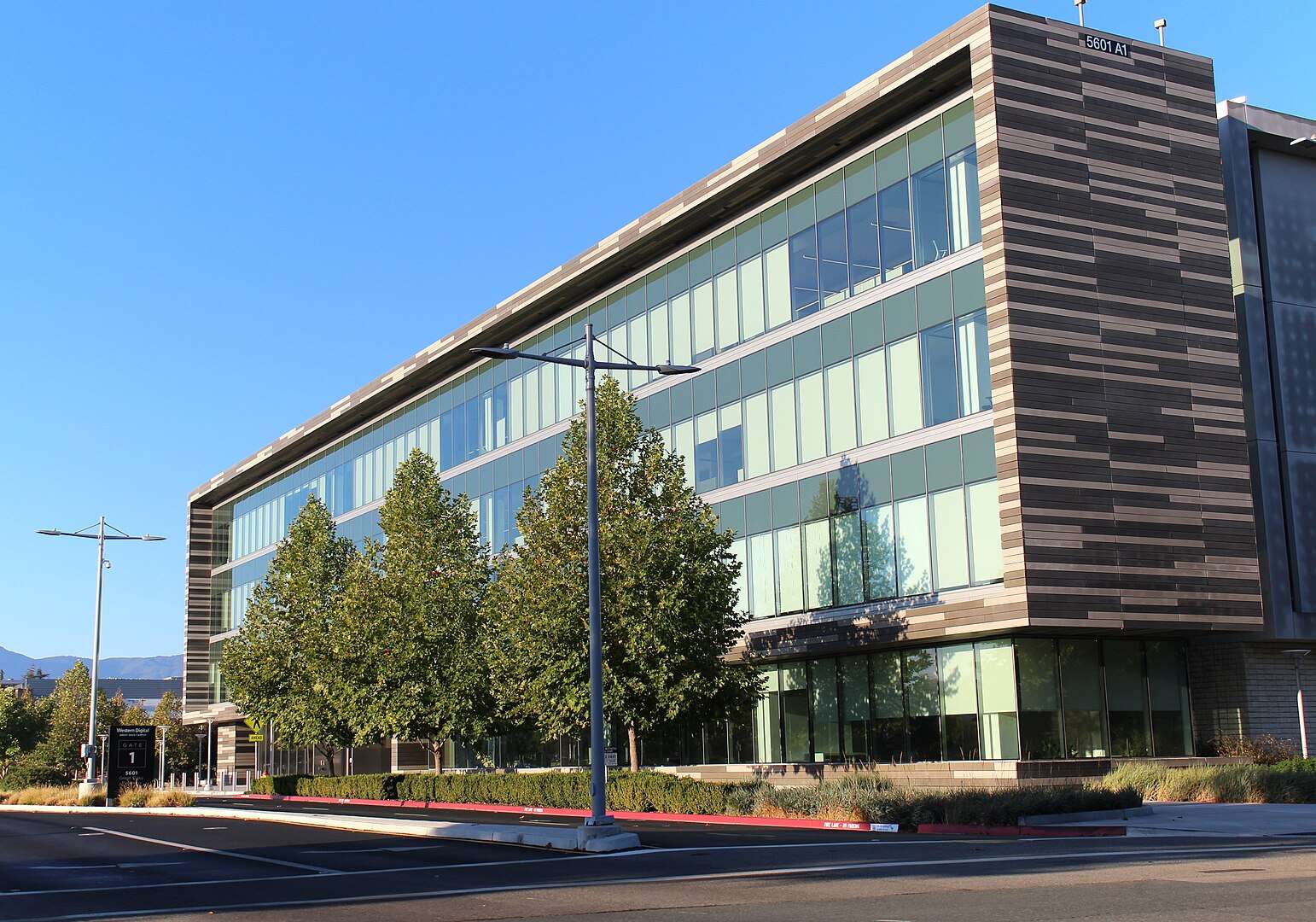
Western Digital aims to shift from being seen solely as a hard drive manufacturer to becoming a key part of the data economy infrastructure. This strategic move was clearly showcased at their Innovation Day 2026, where the company announced a new layer of “smart” software with open APIs designed for customers managing fleets of storage over 200 PB. Their stated goal is ambitious: simplify management and onboarding of new devices in environments already measuring in hundreds of petabytes, reduce qualification cycles, and speed up the transition from purchase to actual use (“time-to-production”). The cost, as analyzed by several industry observers, is equally apparent: increased reliance on the hardware of the manufacturer itself.
The idea stems from a common problem for anyone who’s experienced expanding a data center beyond “a few cages”: when storage becomes an ocean of SSDs, HDDs of different generations, classes, and profiles, operations become friction-filled. Manual integrations, prolonged validations, fragmented layers, and teams that, while not hyper-scale, are forced to handle hyper-scale complexities. Western Digital summarized this in their statement, noting that “mid-scale” customers face challenges similar to hyperscalers but without the same resources to build their own management and automation stacks.
A platform designed for “large volume” that isn’t hyperscale
According to the announcement, the software layer will be built on open APIs and is intended to overlay automation and management capabilities without requiring a redesign of existing architecture. In other words, it’s not positioned as a replacement for current systems but as an “overlay” that abstracts complexity and turns large-scale storage into programmable infrastructure. Tom’s Hardware, which previewed the announcement, further highlights an important detail: the software still has no commercial name and is expected to deploy in 2027.
The technical promise is especially appealing for organizations needing to introduce new technologies without turning each change into a months-long project. During the event, Western Digital emphasized that this layer will facilitate adopting different storage classes—such as SSDs and multiple generations of high-capacity HDDs—and will reduce qualification risks by standardizing the operational framework.
The “cost” of simplification: the return of vendor lock-in
A critical perspective immediately arises: if the management layer is optimized to perform best with the manufacturer’s entire portfolio, the temptation to standardize everything around a single brand grows. Tom’s Hardware points out directly that such a platform could make adopting rival units from Seagate or Toshiba less attractive—precisely because it adds a layer of value that’s not trivial to replicate.
In practice, this is a familiar debate: how much is worth reducing complexity at the expense of losing independence? In environments managing hundreds of petabytes, “vendor lock-in” isn’t just about pricing; it also affects bargaining power, supply strategies (especially during shortages), and the freedom to combine technologies based on cost, availability, or efficiency.
Why Western Digital is acting now: The age of Artificial Intelligence and storage as an “economy”
The announcement comes at a time when data center storage has become central to business strategies. Tom’s Hardware notes that while SSDs dominate consumer storage, “data center-grade” storage now accounts for most of Western Digital’s activity. The company itself emphasizes its transformation—repositioning as an infrastructure partner in a data economy driven by Artificial Intelligence, with a significant portion of revenue linked to AI and cloud.
Innovation Day 2026 wasn’t just about software. Western Digital also revealed their roadmap to boost HDD capacity and performance: from UltraSMR 40 TB drives (pending qualification with hyperscale clients, with production expected in late 2026) to transitioning to HAMR technology from 2027 and aiming for 100 TB drives by 2029. Concurrently, they announced advancements to improve performance—including a “high bandwidth” approach aimed at doubling bandwidth and a “dual pivot” architecture planned for 2028—and lines focused on reducing power consumption in certain scenarios. Though these innovations are part of a different conversation, they help frame the context: the software layer is conceived as the glue that will enable these generations to be introduced seamlessly, so customers don’t have to “suffer” the change.
A move toward democratizing hyperscale… without giving it away
Western Digital describes the initiative as a way to extend “hyperscale economies” to rapidly growing customers driven by AI: more training data, more derived data, more accessible data. In this narrative, the software layer acts as an accelerator—reducing integration time and increasing productive time.
Irving Tan, WD’s CEO, framed it as part of a reinvention of the hard drive to meet requirements for capacity, scale, quality, performance, and ease of adoption. Ahmed Shihab, Chief Product Officer, emphasized that the company has organized around how customers build and scale AI infrastructure with the goal of removing complexity and cost barriers. From IDC, research director Ed Burns interpreted the event as a market validation: clients are already deploying these solutions because they address key AI infrastructure needs—from reliable, scalable capacity to sustainable economics.
The key point is that although the software is announced with open APIs, it’s not necessarily “open” in operational terms: if its value is maximized with the vendor’s hardware, the exit door shrinks. Still, many infrastructure managers may see this as a non-issue: many prioritize simplicity and predictability in their purchases.
With a launch expected in 2027, the question is no longer whether platforms managing hundreds of petabytes will exist—they will—but how many companies will accept sacrificing flexibility for speed, and how many will attempt a multi-vendor strategy despite increased operational complexity.
Frequently Asked Questions
What is a management platform for fleets of over 200 PB?
It’s a layer of software aimed at automating, monitoring, and orchestrating large storage arrays (SSDs and HDDs), especially when the volume and diversity of devices make manual management impractical.
Why could such a tool lead to vendor lock-in in enterprise storage?
Because if the platform is optimized for the manufacturer’s hardware, switching to another provider might mean losing automations, workflows, and part of the system’s “value.”
What role do technologies like UltraSMR, ePMR, or HAMR play in this strategy?
They are generation methods and recording techniques designed to increase hard drive capacity. The management layer aims to facilitate their adoption in production, reducing validation and integration times.
When will Western Digital’s new software layer be available?
Expected in 2027, as announced during Innovation Day 2026 and reported by specialized media.
via: tomshardware
