
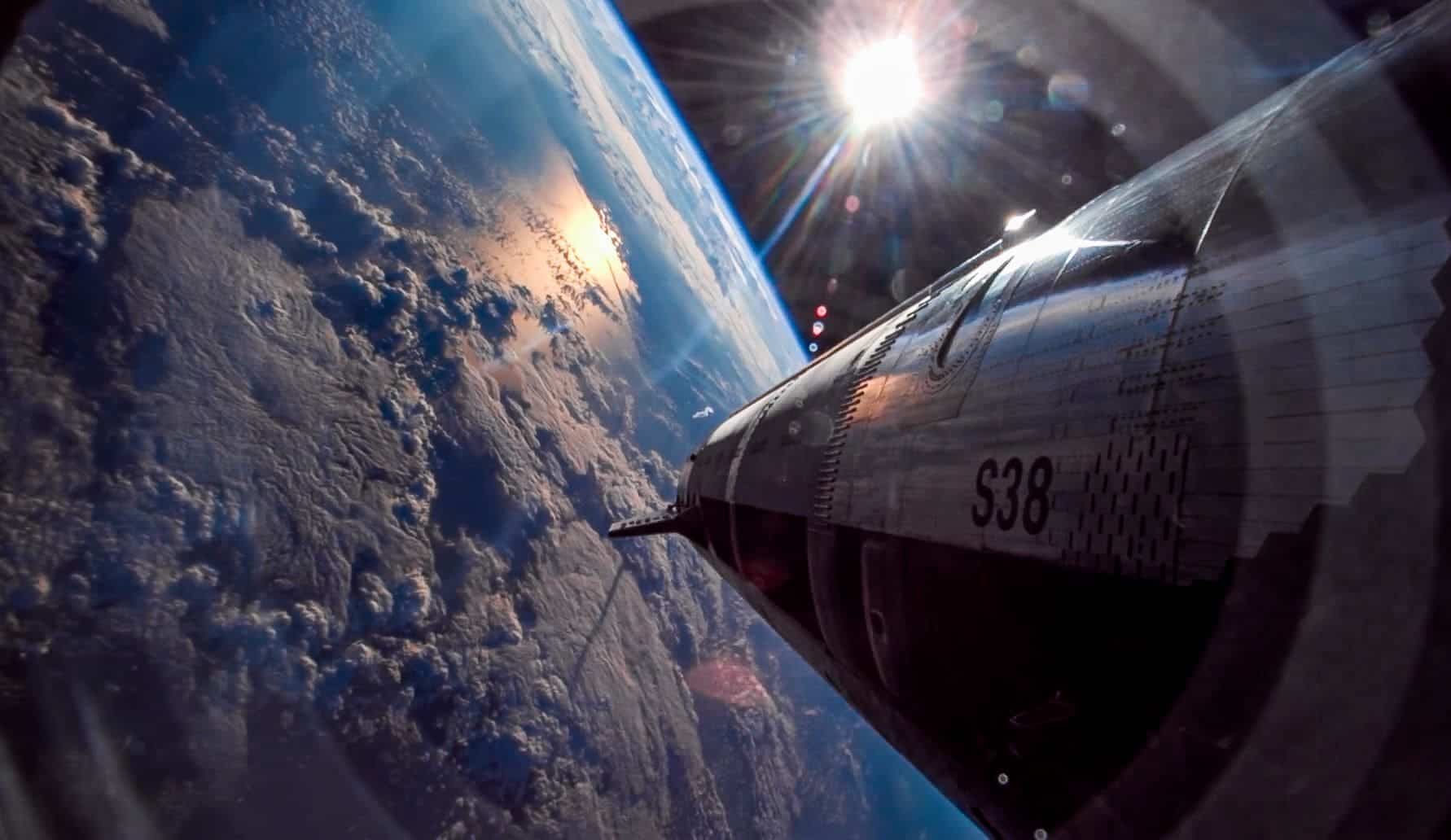
SpaceX has announced the acquisition of xAI with an idea as ambitious as it is controversial: to build a “vertically integrated innovation engine” that combines rockets, global connectivity, and Artificial Intelligence… and that, in the long term, will move some of the intensive computing off Earth. In the statement, signed by Elon Musk, the company argues that the major bottleneck for Artificial Intelligence is no longer just talent, chips, or data, but energy: massive data centers requiring increasing amounts of electricity and cooling, with an impact — according to the release — that would be hard to sustain “without imposing difficulties” on communities and the environment.
The proposal breaks with the usual industry narrative. Instead of building more large data centers on land, the vision involves deploying satellites that function as orbiting computing nodes, powered by nearly continuous solar energy. “It’s always sunny in space,” the text jokes, before shifting to a science-fiction tone: a constellation of up to 1,000,000 satellites that would act as “orbital data centers,” a first step toward a Type II civilization on the Kardashev scale (able to harness a significant fraction of its star’s energy).
The core idea: abundant energy overhead, limits below
SpaceX’s reasoning is simple on paper: on Earth, AI growth translates into higher electricity demand, more heat to dissipate, and increased pressure on networks and resources. In orbit, however, a photovoltaic system would have access to sunlight much more consistently, avoiding weather and day-night cycles experienced on surface.
From there, the announcement provides numbers to illustrate scale: if about 1,000,000 tons of satellites were launched annually, and each ton “generated” 100 kW of computing power, the result would be adding 100 GW of capacity per year, with “almost zero” operational or maintenance costs. It even mentions a “path” toward 1 TW per year with sustained launches.
It’s important to understand what’s happening here: this isn’t a product announcement or a fixed roadmap, but a strategic thesis — and, at the same time, a statement of intent. The message aims to convince that the next leap in Artificial Intelligence will not be just about models, but about global energy infrastructure… and that the “only” real way to scale is to move that infrastructure off-planet.
Starship, Starlink, and the obsession with cadence
For this vision to have any physical feasibility, the key is orbital transportation. The release states that, even in a recent record year, the total payload placed into orbit would have been around 3,000 tons, mostly Starlink satellites launched by Falcon 9. This comparison justifies why Starship wouldn’t be “just another rocket,” but a prerequisite for moving “megaton” masses, both for orbital data centers and permanent bases.
The text also links this idea with the evolution of the satellite ecosystem itself: Starship would begin carrying Starlink “V3” satellites, each launch providing more than 20 times the capacity of current launches with V2 satellites (according to the company). Additionally, a next wave is presented: “direct-to-mobile” satellites for global cellular coverage.
This introduces a recurring theme for the company: the “forcing function.” Initially, the need to deploy thousands of satellites drove increased reuse and flight frequency of Falcon 9. Now, the concept of “orbital data centers” would act as a new pressure point to push Starship towards an even more aggressive cadence: launches “every hour” carrying 200 tons each, enabling the movement of “millions of tons” per year.
What it promises and what it avoids: latency, radiation, waste, and regulation
The release is deliberately optimistic, leaving many technical details out. Precisely because of that, the announcement reads as a blend of industrial vision and manifesto: it sets a grand future, but doesn’t detail how to solve the more challenging issues.
- Latency and connectivity: an orbital data center doesn’t behave the same as one on Earth for interactive loads. Some computing could be “batch” (training, deferred processing), but the document also links it to “services for billions of people.”
- Thermal management: space has no convection; dissipating heat requires radiators and extreme design. Paradoxically, “constant sunlight” helps generate energy but demands precise temperature control.
- Radiation and reliability: electronics in orbit endure radiation and events affecting memory, logic, and degradation. This pushes toward redundancy, shielding, and replacement cycles that could increase mass and cost.
- Orbital sustainability: it’s mentioned that the plan “will be based” on existing strategies (including end-of-life deorbiting), but a constellation of this size would heavily strain space debris management, coordination, and operational safety.
- Permits and international coordination: launching infrastructure intended to become “global computing capacity” involves not just engineering, but geopolitics, radio spectrum, responsibilities, and compliance across multiple jurisdictions.
None of this invalidates the vision, but it does ground it: the leap isn’t incremental but of an order of magnitude. Therefore, more than a project, it sounds like a bet to define the future narrative of infrastructure: if Earth can’t keep pace feeding AI, the next data center could literally be “up there.”
“In 2 to 3 years”: the phrase that will cause the most buzz
The text concludes with one of its most provocative statements: that in 2 to 3 years, the cheapest way to generate AI compute might be in space. A bold prediction, especially because by then, low-cost and frequent launches, satellites with efficient hardware, laser links between satellites, and a competitive economic model would all need to converge.
For now, the only certainty is that SpaceX is trying to connect two obsessions: extreme reuse (to lower orbit access costs) and massive scale (to turn orbit into infrastructure). The acquisition of xAI would fit as the component that “consumes” that compute and turns it into services, models, and products. The rest — the real economy, regulation, and technical feasibility — will determine whether the idea ends up as a milestone… or just another chapter in the saga of colossal promises.
Frequently Asked Questions
What does “orbital data centers” mean, and how are they different from regular satellites?
The idea is to convert satellites into computing platforms (not just communications), with solar power and links between satellites, to run AI workloads and massive data processing.
Why does SpaceX say Earth’s energy won’t be enough for AI?
The release argues that AI growth depends on ever-larger data centers with enormous electricity and cooling needs, and that scaling indefinitely on land would have social and environmental costs.
What role would Starship play in this plan?
It would be the “truck” capable of reducing costs and increasing the mass launched to orbit. The text talks about a very high cadence and transporting large payloads per flight to deploy massive constellations.
What are the main risks of such a large satellite constellation focused on computing?
Besides costs and technical complexity, key concerns include orbital sustainability (space debris, collisions), international regulation, thermal management, and hardware reliability under radiation.
via: SpaceX
