
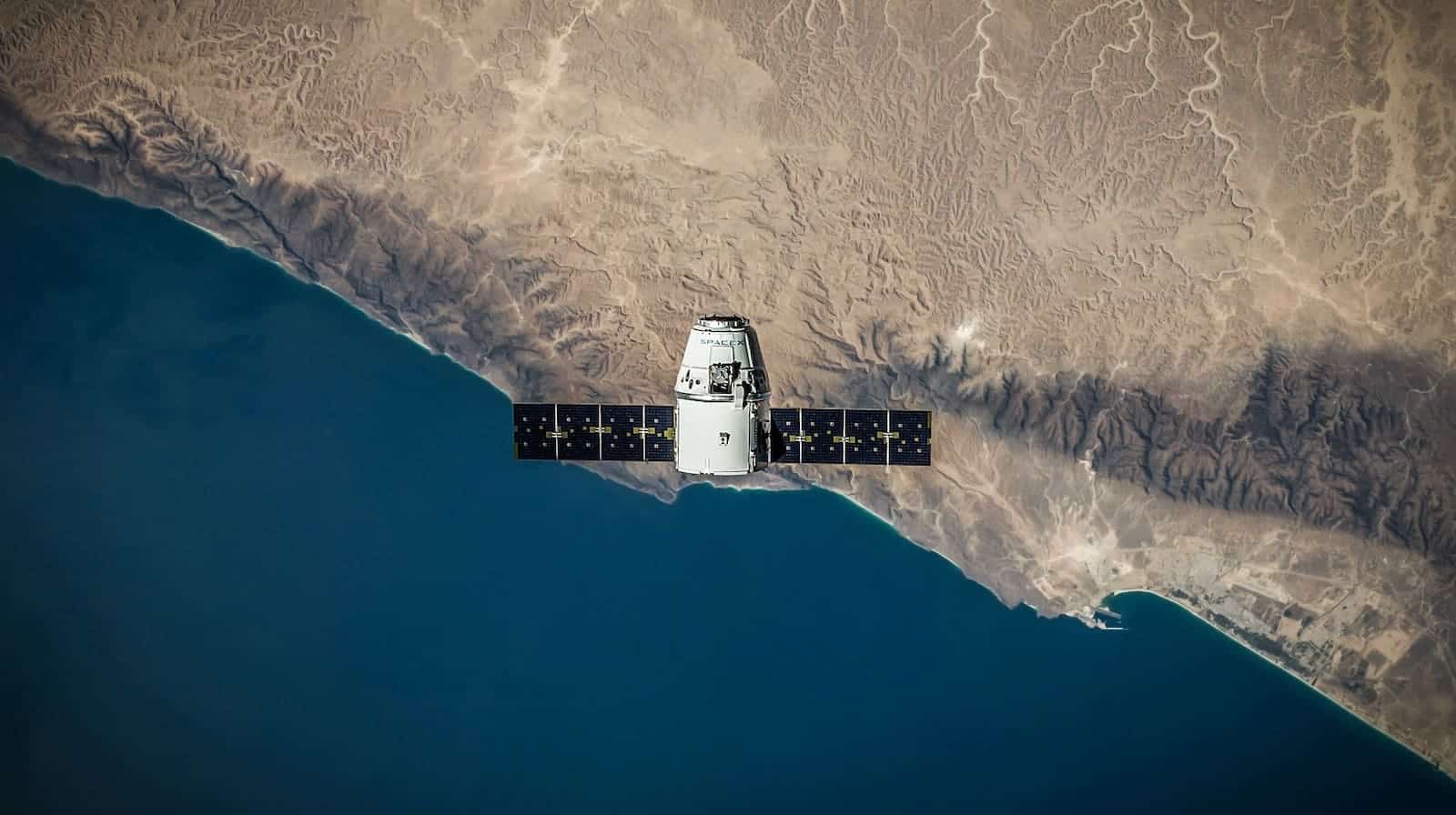
SpaceX has put on the table one of those ideas that sound like science fiction… until they are documented in a regulatory filing. Elon Musk’s company has requested permission from the U.S. Federal Communications Commission (FCC) to deploy and operate a system of up to 1,000,000 satellites that would function as orbital data centers, mainly powered by solar energy and aimed at supporting advanced AI applications and models.
The proposal, dated January 30, 2026, describes a scenario where a massive network of satellites not only transmits data (as with Starlink) but also performs computation in space. According to SpaceX’s own framing, the goal is to leverage nearly constant solar availability and reduce operational costs and environmental impacts associated with terrestrial data centers. The document even describes the initiative as a “first step” toward a Type II civilization on the Kardashev scale, a classic reference to societies capable of harnessing their star’s energy on a large scale.
What exactly is SpaceX proposing?
The filing with the FCC describes an “Orbital Data Center System” operating between 500 km and 2,000 km in altitude, organized into narrow orbital layers up to 50 km thick each. To connect this swarm of satellites, SpaceX envisions relying “almost exclusively” on high-capacity optical links (laser) routing traffic within the network and to the Starlink constellation via a “petabit-capable” laser mesh. This connectivity would land on authorized ground stations, closing the loop between space infrastructure and ground users.
On paper, the logic is straightforward: if demand for AI and digital services grows faster than terrestrial power and cooling infrastructure, space offers an “shortcut” by harnessing solar energy, radiating heat into the vacuum, and facing less social friction than new land-based data centers facing local opposition.
Energy: the bottleneck already on the table
SpaceX’s move isn’t happening in a vacuum. The energy demands of data centers — especially AI-related ones — have become a central issue for governments, regulators, and the tech sector itself.
In its request, SpaceX cites projections by the International Energy Agency (IEA) indicating that global electricity consumption by data centers could grow significantly over the next decade, reaching approximately 1,200 to 1,700 TWh by 2035, depending on scenarios. This volume could represent several percentage points of global consumption, causing clear tensions with already strained electrical grids due to industrial electrification, electric vehicles, and urban growth.
SpaceX’s document attempts to turn this pressure into an opportunity: “If the problem is energy and large-scale deployment on land, let’s put part of the processing where solar energy is most accessible.” It also links economic viability to the development of Starship, the next-generation reusable rocket that the company expects will reduce launch costs per kilogram to orbit.
Why the figure of 1,000,000 doesn’t necessarily mean a million will be launched
Still, the figure is so striking that it’s important to consider it within the usual regulatory context. Reuters emphasizes that the FCC is unlikely to approve such a volume without reductions and conditions, noting that operators sometimes request oversized authorizations to allow for margins in design and negotiation. This isn’t the first time: SpaceX previously requested permission for 42,000 Starlink satellites before deploying the system at its current scale.
Furthermore, the orbital ecosystem isn’t unlimited. Sector estimates suggest around 15,000 satellites in total, with Starlink being the majority. Reuters reports approximately 9,500 Starlink satellites currently in orbit. Multiplied by orders of magnitude, this raises concerns about space debris, collision risk, and orbital saturation.
In other words: the request opens a conversation — technical, commercial, and political — more than a definitive plan.
The immediate precedent: Starlink Gen2 expansion
The timing isn’t accidental. The FCC has been approving expansions of Starlink second generation (Gen2) in phases. In early January 2026, the regulator authorized the operation of thousands of additional satellites within that program, raising the allowed number of Gen2 satellites to 15,000, while leaving some previous proposals under review.
This precedent exemplifies the pattern: SpaceX sets a maximum ambition, the regulator responds with partial approvals, technical conditions, and phased revisions. In this scenario, the “orbital data center” could start as a small, demonstrable subset before any large-scale expansion.
Between epic vision and engineering: what’s at stake
The idea of moving computation into space touches multiple critical points:
- AI infrastructure: the race for processing capacity is no longer just about chips; it’s about electricity, cooling, placement, and permits.
- Launch economics: everything depends on whether Starship achieves reliable cadence and significantly lower costs than current options.
- Orbital regulation and sustainability: more satellites mean more coordination, waste mitigation, and debates over orbital “ownership.”
- Technological competition: while others fight for available launchers and schedules, SpaceX aims to turn its launch advantage into an “overall infrastructure” edge, from rockets to computing.
For now, the tangible outcome is the document: the request exists, the technical framework is outlined, and the regulatory debate is underway. What comes next will depend on the FCC, the actual maturity of Starship, and whether the space economy can support more than connectivity—namely, planet-scale computation.
Frequently Asked Questions
What does “orbital data center” mean in SpaceX’s proposal?
It refers to satellites not only designed to communicate but also to perform data processing in space and route results via laser links and ground stations.
At what altitude would those “data center” satellites operate, according to the document?
The filing describes layers between 500 km and 2,000 km, organized into “layers” of up to 50 km thick.
What risks does such a large constellation pose for space debris and collisions?
It increases congestion and the complexity of collision avoidance, as well as raises the risk of fragment generation in case of failures or chain-reaction impacts.
Why does SpaceX link this project to Starship?
Because the economic model depends on reducing orbital access costs and launching large payloads with high frequency; without that leap in costs and cadence, the plan would be much less viable.
via: X Sawyer Merritt
