
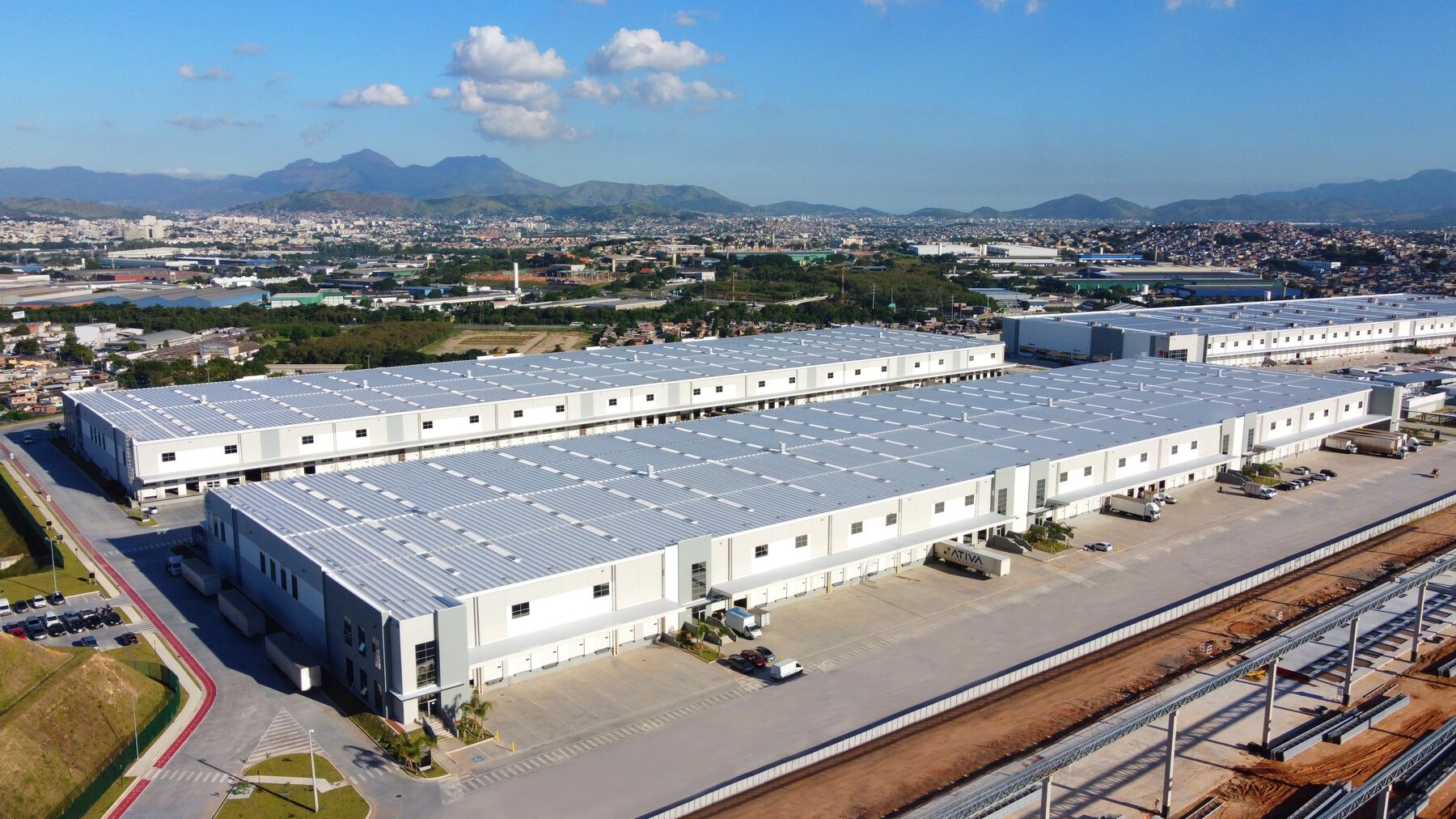
The European race to build data centers is running out of a key ingredient: space with available energy. In this context, logistics property giant Prologis has decided to accelerate a move that until recently seemed reserved for specialized developers: repurposing existing logistics complexes into data centers. The company is already considering the transformation of 11 assets, and this move is part of a broader plan that envisions up to 20 projects in Europe between 2028 and 2030, with an estimated investment of between 7 billion and 8 billion euros.
This shift is significant. Prologis has been operating for years in a league where occupancy, location, and contract turnover are paramount. Now, it aims to add a technological layer that is perceived as highly profitable and defensive in the real estate investment world: critical infrastructure supporting the cloud, AI, and digital traffic.
Eleven assets under review: keep the structure or demolish?
According to the company, the process isn’t simply about “putting servers in a building” and calling it a day. Prologis is assessing each asset individually to decide whether the existing building can be repurposed or if it needs to be demolished and rebuilt. At the heart of this decision are two questions dominating any discussion about data centers in Europe today: Is there enough electrical capacity? And can it be guaranteed on time?
In Spain, the company is already working on a potential project and acknowledges that developing new data centers depends first on securing the end customer. Simultaneously, it’s engaging with hyperscalers to develop turnkey projects, an approach that allows major operators to enter markets more quickly where land, energy, and permits have become bottlenecks.
The logic is straightforward: a data center is no longer just a “special real estate asset”; it’s a facility with specific technical requirements—power, redundancy, cooling, connectivity—and with tight schedules where any delay can cost millions in contracts.
A high-pressure market: energy sets the pace
Prologis’s initiative comes at a time when European demand is putting increased pressure on electrical infrastructure. CBRE estimates that more than 750 MW of data center capacity will be added in Europe this year, and forecasts that availability will fall to a record low of 6.5% by the end of 2026, affected by rising demand and network bottlenecks.
In other words: even when there is money and operators willing to sign, the limiting factor is the actual capacity to connect and supply. This is why repurposing existing assets is gaining appeal: if a logistics complex is already well-located with good access, solid land, and some infrastructure, transforming it into a data center can shorten timelines… as long as energy supplies are reliable.
Why is Prologis doing this: diversification and portfolio value “upgrades”
The move also makes sense financially. Prologis maintains a very high occupancy rate: 95.3% in 2025, up from 93.5% the previous year. By the end of the fiscal year, it recorded revenues of $8.79 billion (about €7.34 billion) and valued its portfolio at $98.7 billion (around €82.4 billion). In 2025, it leased 69.5 million square meters, a record figure the company’s CEO Daniel S. Letter describes as giving the business “a strong momentum” heading into 2026.
Building on this foundation, branching into data centers is seen as a way to maximize the value of well-located logistics assets and diversify into a different type of real estate—characterized by longer leases, fewer clients but larger scale, and a market where the competitive edge hinges on land and energy availability.
In Europe, Prologis manages more than 23 million square meters across over 1,000 assets. Globally, it has 120 million square meters in 20 countries. This scale provides enough opportunity to find “hidden gems”—sites that, because of their location and amenities, might be a better fit for computing infrastructure rather than traditional logistics.
Spain enters the radar: Madrid, Barcelona, and Aragón as hubs
The interest in Spain is no coincidence. The country has shifted from a peripheral market to one of Europe’s most attractive locations for data centers, with Madrid, Barcelona, and Aragón leading the way. This list reflects not only demand but also factors like connectivity, industrial land availability, business ecosystems, and, crucially, access to energy in specific areas.
Meanwhile, industry group Spain DC has projected investments of up to €8 billion by 2026, with the total potentially reaching €58 billion by 2030 if growth continues at the current pace. It’s no surprise that top-tier logistics players want a stake: data centers are now considered “national infrastructure,” attracting indirect employment, industrial contracting, services, and networks with each new project.
Prologis already has a strong presence in Spain’s major cities—Madrid, Barcelona, and Valencia—and has expressed interest in expanding to other locations like A Coruña, Valladolid, or Málaga. This broad coverage could work in its favor as the market begins exploring beyond traditional hotspots, seeking new areas with lower congestion and growth potential.
Between opportunity and limit: the challenge of turning logistics into tech
Transforming warehouses into data centers is not just cosmetic. It requires redesigning the building, reconsidering load capacities, safety, access, cooling, and connectivity, as well as negotiating with energy providers and authorities. For this reason, Prologis’s strategy is cautious: analyzing each asset and securing clients before building, especially when offering turnkey solutions to large companies.
Ultimately, this move underscores an industry-wide truth: Europe wants more data centers, but can’t build them fast enough if the electricity grid and infrastructure don’t keep pace. Those who secure suitable land and reliable power—whether through CapEx or real capacity—will have a significant edge. For Prologis, leveraging its logistics portfolio to transform prime locations into high-value tech assets within a specific window—from 2028 to 2030—appears to be the strategy.
Frequently Asked Questions
Why does Prologis aim to convert logistics complexes into data centers?
Because Europe’s data center market is expanding and locations with available energy have become scarcer. For a major logistics owner, repurposing assets can boost profitability and diversify into digital infrastructure.
What does a “turnkey” data center mean for hyperscalers?
It’s a model where the developer delivers a data center fully designed and built according to the end client’s requirements (power, redundancy, security, cooling, connectivity), reducing time and execution risk.
Why are Madrid, Barcelona, and Aragón considered data center hubs in Spain?
They are areas with demand, connectivity, and business ecosystems, and where industrial land development and infrastructure planning can facilitate new projects—even though energy remains a key limiting factor.
What is currently hindering the growth of data centers across Europe?
Primarily network bottlenecks and the availability of electric capacity. Demand is growing rapidly, but connecting and reliably supplying power has become more complex, reducing the “free” capacity in the market.
