
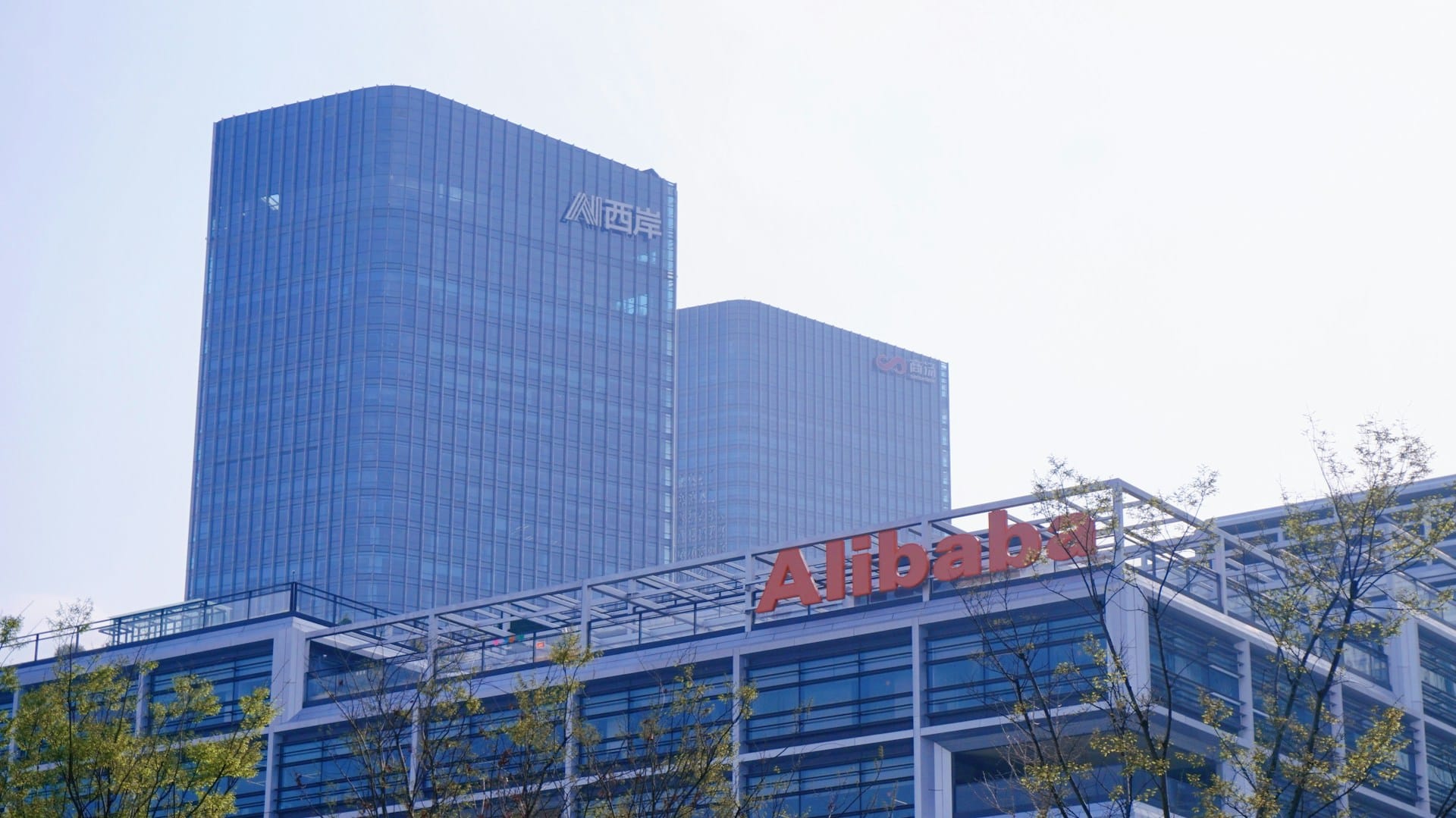
For years, talking about “own” processors in China almost always meant navigating uncomfortable terrain: heavy reliance on foreign licenses, closed ecosystems, and a global supply chain where rules could change overnight. However, as technological tensions have intensified and export controls have tightened, the focus has shifted to a promising alternative: RISC-V, an open architecture that allows designing CPUs without paying royalties for the instruction set.
This promise is not theoretical. In China, it is becoming a strategic direction that links business decisions made over two decades ago with the current moves of major tech groups. And there’s a clear guiding thread in this story: the evolution from C-Sky (C-SKY) to T-Head, Alibaba’s semiconductor subsidiary, which in recent years has aimed to turn CPU design into a national and corporate asset, with particular focus on scalability for AI, edge computing, and embedded systems.
From Local Supplier to a Piece on a Geopolitical Chessboard
C-SKY (with roots dating back to the early 2000s) was, for a long time, a relevant player in embedded CPUs within the Chinese market. Its value was not just “making chips,” but owning the intellectual property of processors, tools, and an installed base in sectors where reliability and cost are as important as performance.
In 2018, Alibaba took a step that is now viewed in a new light: acquired Hangzhou C-SKY Microsystems, in a move announced as strengthening its capabilities and aligned with the goal of technological self-sufficiency. At that time, the international environment was already more hostile to access to key components, and the risk of dependency was seen as a potential brake on industrial growth.
Months later, Alibaba formalized its commitment by creating/registering its chip division associated with DAMO Academy, consolidating the project that would ultimately materialize under the brand T-Head (Pingtouge). The message was clear: the group didn’t want to just buy hardware, but influence the “baseline” of computing.
T-Head and the Commitment to Industrial-Scale RISC-V Cores
With T-Head, Alibaba began promoting a family of RISC-V cores focused on performance, targeting a space traditionally dominated by ARM (in embedded applications) and x86 (in servers). A prominent example was the push for high-performance cores like XuanTie C910, introduced as part of a strategy to bring RISC-V beyond microcontrollers and simple devices.
The key here is not just the “core” itself but the direction: building a coherent technology stack (CPU IP + tools + software support + fabrication partnerships) so that RISC-V stops being just a promising experiment and becomes a production platform. Simultaneously, the Chinese ecosystem has worked to strengthen software compatibility and availability. Initiatives such as public repositories and compatibility projects (for example, work related to Android on RISC-V) signal that the goal is not merely academic.
Why RISC-V Fits China’s Strategy (and Why It’s Not a Magic Bullet)
RISC-V has a clear advantage: it does not depend on a single company owning the ISA, and its governance is structured as an open standard. In a context where licenses, sanctions, or restrictions could block entire technological pathways, having an open ISA reduces structural vulnerabilities.
However, it’s important to distinguish between the headline and the actual work. An open ISA alone does not guarantee:
- Performance competitiveness per watt against mature designs.
- Development tools, debugging, and optimization at levels required by critical sectors.
- Ready-to-deploy software ecosystems for large-scale deployments.
- Manufacturing and packaging capacity without external bottlenecks.
In other words: RISC-V can reduce licensing dependence, but it doesn’t eliminate the need to master design, verification, advanced packaging, memory, and supply chain processes. Nonetheless, the movement is pragmatic: if years of maturation are needed, it’s better to invest them on a foundation that can’t be “closed” from outside.
Export Controls and the “Accelerator” Effect
In recent years, controls on advanced AI chips have acted as a catalyst. When access to cutting-edge GPUs and certain technologies becomes restricted, the incentive to Create domestic alternatives multiplies—even if they aren’t immediately competing at the highest levels. In this context, RISC-V provides a pathway to scale internal capabilities across multiple layers: from microcontrollers and edge to more ambitious processors.
This trend is not limited to companies; there are signs of institutional support for open architectures as tools for technological independence. The combination of external pressure and internal planning is probably the main driver behind current acceleration.
And Now? Rumors of a Spin-Off and Going Public
In this context, it’s particularly noteworthy that Alibaba is linked to plans to spin off T-Head and explore a potential IPO, according to recent reports. If confirmed, this move could be seen as:
- Financial and strategic reorganization: splitting off an R&D-intensive, long-cycle unit to give it independent structure.
- Market signaling: highlighting a technological asset at a time when “sovereignty” and semiconductors are more critical than ever.
- Facilitating partnerships and capital raising: an independent T-Head could partner more freely, without the constraints of being part of Alibaba’s corporate structure.
For now, the key caveat remains: this is based on sources and not necessarily a confirmed, finalized plan. Yet even as a hypothesis, it aligns with the global narrative: chips are no longer just products; they are infrastructure, bargaining power, and national strategy.
What to Watch for in 2026 and Beyond
If the “C-Sky → T-Head” trajectory explains the origin, the future will unfold across three fronts:
- Real product and adoption: volume chips, customers, use cases, costs, reliability.
- Software ecosystem: solid compatibility (toolchains, OS, frameworks) and talent capable of optimization.
- Supply chain: access to packaging, memories, mature and competitive nodes, and logistical resilience.
China appears to have chosen a clear path: reducing single points of dependency in the computing base. RISC-V isn’t a magic wand, but it’s a terrain where sustained investment can translate into tangible technological sovereignty. And the story of T-Head is perhaps the most representative example of that transition.
Frequently Asked Questions
What is RISC-V and why is it considered an “open architecture”?
Because the instruction set architecture (ISA) is an open standard: any company can design compatible processors without paying royalties, encouraging innovation and reducing licensing dependence.
Can RISC-V replace ARM or x86 in computers and servers?
In the long run, it could compete in specific segments, but the main challenge lies in the ecosystem (software, tools, optimization) and industrial maturity. It is progressing faster in embedded and edge applications; in servers, it’s still a long race.
What does China gain by promoting RISC-V over proprietary architectures?
Less exposure to license restrictions and greater ability to develop a local value chain (design, toolchains, products) without relying on external decisions.
What would it mean if T-Head spun off from Alibaba and went public?
It could facilitate financing, partnerships, and strategic focus, as well as “publicize” the value of the semiconductor business as an independent asset in a geopolitically increasingly charged environment.
