
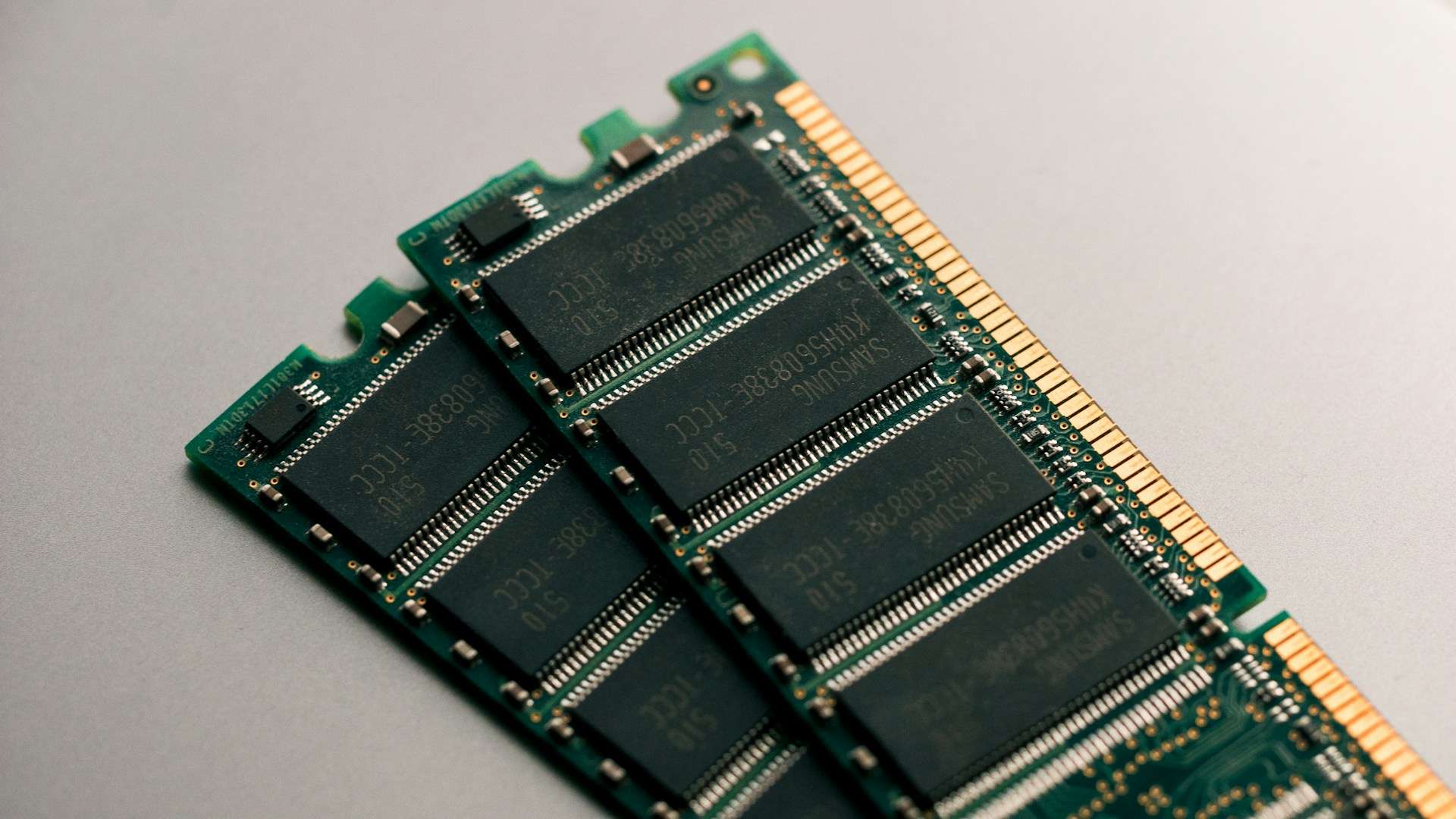
The memory industry is experiencing an unusual moment: while large data centers and artificial intelligence are driving global demand, a player that barely registered in the statistics a few years ago is starting to grow in size and ambition. ChangXin Memory Technologies (CXMT), the leading Chinese manufacturer of DRAM, is ramping up its roadmap to increase capacity, improve technology, and most importantly, establish itself as a real alternative to the historic “Big Three” (Samsung Electronics, SK Hynix, and Micron).
The stakes are high. For decades, the DRAM market has been dominated by a de facto oligopoly, with South Korea and the United States as industrial centers. In 2023, Samsung and SK Hynix, alongside Micron, held practically the entire market, enabling them to set price trends, investment cycles, and technological transitions. However, CXMT’s growth has shifted from being anecdotal to becoming a factor that analysts and manufacturers are watching closely—especially in the “conventional” DRAM segments (DDR4/DDR5), where scale and cost are king.
From irrelevance to fourth place: the “snowball” effect
One of CXMT’s key factors is speed. Founded in 2016 and supported by a national strategy aimed at reducing external dependencies, the company has increased its presence to reach approximately 4–5% of the global DRAM market share, according to estimates published by industry media and analysts. While still small compared to industry leaders, this percentage is enough to establish CXMT as the fourth relevant player and, in certain niches, to pressure margins with a more aggressive pricing policy. Moreover, this growth has a “snowball” component: higher volume reduces costs per unit; lower costs make sourcing more attractive; and these orders justify further investments to continue scaling up.
This phenomenon occurs in a particularly sensitive environment. Memory is a capital-intensive industry with highly cyclical patterns: when a player adds capacity—especially in a context of strong demand (AI, servers, enterprise PCs)—the market fears two simultaneous scenarios: a short-term shortage and high prices, and a medium-term oversupply if everyone invests at once.
Financial leverage: a major IPO to fund capacity and technology
CXMT’s plan to raise funds from the domestic market signals that the movement is serious. Various reports indicate that the company (or its related corporate structure) is preparing an IPO in Shanghai, aiming to raise around 29.5 billion yuan to modernize production lines, enhance technology, and boost R&D—especially as China’s semiconductor “self-sufficiency” narrative gains momentum.
Reuters has recently reported plans for an IPO as early as the first quarter of 2026, with a target raise between 20 billion and 40 billion yuan, and a valuation reaching up to 300 billion yuan (roughly $42 billion USD at the exchange rate used in that report).
In industrial terms, CXMT seeks capital to accelerate the most expensive aspects of memory manufacturing: furnaces, equipment, capacity expansions, and the long path of performance improvements (“yield”) that convert installed capacity into sellable chips with margins.
Capacity: not just building factories, but manufacturing with performance
In memory, the critical question is rarely “How many factories are there?” but rather “How many good chips are produced per wafer?” Current reports depict CXMT as expanding, with estimated monthly capacity around 200,000 wafers in 2024, with expectations of increasing as new equipment is added and processes stabilize.
This nuance is especially relevant for DDR5. Over recent months, contrasting assessments have emerged regarding CXMT’s actual DDR5 maturity: some reports suggest the company has already achieved DDR5 milestones, while more recent information indicates that mass production of DDR5 has been delayed due to quality, thermal stability, and industrial performance issues—obstacles that separate a promising product from a large-scale, competitive offering.
For the global market, this difference matters. If CXMT can achieve “good yields” in DDR5 and scale volume, it could push prices downward in mid-range and entry-level segments, forcing industry leaders to re-balance their product mix (more HBM, more premium products, fewer commodity DRAMs). Conversely, if performance remains elusive, its impact will be more gradual and concentrated in segments where price sensitivity outweighs the latest specifications.
The next leap: HBM and the geopolitical boundary
The focus is shifting from DDR5 to HBM (High Bandwidth Memory), which is critical for AI accelerators. Here, the technological and equipment thresholds are higher, and geopolitical factors come into play: the U.S. has tightened export controls affecting the availability, maintenance, and upgrade of advanced tools in China. Reuters reports that CXMT plans additional investments, including a project related to HBM in Shanghai, with ambitions to reach HBM3 by 2026—though they remain behind the global leaders.
The dual implication: if CXMT reaches sufficient volume in HBM, the power dynamics in AI memory could shift; if not, its primary disruptive capacity will continue to be in conventional DRAM, where it can more quickly influence prices and market share.
“Big Four” or contained pressure? What will decide the outcome
The hypothesis of a “Big Four” in DRAM isn’t far-fetched but also isn’t automatic. For CXMT to break the historical equilibrium, four elements would need to align:
- Capital and sustained investment, even during downturns (memory punishes late investment).
- Stable industrial performance in competitive nodes for DDR5.
- Operational access to tools and technical support under restrictions.
- Sufficient domestic demand to absorb initial volume and fund the learning curve.
Currently, all signs point to a company that is growing, seeking financial muscle, and already on the radar as a genuine competitive threat—though significant technical and geopolitical uncertainties remain. In a market where leaders measure every percentage point of market share as a strategic asset, that 4–5% is no longer noise: it’s a signal.
Frequently Asked Questions
What is CXMT, and why is there so much talk about its expansion in DRAM?
CXMT (ChangXin Memory Technologies) is China’s leading DRAM manufacturer. Its growing market share and plans for financing and investment position it as the fourth player capable of disrupting the traditional balance of the industry.
Could CXMT impact DDR5 memory prices in 2026?
If it stabilizes yields and increases volume, it could put downward pressure on mid- and entry-level prices—especially in cost-sensitive markets. If mass production is delayed, the effect would be more limited and gradual.
What role does HBM memory play here, and why is it more challenging?
HBM is high-bandwidth memory used in AI accelerators. It demands more complex processes and packaging and is often constrained by advanced equipment and trade restrictions, raising barriers to entry.
What risks hinder CXMT despite its growth?
Major risks include difficulties in achieving high yields in advanced technologies, access to equipment under export controls, and market cycles forcing investments just as prices decline.
Source: Jukan on Twitter
