
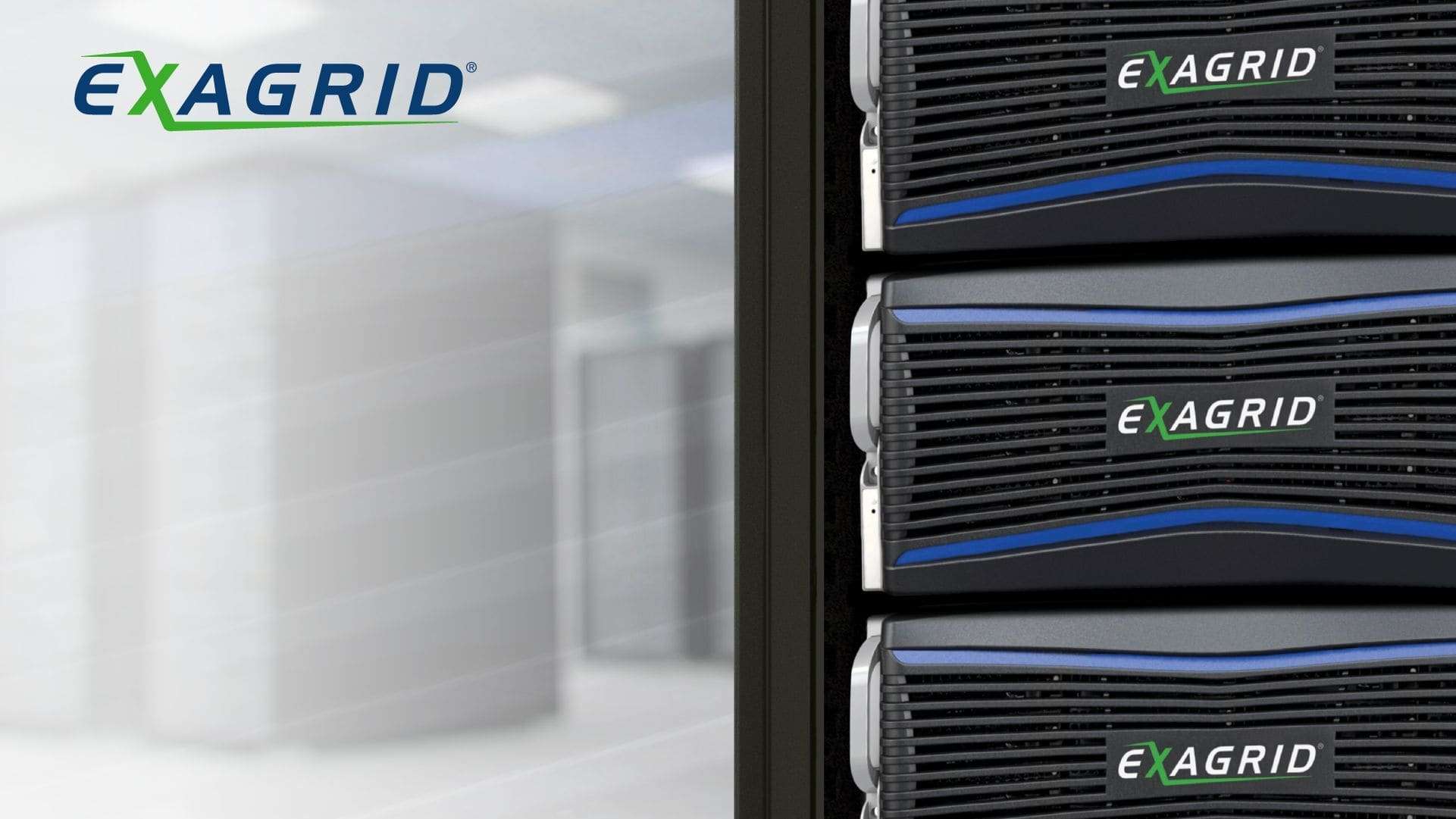
Pressure on backup infrastructures is driven not only by data growth. By 2026, the most influential factor shaping many organizations’ backup strategies will be time: increasingly tight backup windows, urgent restorations, and an inconvenient reality—ransomware. In this context, ExaGrid has announced the release of a new all-flash/SSD backup storage solution based on their Tiered Backup Storage approach, incorporating their latest security and operational telemetry features in ExaGrid software version 8.
What ExaGrid has announced and why it matters
According to the company, the new SSD portfolio maintains the core idea of its architecture: a Landing Zone—a high-performance ingress area for ingesting backups and speeding up restores—combined with a dedicated Repository Tier for retention, where deduplication and protection against tampering come into play. Practically, ExaGrid presents this evolution as a response to two simultaneous demands:
- Performance: faster backups and restores thanks to SSD and an optimized ingestion zone.
- Operational security: robust retention against ransomware, with layers designed to reduce attack surface.
The announcement is significant because it consolidates a trend: backup is no longer “cold storage” but becomes an active business continuity infrastructure. This aligns with cybersecurity guidelines: preparing for ransomware involves, among other measures, having recoverable copies and proven restoration processes.
Key points of the launch
ExaGrid states that its new SSD range comprises four models—EX90-SSD, EX135-SSD, EX270-SSD, and EX540-SSD—and that a scale-out deployment can reach 32 appliances within a single system, scaling to over 17 PB of “full backup” capacity within that federation.
At the same time, the vendor emphasizes the economic argument: after three years of software development (according to the company), the SSD models would require a smaller Landing Zone than their HDD systems, reducing SSD volume needed and improving cost/benefit ratio for backups. This point, as usual in product notes, should be read as commercial positioning: the actual return depends on change patterns, retention policies, deduplication ratios, and the backup software used.
Security: “layered air gap” and immutability
Where ExaGrid aims to differentiate itself is in its ransomware-focused security package, led by its AI-Powered Retention Time-Lock (RTL) (AI-driven temporary retention lock, per the manufacturer). The announcement lists four elements:
- Auto Detect & Guard (anomaly detection with alerts and recovery guarantees, according to the company).
- Unexposed Tier—called tiered air gap, a layer that “does not look” at the network and is designed to hinder attacker access by design).
- Delayed deletes (deferred deletions).
- Immutable objects.
In simpler terms, the logic is clear: if ransomware tries to encrypt or delete the backup, the defense cannot rely solely on credentials. It needs architectural friction (layer separation) and retention rules that cannot easily be altered on the fly.
Integration with the ecosystem: Veeam, Commvault, Rubrik, and more
A recurring challenge in backup storage is true compatibility with tools, workflows, and formats. ExaGrid guarantees support for more than 25 applications and utilities, explicitly listing platforms such as Veeam, Commvault, Rubrik, NetBackup, Cohesity, as well as Oracle RMAN Direct or SQL exports, among others. It also indicates that deduplication can be enabled or disabled for certain vendors (per case) and that its own deduplication can be applied to maximize ratios, maintaining compression when “dedupe-friendly” solutions are used.
For IT teams, this point is more important than it appears: the savings and performance of the repository depend not only on the appliance itself but also on how it “communicates” with backup applications, the deduplication/compression order, and how incremental changes are managed.
Business message: sustained growth and SSD or HDD options
The press release also includes a financial message, typical when a vendor wants to reinforce its resilience: CEO Bill Andrews states that ExaGrid has maintained positive results in P&L, EBITDA, and free cash flow over 20 quarters, and that 2025 was “very successful,” aiming for double-digit growth in 2026.
Beyond the numbers, their commercial approach is pragmatic: ExaGrid does not push for an “all SSD” configuration. Instead, it proposes hybrid scenarios (core sites with SSD, secondary sites with HDD, SSD for production, HDD for disaster recovery) to balance cost, space, power consumption, and performance.
Implications for businesses and government agencies
Practically speaking, this announcement reinforces three key ideas gaining prominence in modern backup management:
- Backup is no longer just retention: it’s about quick and verified restoration.
- Backup security is part of the design: immutability, layered separation, and controls against impulsive deletions.
- Performance becomes strategic: if the window isn’t sufficient, the backup is useless; if restore takes too long, the business suffers.
And although no technology alone can eliminate ransomware, cybersecurity frameworks continue emphasizing the basics: resilience, preparedness, and recovery capability.
Frequently Asked Questions
When does it make sense to choose all-flash backup storage over HDD?
It usually makes sense when the organization has very tight backup windows, frequent restores (e.g., virtualized environments), or demanding RTO requirements. For very long retentions with infrequent access, HDD can still be more cost-effective per TB.
What is a “layered air gap,” and how does it differ from “disconnecting a NAS”?
An layered air gap aims to introduce structural separation within the retention system itself (a layer not exposed to the network), not just operational disconnection. Its goal is to reduce the likelihood that an attacker can reach retention data through the same vectors used against connected systems.
How does this type of appliance integrate with Veeam, Commvault, or Rubrik?
Typically, it’s deployed as a backup destination, with deduplication/compression policies adjusted to avoid double penalties. ExaGrid claims compatibility with over 25 solutions and offers control over deduplication in several of them.
Is immutability alone sufficient to combat ransomware?
No. While immutability prevents alterations to the copy, true resilience depends on design (separation), access controls, monitoring, and regular restore tests.
via: exagrid
