
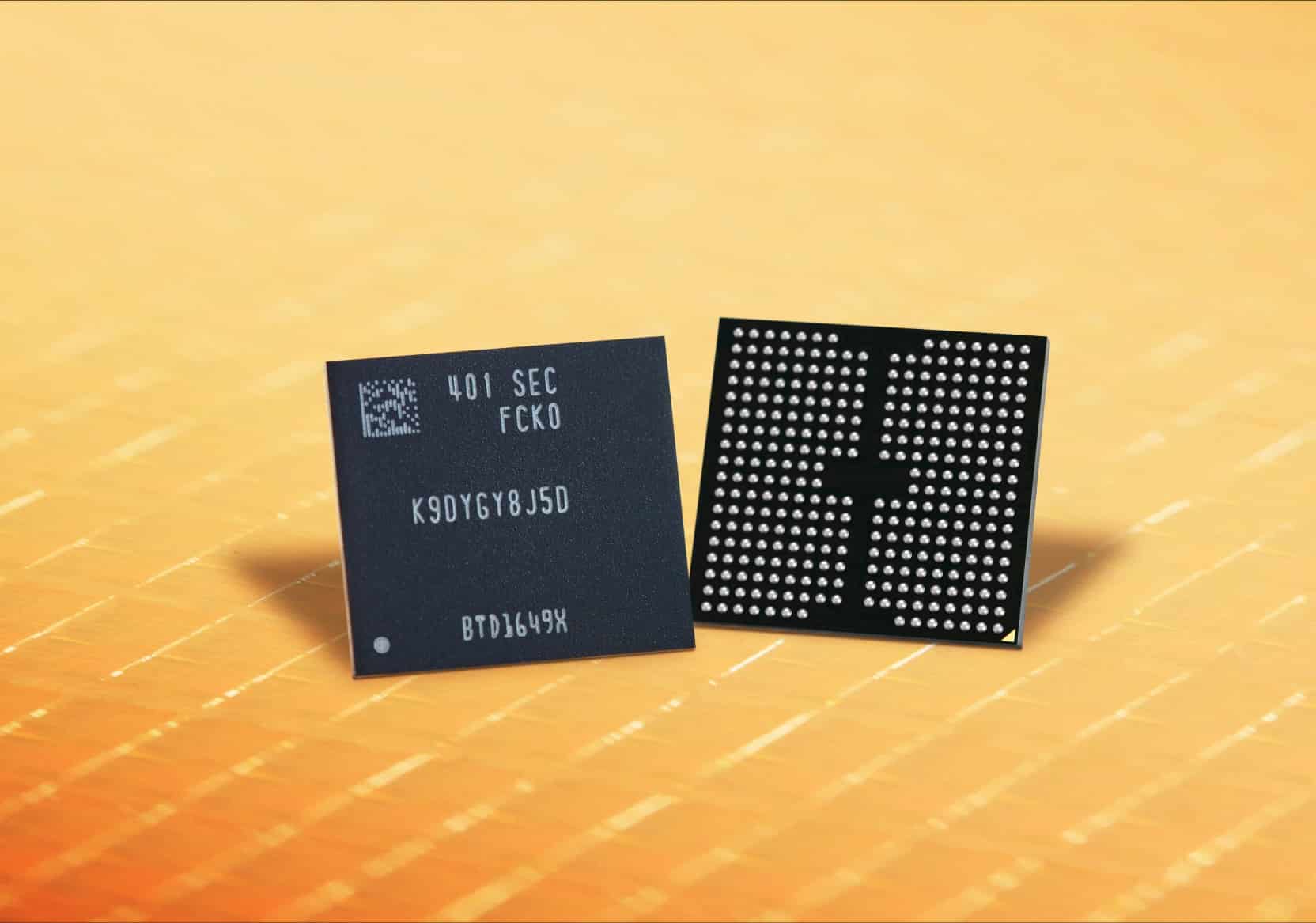
The battle for profitability in the memory business—one of the most sensitive indicators of the tech cycle—is entering an interesting phase. Samsung Electronics is narrowing the margin gap with SK Hynix thanks to a factor that, in recent quarters, had been overshadowed by the spotlight on HBM (high-bandwidth memory): the rebound of “commodity” or traditional DRAM, which supplies mainstream servers, PCs, and a significant portion of cloud infrastructure.
In a market dominated by the AI narrative, HBM has become the crown jewel: high margins, more stable contracts, and demand linked to the widespread deployment of accelerators. SK Hynix has capitalized on this trend with an edge, strengthening its profitability profile in the more premium segment of the business. But when prices for conventional DRAM surge, the playing field shifts: scale once again becomes a weapon, and Samsung plays with a very different hand.
The “Supercycle” of Memory and the Return to Volume
The thesis is straightforward: if the market enters a phase of supply shortage and prices rise sharply, the manufacturer with the highest production capacity and shipment volume usually captures a disproportionate share of the margin rebound. In other words, when standard memory becomes more expensive across the board, the broader “thick” portfolio—less focused on niches—can quickly regain ground.
This pattern aligns with industry observations: the surge in AI demand not only boosts HBM demand but also increases the need for traditional server memory used in inference, databases, caches, backend services, and data center modernization. Additionally, the sector is well aware of an element: when the supply chain is strained, prices tend to move faster than capacity expansion plans.
Samsung Sets the Pace in Profits, with Memory as the Driver
In this context, Samsung projects a quarter-end with record figures: approximately 93 trillion won in revenue and around 20 trillion won in operating profit in Q4 2025, a significant jump compared to the previous year. Although the group is a conglomerate with multiple divisions (mobile, consumer, components), the market interprets the main message once again: memory is contributing substantially to the “push” in results. When prices align, the semiconductor business has the capacity to dominate the entire P&L.
The key, for investors and competitors alike, is not just the fleeting record. It’s what it signals about the cycle: if price increases sustain, Samsung can turn its industrial scale—including periods of dominant HBM—into a profitability accelerator.
SK Hynix: Premium Strength, but Less Exposed to the Conventional DRAM Rally
SK Hynix remains positioned as a reference in AI memory, with high exposure to HBM. This specialization provides a structural advantage in a world where hyperscalers, large tech firms, and model training drive demand for bandwidth.
However, this same concentration can make SK Hynix less benefited by the “price effect” of traditional DRAM during specific quarters: when the market rewards standard memory more due to an offer shock, the manufacturer with a higher proportion of commodity products tends to capture more “beta” of the cycle. In colloquial terms: HBM is a quality business; conventional DRAM, during shortages, can revert to a quantity-focused business with increasing margins.
Q1 2026: The Data Point That Could Shift the Narrative
The start of 2026 appears to be the next catalyst. Market research firms like TrendForce predict a very significant increase in contractual prices for conventional DRAM in Q1 2026, around 55%–60% quarter-over-quarter—a forecast that, if realized, would strengthen the argument that the memory “supercycle” extends beyond the end of 2025.
For Samsung, this scenario fits particularly well: higher prices on a large volume base tend to translate into rapid expansion of operating margins. For SK Hynix, the challenge is twofold: maintaining leadership in HBM (where the market pays for performance and guaranteed supply) without being overly exposed to a rally in traditional memory, which due to mix dynamics favors the competitor more focused on commodity.
Comparative Table: Why the Cycle Might Favor Each
| Factor | Samsung Electronics | SK Hynix |
|---|---|---|
| Exposure to “commodity” DRAM | High (scale and volume) | Lower (more premium mix) |
| Exposure to HBM | Significant but not dominant in the mix | Very high; recent profit pillar |
| Sensitivity to increases in standard DRAM prices | High (volume leverage) | More limited comparatively |
| Short-term market outlook | “Cycle recovery + scale” | “Mix quality + AI leadership” |
| Main risk | Dependent on price cycle | Maintaining HBM advantage and capturing commodity cycle |
Underlying Battle: Profitability Leadership, Not Just Market Share
The question isn’t who sells more memory—Samsung has a historical advantage there—but who maximizes profitability during the critical phase of the cycle. In a market where HBM has become a symbol of the AI era, SK Hynix has succeeded in “redefining” its margin profile. Yet, the memory market is inherently cyclical, and when the pendulum swings back toward traditional DRAM, Samsung can quickly close the gap.
If the price rally forecasted for early 2026 comes to pass, the first quarter could become the turning point: shifting the conversation from “who dominates HBM” to “who captures more total profit in memory” as the entire complex rises.
Frequently Asked Questions
Why can “commodity” DRAM impact Samsung’s profitability so much?
Because Samsung operates with very high production and shipment volumes in standard memory. When contractual prices rise, that volume amplifies the effect on overall margins, making it especially visible.
What’s the difference between HBM and conventional DRAM in terms of business?
HBM is aimed at AI accelerators and high-performance systems, with more premium prices and margins. Conventional DRAM is more mass-market (general server, PCs), and its profitability often depends more on supply/demand cycles.
What does “supercycle” refer to in memory, and why is it discussed for 2026?
It describes an extended period of strong demand and rising prices, typically driven by structural shifts (AI, cloud, data center modernization) rather than a short-term peak.
What should investors focus on in upcoming results?
The mix (HBM vs. commodity), evolution of contractual prices, demand guidance for 2026, and any signals about capacity constraints, bottlenecks, and large customer agreements.
Source: Jukan
