
NVIDIA wants its role in the AI Era to go beyond data centers. After years dominating training and inference on high-performance infrastructures, the company is accelerating its entry into the “client”: PCs, edge devices, and especially laptops with Windows on Arm (WoA). A supply chain report now points to a commercial debut of systems based on the N1X platform in the first quarter of 2026, with a subsequent transition to a next-generation N2/N2X in 2027.
The strategic key is clear: if NVIDIA manages to “break into” high-end Windows laptops with its own platform (and an ecosystem of component validation that reduces friction for manufacturers), it would directly challenge the x86 duopoly of Intel and AMD at a time when PCs are reconfiguring around local AI workloads.
From DGX Spark to the laptop: the bridge already exists
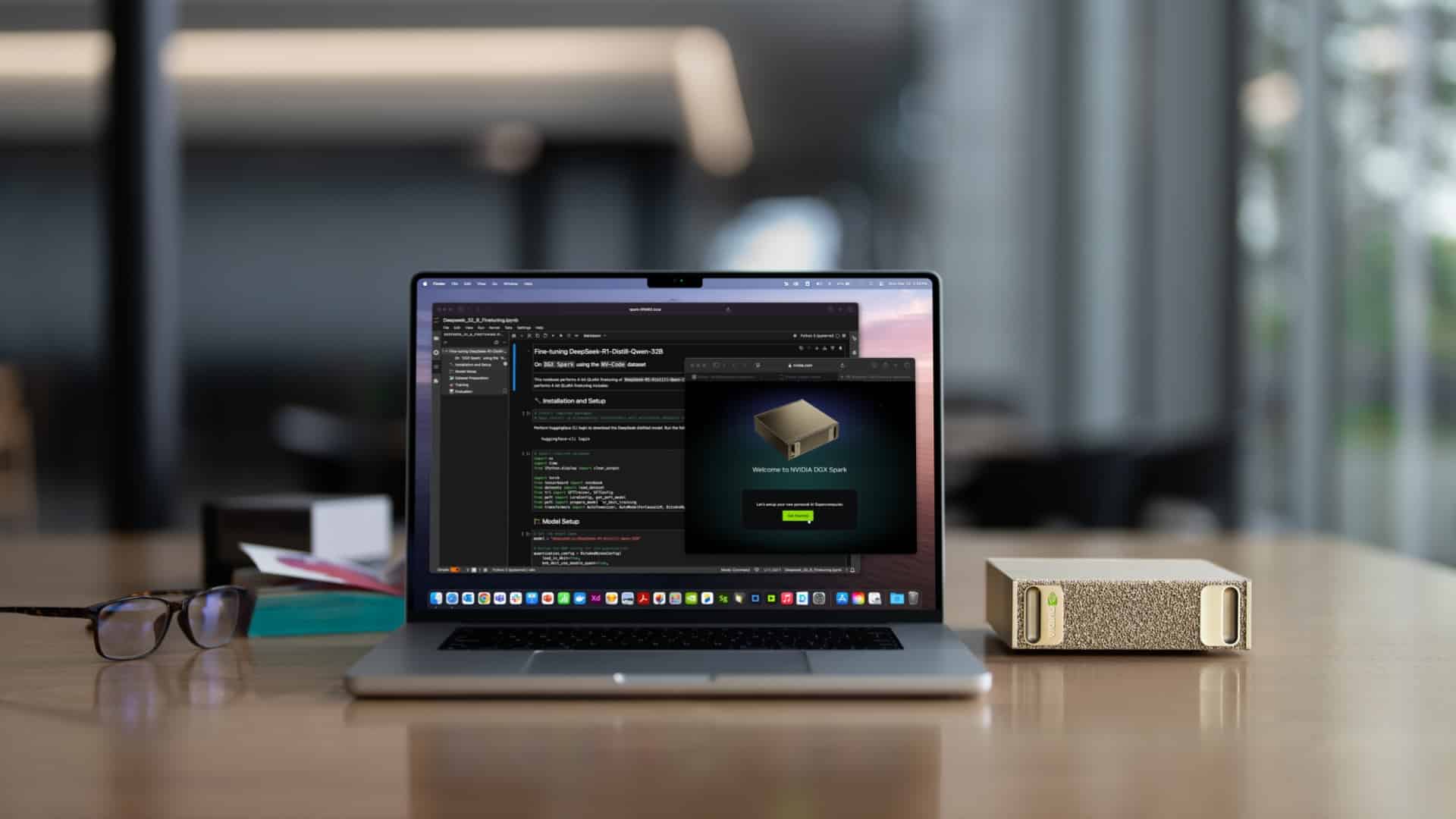
NVIDIA’s “AI PC” push isn’t starting from zero. The most visible example is DGX Spark, a compact system aimed at developers and local model creation, based on the GB10 Grace Blackwell Superchip. It is designed as a “personal station” for AI. It has been announced to be available from October 15, 2025, with 128 GB of unified memory and a performance ceiling of up to 1 PFLOP (according to metrics and conditions published by specialized media), plus the capacity to work with models up to 200 billion parameters locally.
This point is relevant for two reasons:
- It marks a clear line: NVIDIA aims to bring its stack (software, drivers, frameworks, and acceleration know-how) to personal and edge environments, not just racks.
- Activates OEMs: DGX Spark has been referenced by manufacturers like Acer, ASUS, Dell, GigaByte, HP, Lenovo, and MSI among the systems announced by the industry.
The implicit takeaway is simple: if the “AI desktop” already has a narrative and a channel, the next logical step is the laptop.
A debut in 2026… with nuances: Windows timeline and stack maturity
Rumors about N1X laptops have been circulating for some time, but the market has seen delays and silence (including a CES without a definitive N1X laptop announcement). Part of this friction aligns with multiple leaks indicating: silicon adjustments, commercial decisions, and especially the software timing.
According to reports from specialized press, the delay is related to Microsoft’s evolving schedule and the need to align firmware, drivers, and WoA experience to a competitive high-end level.
Meanwhile, additional hints have appeared: a leak from manifests/logistics pointed to engineering samples N1X ES2, suggesting active hardware iteration.
NVIDIA aims to change the PC ecosystem “manual”: from PCL to AVL/RVL lists
One of the most interesting details from the supply chain report isn’t just the date, but the scaling model. Intel has relied for decades on a highly structured ecosystem (component lists, validation, and compatibility across platforms). The leak suggests NVIDIA might start with a more guided adoption based on reference designs and engineering support for OEM/ODMs, before introducing a list system:
- AVL (Approved Vendor List): fully validated suppliers by NVIDIA.
- RVL (Recommended Vendor List): recommended suppliers that meet specifications but with less extensive validation.
The intention appears clear: accelerate the time-to-market for laptops and reduce integration costs for manufacturers, without replicating the organizational weight of Intel’s traditional approach.
Table: what’s known (and what’s not) about the N1/N1X → N2/N2X plan
Editorial note: the following table separates what is publicly confirmed (e.g., DGX Spark and its positioning) from what is reported via leaks/supply chain (laptop dates and N2 generations). Where there is no official confirmation, it is explicitly stated.
| Element | Status | Time Frame | Focus | Main Points |
|---|---|---|---|---|
| DGX Spark (GB10) | Available/announced for sale | From 10/15/2025 | Compact desktop for local AI | 128 GB unified; up to 1 PFLOP (per media); models up to 200 billion parameters |
| Laptops with WoA featuring N1X | Reported (supply chain) | Q1 2026 | Consumer/high-end market | Delays linked to software/iteration; signs of N1X ES2 |
| Additional WoA variants (N1/N1X) | Reported | 2026 (Q2 via leaks) | Market segmentation by power/segment | Public differentiation isn’t always clear (per reports) |
| Next generation N2/N2X | Reported | 2027 | Generational replacement | Potential transition mentioned in leaked roadmap for 2027 |
| AVL/RVL model | Reported | From upcoming wave | ecosystem/validation | Goal: accelerate OEM/ODM adoption (not officially confirmed) |
The geopolitical and “cross-competition” dimension: Intel is also in play
The story gets even more interesting when crossed with another fact: NVIDIA and Intel have been linked in discussions of collaboration in platform areas. Reuters reported plans by NVIDIA to invest in Intel and possible lines of cooperation.
This adds a nuanced layer: NVIDIA may compete against x86 in certain areas (WoA laptops) while collaborating in others to secure supplies, packaging, or critical components. The practical outcome is that the PC market is entering a phase where alliances are no longer binary: competition in one layer, cooperation in another.
Implications for companies and IT
If WoA laptops with N1X arrive in 2026 with a solid experience, the impact will go beyond just “another chip”. For corporate environments and IT teams, the questions will be:
- Standardization: To what extent does WoA become a “no-excuse” option for fleets?
- Compatibility: drivers, security, management tools, EDR, encryption, legacy apps, local virtualization.
- AI at the endpoint: local inference, privacy, latency, costs (less reliance on cloud for specific tasks).
- Efficiency and TCO: autonomy, sustained performance, real operational costs in mixed workloads.
In short: this isn’t just about isolated benchmarks but about ecosystem and experience.
Frequently Asked Questions
What is Windows on Arm (WoA) and why does it matter for professional laptops?
It’s the Windows edition optimized for ARM processors. It matters because it promises energy efficiency and performance per watt, but its adoption depends on application, driver, and corporate tool compatibility.
What differences might there be between N1 and N1X in laptops?
According to reports, N1X is expected to be a higher-performance variant (more resources and targeting “high-end”), while N1 would cover lower tiers. The exact segmentation is not officially confirmed.
Is DGX Spark a “consumer PC” or a developer station?
It is primarily aimed at development and local AI workloads (stack and tooling), positioned as a “personal AI supercomputer” in a compact format.
What would need to happen for WoA to become widely adopted in enterprises?
Three factors: enterprise software compatibility (including legacy apps), maturity of drivers/peripherals, and a management/security model comparable to x86 deployments at scale.
Information via Jukan on Twitter.
