

Apple Silicon earned its reputation on a simple promise: strong performance with unusually high power efficiency—especially in laptops. But a discussion on Reddit is reigniting a familiar debate in the MacBook Pro community: what happens when you push these chips hard for sustained, real-world creative workloads?
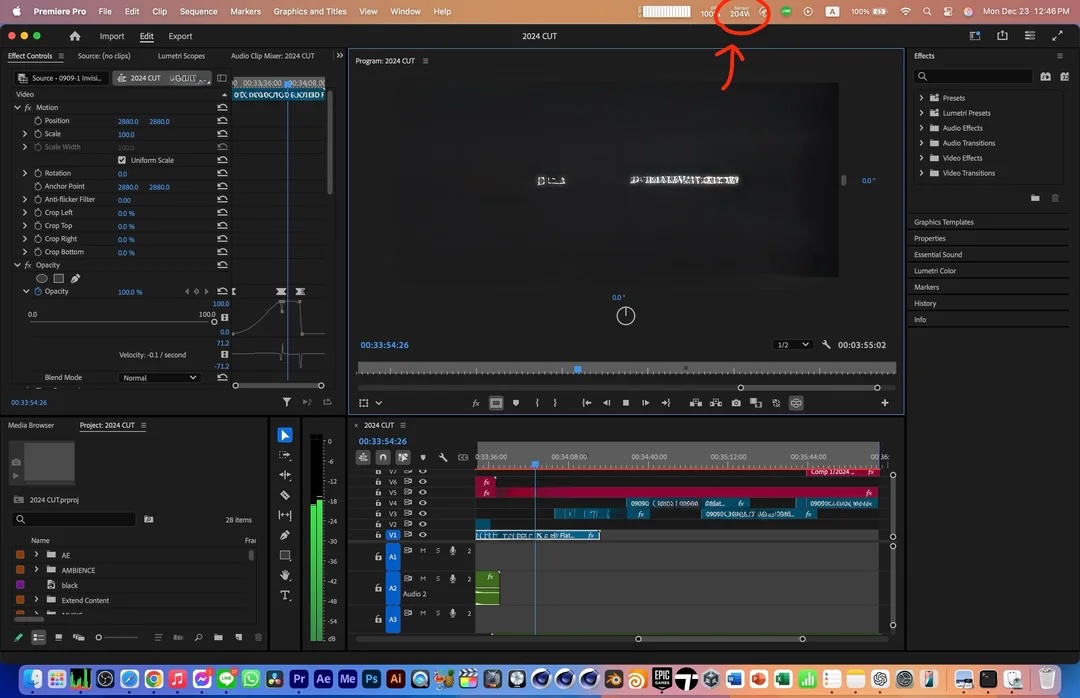
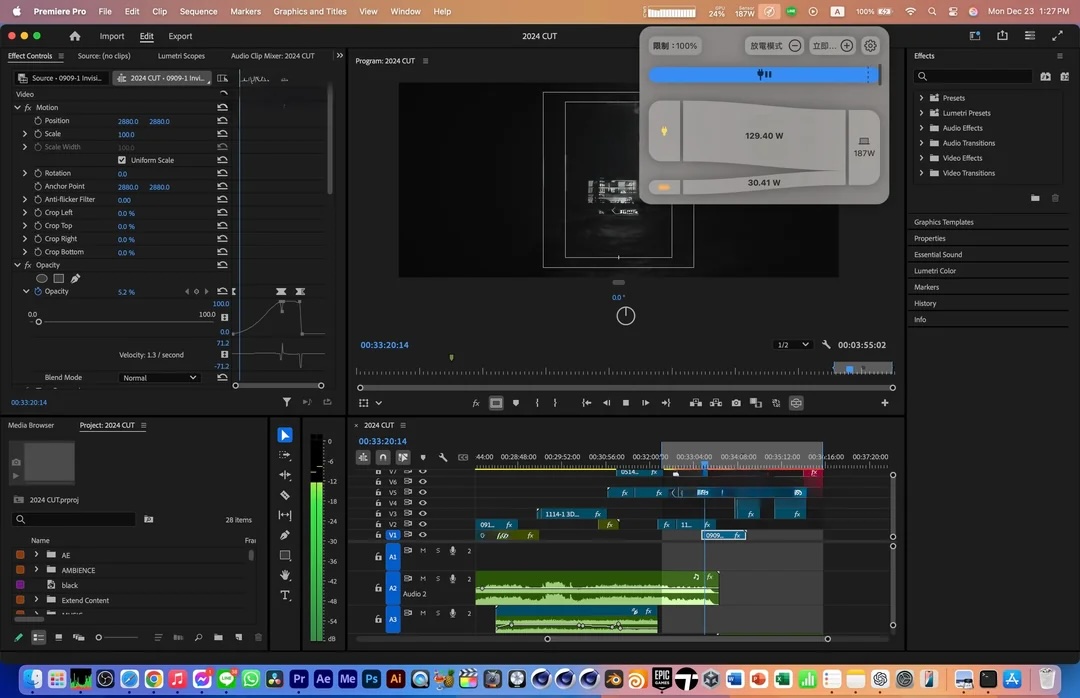
A Reddit user posting under the handle “MarionberryDear6170” shared updated readings showing an M4 Max MacBook Pro briefly peaking at around 212 W of total system power draw while editing a demanding Adobe Premiere Pro project with numerous effects and After Effects (AE) integrations. In subsequent attempts to capture the behavior on-screen, the user reported additional high readings around 187 W and 202 W, noting that the menu-bar utilities used (AlDente and Stats) do not always update in real time—so the true peak can be easy to miss.
Not Just a Benchmark: A “Creator Workload” Spike
What stands out in this case is that the load described isn’t a synthetic stress test. It’s the kind of workflow many professional editors actually run: a heavy timeline, stacked effects, and cross-app integrations. The user’s concern is less about the existence of spikes (which are normal in modern SoCs) and more about what those spikes imply for thermal behavior, throttling, and battery charging headroom when the system demand exceeds the 140 W power adapter rating.
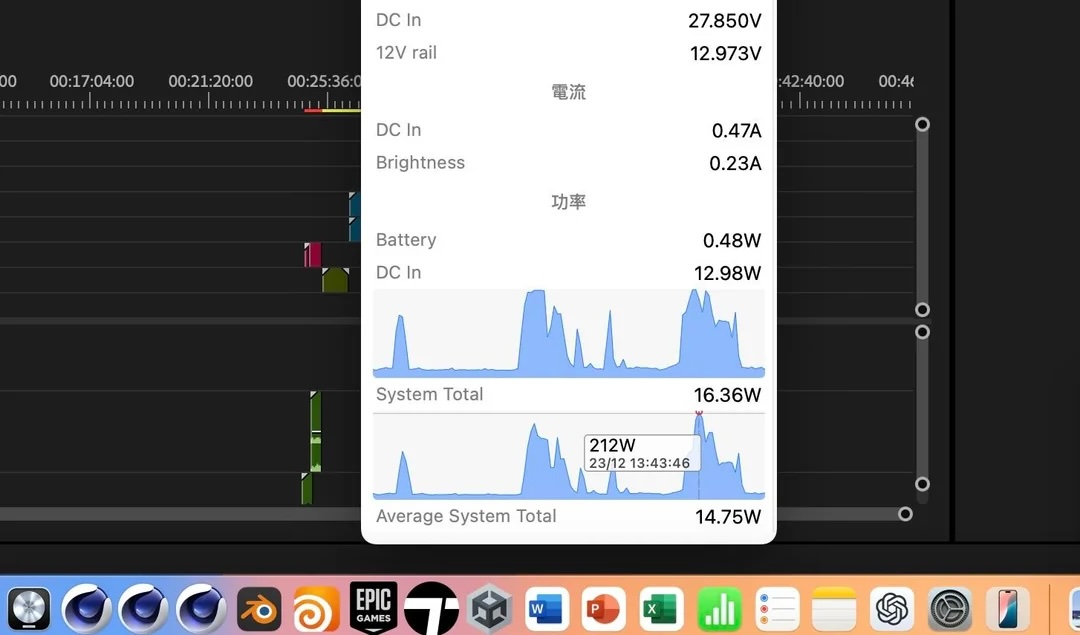
In the same thread, the user said they were continuing to test whether the battery percentage drops even with the 140 W charger connected—an issue that can occur on high-performance laptops when peak draw temporarily outpaces the adapter.
Temperatures Reportedly Hit 110°C
Alongside power readings, the user claimed CPU and GPU temperatures often climbed to around 110°C during these heavy sessions, while also noting that the chassis itself did not feel noticeably hotter than an earlier M1 Max system. They added they were using High Power Mode, with fans reaching up to roughly 5,800 RPM, and that throttling still appeared inevitable even at maximum fan speeds.
Other commenters pushed back on the idea that this is uniquely alarming—arguing that if there’s sufficient thermal and power headroom, any high-end chip will climb toward its limits under sustained load. One commenter asked for a more user-selectable “balanced mode” that would cap clocks or tighten temperature targets (distinct from Apple’s existing “Automatic” behavior), reflecting an ongoing desire for more explicit performance/power controls.
Why This Matters for the Next Generation
Separate from the Reddit discussion, some reports indicate Apple is actively developing Macs with next-generation silicon (including systems based on M5 and future M6-class chips). If Apple keeps the same basic thermal design in upcoming MacBook Pro revisions, the community question becomes straightforward: will performance scaling increasingly rely on higher power envelopes and hotter hotspots under sustained creator workloads?
It is worth emphasizing that the Reddit readings describe one user’s measurements and may reflect variables like ambient temperature, workload specifics, sensor interpretation, and software reporting. Still, the thread captures a broader shift in perception: Apple Silicon can be extremely efficient at many everyday tasks—but under prolonged, high-intensity professional loads, efficiency doesn’t eliminate physics. The system will consume what it needs to maintain performance until it reaches thermal or power constraints, at which point it will manage temperatures via fan curves and throttling.
If these peak numbers become more common in top-end configurations, the “MacBook equals quiet efficiency” narrative may increasingly depend on how often a user hits those sustained extremes—not whether the extremes exist.
source: Reddit.
