
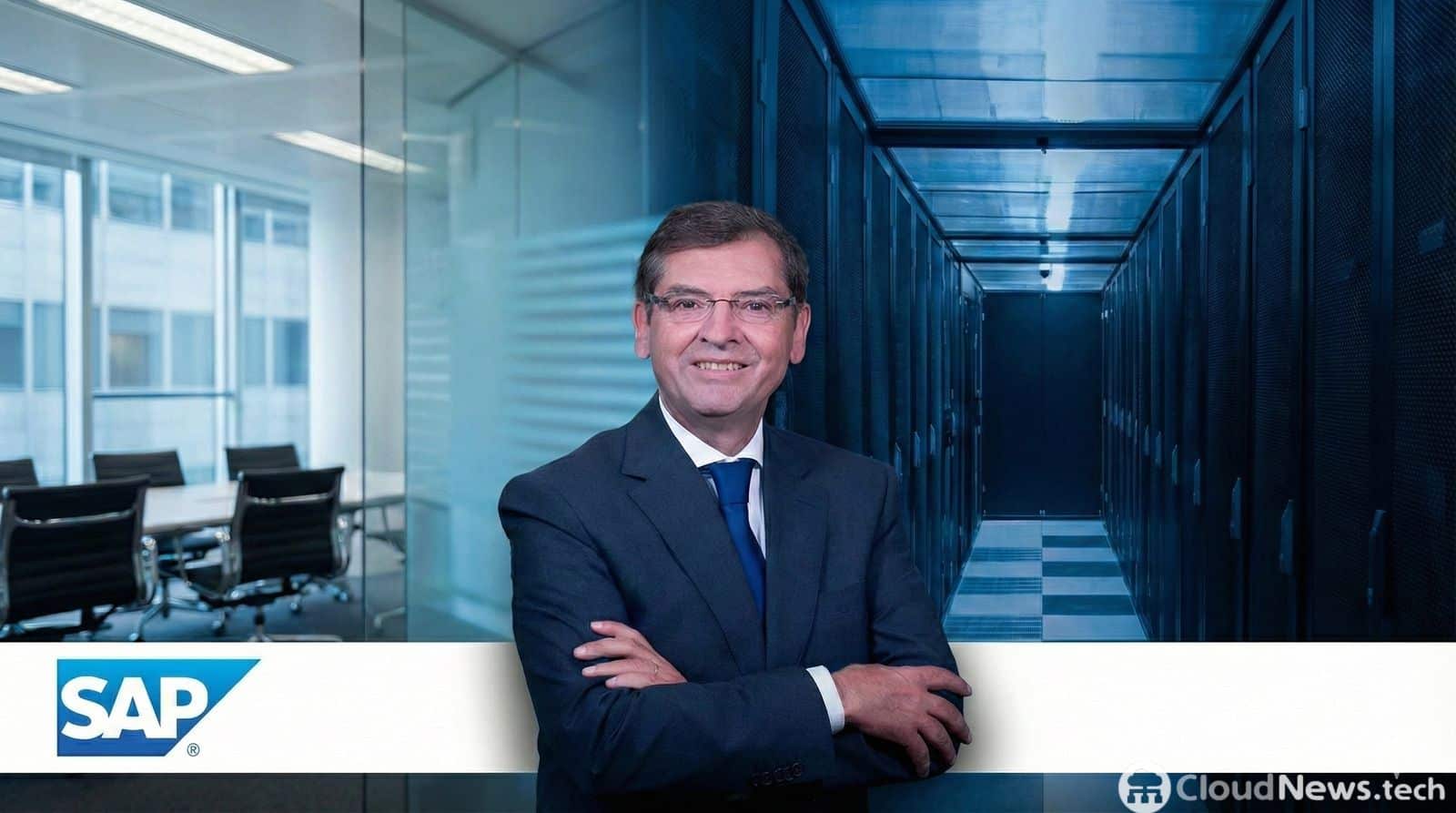
SAP has decided to reshuffle its leadership structure in Spain in a move aimed at strengthening its growth strategy in a market the company considers key within Southern Europe. According to the multinational, Carlos Lacerda will expand his responsibilities to lead SAP’s business in Spain, a role he will combine with his current position as Senior Vice President and General Manager for Southern Europe, a region that includes Greece, Israel, Portugal, Turkey, Cyprus, Malta, and Spain.
The change comes alongside another significant shift: José Vallés, until now General Manager of SAP Spain, embarks on a new professional chapter. The company has not specified Vallés’s next destination nor the transition timeline, but the announcement clearly marks the beginning of a new cycle within the Spanish subsidiary, at a time when demand for technological modernization across companies is accelerating rapidly.
A “dual” leadership for a strategic market
SAP’s decision to place Spain under Lacerda’s leadership, without disconnecting it from his regional responsibilities, reflects an intent to ensure coherent execution of the strategy across Southern Europe. Practically, this type of structure aims to align commercial priorities, delivery capabilities, and partner ecosystems among countries with similar realities: a business fabric with a strong presence of SMBs and mid-market companies, highly internationalized large corporations, and a public administration with increasing digitalization needs.
In his new role, Lacerda will be responsible for driving growth strategy, accelerating digital transformation for clients, and strengthening the partner ecosystem in Spain. This last point is significant: within SAP’s model, channel partners and technology partners are often crucial for scaling complex projects, deploying solutions, and supporting adoption through consulting, migration, integration, and operations services.
Executive profile: multinational experience and cross-sector perspective
Lacerda arrives in Spain’s leadership team with a distinctly international profile and extensive experience. SAP highlights that he has over 25 years of professional and managerial experience across multiple regions, along with work in diverse sectors such as aerospace, pharmaceuticals, and technology.
His background includes leadership roles at Microsoft, with responsibilities in EMEA and Asia, as well as positions such as CEO of ANA, the Portuguese airport management company, and at the pharmaceutical company Farminveste. SAP also emphasizes his role in promoting the ERP cloud strategy and adoption within SAP EMEA South, an area that has become the backbone of modernization efforts for many organizations migrating from traditional environments to more agile cloud models in recent years.
This blend—combining technology expertise with operational and business management in regulated and critical sectors—is especially relevant currently, as clients are no longer just seeking “software,” but execution capacity, risk control, service continuity, and measurable results in key processes such as finance, procurement, supply chain, and HR.
Internal and external messaging: growth, partners, and artificial intelligence
The revamped structure is supported by a clear message from regional leadership. Lacerda will report directly to Augusta Spinelli, President for Europe, Middle East, and Africa. Spinelli has indicated that he has a “solid track record” in Southern Europe and deep knowledge of the Spanish market, which will be “fundamental” for advancing the growth strategy.
Alongside, Lacerda frames the current moment as a significant technological transition, where artificial intelligence is reshaping priorities and opportunities. In his statements, he affirms that his main focus will be assisting Spanish companies in their AI evolution to remain resilient and competitive, relying on a solid partner ecosystem and a committed team, with the goal of achieving sustainable growth and strengthening SAP’s position as a leader in business transformation and innovation.
Although the announcement centers on leadership change, the subtext is clear: SAP aims to reinforce its role at the most critical layer of organizations—the interface between business processes and technology—especially as companies now seek automation, efficiency, and decision-making based on data, with AI as a key catalyst.
What clients and partners in Spain can expect
In the short term, such announcements typically translate into operational continuity and a more focused approach rather than a sudden directional shift. The emphasized themes of growth, digital transformation, and partners suggest an agenda prioritizing project acceleration, minimizing adoption friction, and enhancing client support.
For the partner ecosystem, this message is particularly relevant: SAP is signaling that Spain is not just another “market” within regional structures, but a territory where strategic rhythm and clarity are being actively driven. For user organizations, it generally indicates that SAP intends to increase its presence in modernization conversations, especially regarding platform decisions and where AI and automation have direct impacts on productivity and competitiveness.
Frequently Asked Questions
What does it mean that the General Manager for Southern Europe also assumes leadership of SAP Spain?
This usually indicates a move to align strategy and execution across regional countries, giving more weight to priority markets and speeding up decision-making for both clients and partners regarding business and transformation initiatives.
Does this change anything for companies already clients of SAP in Spain?
Typically, there are no immediate changes to contracts or support. The impact is usually seen in investment priorities, adoption programs, project pace, and coordination with partners to speed up deployments and modernization efforts.
Why does SAP place such emphasis on partners in this kind of announcement?
Because much of the deployment, integration, migration, and operation of enterprise solutions is carried out through partners. A strong partner ecosystem is essential to scale capabilities, reach more sectors, and reduce implementation timelines.
What is the connection between this leadership change and AI adoption in Spanish companies?
SAP links the leadership to driving the evolution towards AI as a lever for resilience and competitiveness. In practice, AI is incorporated when processes and data are modernized; thus, the focus on digital transformation often goes hand-in-hand with AI-driven strategies in enterprise settings.
via: news.sap
