
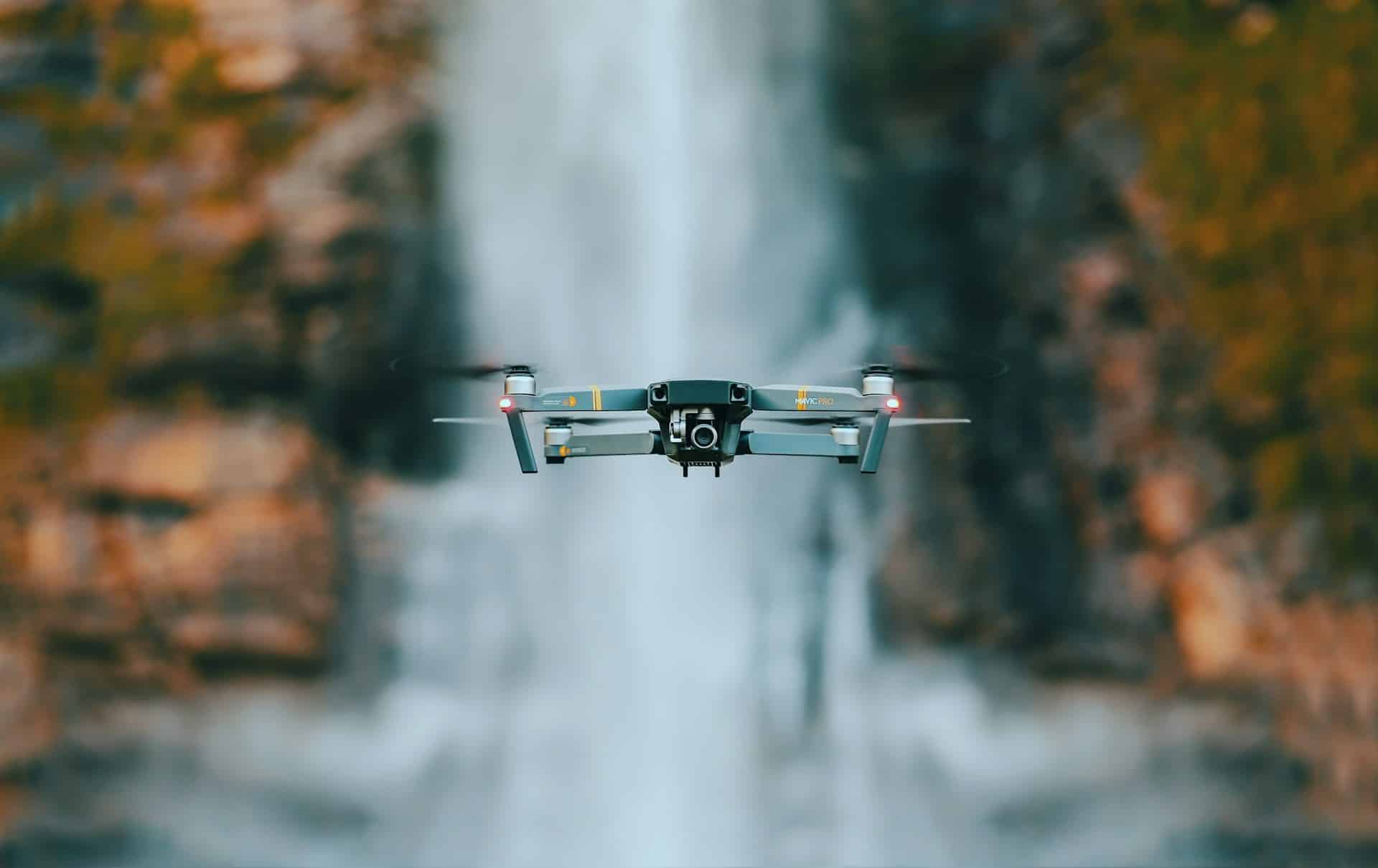
The ongoing technological tension between the United States and China is once again playing out in an unexpected battleground: civilian drones and their components. In recent weeks, Washington has sent mixed signals: on one hand, the Commerce Department withdrew a proposal that would have further tightened restrictions on importing Chinese-made drones; on the other, the Federal Communications Commission (FCC) maintains a regulatory pathway that, in practice, limits the entry of new models and certain critical components associated with foreign manufacturers, with a particular focus on Chinese companies like DJI and Autel.
The result is a confusing landscape for the market—especially delicate for sectors that rely on drones daily, such as precision agriculture, industrial inspection, or emergency services. Simultaneously, for Taiwan’s tech industry, particularly manufacturers of IPC (Industrial PC) and embedded electronics, the US shift tends to be seen as a relevant background noise with limited direct impact: not because the drone market doesn’t matter, but because their core business is often more diversified and demand shifts rather than disappears.
What has changed (and what hasn’t): two different levers in Washington
The key to understanding this story is that it’s not about a single measure, but about layered regulations involving different actors:
- U.S. Department of Commerce: has withdrawn a regulatory proposal that, if approved, could have restricted or blocked imports of Chinese drones on national security grounds. This retreat reduces the risk of a full-scale “shutdown” through trade measures, at least in the short term.
- FCC: maintains a framework affecting the authorization of new models and certain radio frequency components, by adding drones and parts to the so-called Covered List (a list of equipment considered a threat to national security). This doesn’t mean all existing drones are immediately “shut down,” but it complicates—and increases the cost of—the renewal of fleets and the entry of new hardware.
Quick overview: regulatory landscape status
| Measure / Agency | What it affects | Practical impact | As of January 2026 |
|---|---|---|---|
| Withdrawal of proposal (Dept. of Commerce) | Chinese-made drone imports | Reduces the likelihood of broad trade veto | Proposal withdrawn |
| Covered List (FCC) | New models and certain “critical” components | Blocks or complicates the entry of new products requiring approval | In effect |
| Temporary exemptions (FCC) | Specific drones and components | Allows selective imports until the end of 2026 (with nuances) | Announced |
The nuance that changes everything: “new models” and temporary exemptions
One of the most significant elements is that the impact is not retroactive to everything already deployed. According to the approach described by the FCC and reported by various media outlets, the most visible effect centers on new models and certain components that require regulatory approval pathways.
Additionally, exemptions have been considered for a list of drones and components during a temporary period (until the end of 2026, according to published information). This aims to avoid an immediate “shutdown” in applications where the domestic US supply cannot meet demand quickly. In other words, the political goal of reducing dependence remains, but it’s recognized that the transition cannot happen overnight without operational friction.
Why the impact on Taiwan’s IPC sector is considered “limited”
The relationship between drones and IPC (industrial computers and embedded modules) exists but is rarely linear. IPCs appear in drones, base stations, controllers, payloads, vision systems, and robotic and UAV integration equipment. However, for many Taiwanese manufacturers, the IPC business is often divided among industrial automation, transportation, energy, retail, healthcare, defense, and increasingly, robotics.
In this context, the Commerce Department’s setback can be seen as straightforward for Taiwan: reduces the risk of an immediate shock, but doesn’t eliminate the underlying strategic trend in the U.S. (less Chinese hardware in critical supply chains). Put simply, it changes the pace but not the direction.
Another factor softening the blow is that part of Taiwan’s IPC industry has targeted sectors with structural demand, such as defense/aerospace and UAV platforms, where purchase cycles depend less on “consumer” drones and more on integrators, certifications, and long-term contracts. In such cases, restrictions on DJI or other Chinese manufacturers tend to rearrange suppliers rather than wipe out budgets.
Collateral effect: uncertainty for operators and public procurement
The most clear impact is on fleet planning. When regulation affects the entry of “new models,” operators start to consider:
- availability of spare parts and components,
- fleet renewal (capital expenditure) versus maintenance (operational expenditure),
- software and firmware compatibility,
- the risk of being stuck with an installed base that can’t grow normally.
In sectors like emergency response and public safety, the debate becomes even more sensitive—not just because of costs but due to operational continuity. That’s why exemptions and nuances have appeared, and why the withdrawal of the Commerce proposal is seen as a way to “buy time.”
A reconfiguring market that doesn’t stop
An important takeaway from this regulatory sequence is that the U.S. drone market isn’t slowing down; it’s reconfiguring. This reconfiguration tends to push integrators and manufacturers toward:
- more auditable supply chains,
- greater emphasis on “non-Chinese” components in sensitive systems,
- and, likely, a relative increase in costs for certain categories in the near term.
For Taiwan, this usually means a mixed scenario: less dependence on a single end client, more substitution opportunities, and at the same time, a geopolitical environment that demands cautious navigation.
Frequently Asked Questions
What does it mean if a drone or component is on the FCC’s “Covered List”?
It may have its regulatory approval for entry blocked or restricted, especially if it requires certifications related to wireless communications. The practical effect mainly impacts the marketing of new products—not necessarily the already deployed ones.
Does this affect already purchased or used drones?
The described approaches primarily focus on new models and future imports. However, availability of spare parts, fleet expansion, and new purchases could still be affected.
Why isn’t Taiwan’s IPC sector directly hit?
Because IPCs are sold across multiple verticals (automation, transportation, defense, robotics), and the drone market is just one part of the mix. Moreover, when restrictions target Chinese manufacturers, some demand shifts to other integrators who can continue using Taiwanese electronics.
What should European companies operating with drones or in the global supply chain monitor?
Component traceability (especially communication modules), the risk of parts substitution, and evolving lists and exemptions. Although regulations are U.S.-focused, they can influence global availability and prices for certain SKUs.
via: Digitimes
