
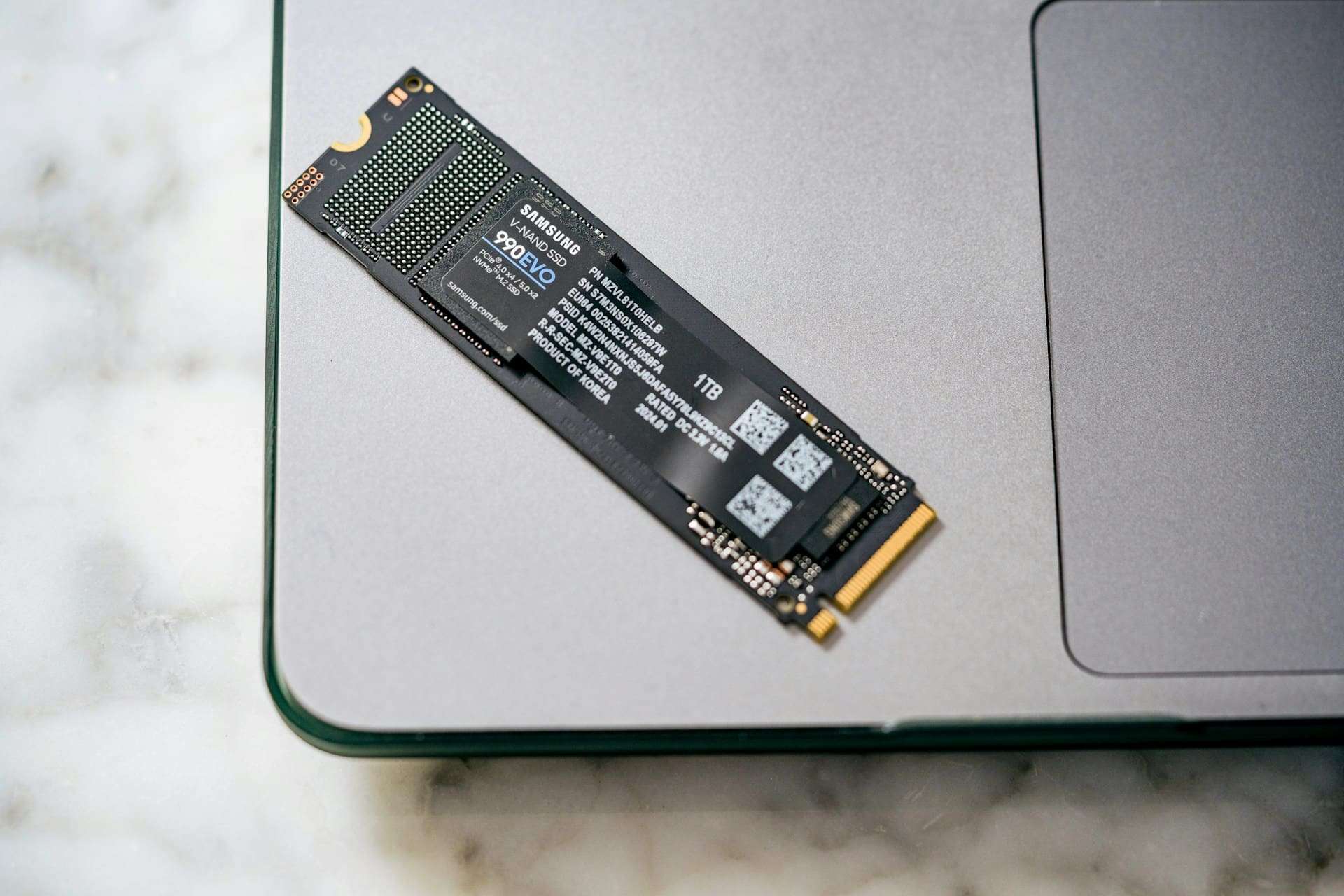
Building a “normal” PC in 2026 is becoming a resigned exercise for the average user. For years, the market assumed that memory and storage would follow the usual pattern: more capacity, greater efficiency, and falling prices. However, early 2026 is breaking that logic with sharp increases in the most common components: DDR5 RAM, NVMe SSDs, and mechanical hard drives (HDDs). Several industry analyses point to a fundamental reason: the rise of artificial intelligence is straining supply chains and reshuffling industrial priorities, with data center clients gaining ground over consumer markets.
The most repeated indicator these weeks is the price tracking published in Germany by ComputerBase, which compares a dozen “mainstream” products (the most viewed in its comparator) and removes distortions caused by opportunistic sellers affecting market perception. The result is clear: DDR5 memory has increased on average by about 344% compared to September 2025, with extreme cases nearly or exceeding 440% for 32 GB kits. Meanwhile, HDDs have risen around 46% on average, and SSDs about 74%, with several models doubling in price within just a few months.
DDR5: from routine purchase to a “premium” component unexpectedly
DDR5 RAM is the most visible symbol of this phase shift. In practice, kits that until recently were bought “without a second thought” are now decisions that are postponed or reconsidered, especially in mid-range offerings. The jump is not due to a sudden product improvement but to a market where supply cannot keep up with a structurally higher (and more concentrated among wealthier clients) demand.
ComputerBase’s analysis highlights significant price hikes: a 32 GB Crucial Pro Overclocking kit moved from €83.69 (September 2025) to €473.89 in mid-January 2026 (+466.24%). Similarly, a 32 GB TeamGroup T-Create Expert went from €99.89 to €546.00 (+446.60%). Additionally, the report notes a factor adding noise: the appearance of small sellers on marketplaces with “strange” prices, a dynamic consistent with stockpiling for resale at higher prices (the so-called “scalpers”), which makes it necessary to filter data to distinguish real trends from anomalies.
HDD and SSD: the other side of the crisis is storage
Unlike RAM, HDDs do not show extreme multiples but do exhibit persistent price increases that break stability expectations. Tom’s Hardware, following the same research as ComputerBase and contrasting with similar trends in the U.S., describes a market where several popular models have risen between 23% and 66% since September 2025, with an average around 46%. The underlying message is uncomfortable for consumers: even “affordable” storage is no longer cheap.
In SSDs, the phenomenon is more aggressive. The average increase for models tested by ComputerBase is around 74%, with some products more than doubling in price over four months. Against this backdrop, Tom’s Hardware popularized a provocative comparison — not a real financial indicator but useful to visualize the tension: the price per gram of a high-capacity NVMe SSD can approach — or even surpass — the value of gold per gram, at least in certain markets and ranges.
When an SSD is measured “by grams”: the gold test, adapted for European prices
The comparison works like this: a typical M.2 SSD weighs only a few grams (without a heatsink). Tom’s Hardware estimates an average of about 8 grams for 4 TB models and 8.2 grams for 8 TB ones, then compares the device’s price with the equivalent gold value by weight. Currently, 24-karat gold in Europe trades around €127–128 per gram, according to various quotes. Using that reference, an 8-gram device would “cost” roughly €1,019.44 in gold; an 8.2-gram one around €1,044.93.
The key point is that the result depends entirely on the SSD’s final price. In Spain, for example on Amazon.es, high prices for 4 TB “fast” models are observed, but they still fall short of that “gold equivalence” threshold. For 8 TB models, the gap narrows, with some still below the gold value but already moving into figures once considered exclusive to the professional sector.
Comparison table: average increases in “data hardware” (September 2025 → January 2026)
| Category (sample) | Average increase | Quick overview |
|---|---|---|
| RAM (DDR5) | 344.05% | RAM is the main price bottleneck |
| HDD | 46.41% | Sustained rise in mass storage |
| SSD | 74.12% | Rising NAND and “premium” prices for high capacities |
Comparison table: SSD prices on Amazon.es vs. “gold threshold” (€127.43/g)
Methodological note: The “gold threshold” is a visual comparison based on the typical weight of a SSD M.2 without a heatsink. The listed prices are snapshot/indicative figures from Amazon.es and may vary daily.
| Product (example) | Capacity | Observed price | Typical weight used | Price per gram | Gold threshold (same weight) |
|---|---|---|---|---|---|
| WD_BLACK SN850X | 4 TB | 364.98 € | 8.0 g | 45.62 €/g | 1,019.44 € |
| WD_BLACK SN850X with heatsink | 4 TB | 468.27 € | 8.0 g | 58.53 €/g | 1,019.44 € |
| Samsung 990 Pro with heatsink | 4 TB | 414.96 € | 8.0 g | 51.87 €/g | 1,019.44 € |
| WD_BLACK SN850X | 8 TB | 902.79 € | 8.2 g | 110.10 €/g | 1,044.93 € |
The relevant point is not “beating” gold but the trend: within months, capacities that were the sweet spot for content creators, gaming enthusiasts, and home workstations are shifting into a budget tier where users consider cuts (returning to DDR4, reducing from 4 TB to 2 TB, reusing HDDs, waiting for sales) or simply postponing the build.
What might happen now: less “spike” and more adjustment
According to these analyses, it’s not a classic speculative peak but a rebalancing of supply and demand accelerated by AI: more investment in data centers, increased pressure on DRAM and NAND, and an industry prioritizing higher-margin and more stable contracts. For the retail market, this means less predictability and more volatility, along with resale and distortion in secondary channels.
While CPU and GPU costs are also rising (and other components follow suit), the particular issue of 2026 is that the “basics” — memory and storage — are no longer the low end of the budget. Without that base, building a balanced PC increasingly becomes a luxury.
Frequently Asked Questions
Why has DDR5 RAM increased so much in such a short time?
Because demand has surged and is concentrated among large clients (data centers and AI infrastructure), while supply lags behind. Additionally, the retail channel may suffer distortions from resale and opportunistic stockpiling.
Does it make sense to switch back to DDR4 for building a cheap PC in 2026?
In some configurations, yes: it can be a way to control costs if the platform and intended use allow. The trade-off is limiting upgrade options and, in some cases, losing performance compared to DDR5.
What capacity SSD should I buy today to avoid paying a “per-terabyte premium”?
Generally, 2 TB and 4 TB models offer a better balance than 8 TB, where the price per terabyte increases more sharply. It’s also wise to monitor if the model cuts corners (e.g., models without DRAM) to reduce costs.
How can I tell if an SSD or RAM price is distorted by resale or stock shortages?
Common signs include unfamiliar sellers, sharp fluctuations without clear reason, and “out-of-range” deals appearing and disappearing. Comparing multiple sellers, checking who sells and ships, and reviewing price histories help avoid impulsive purchases.
