
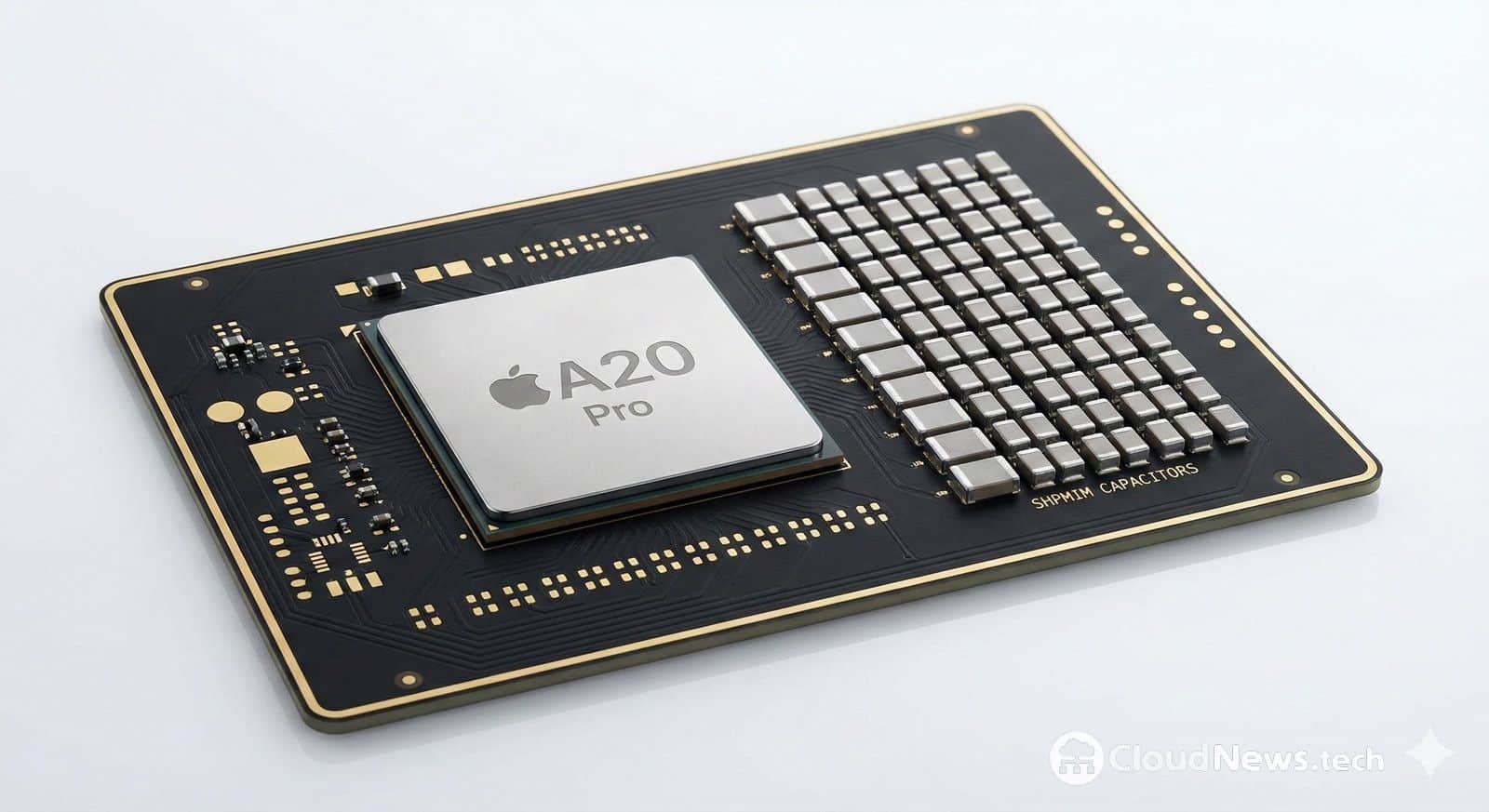
The upcoming major evolution of Apple’s chip for the iPhone may not come solely from lithography improvements but from less “flashy” changes that are crucial for real-world performance: how the processor is packaged and how its power supply is stabilized. This is the thesis of a recent note by Jeff Pu (GF Securities), which attributes two key advancements to the future A20 Pro: WMCM packaging and SHPMIM capacitors. These technologies aim to enhance efficiency, stability, and thermal margins in increasingly demanding devices—and especially in a potential foldable iPhone.
However, this information is based on supply chain reports and analyst forecasts: Apple has not confirmed the chip or associated models. Still, the consistency of this story with other industry reports makes it noteworthy for the sector.
250 million iPhones in 2026: moderate growth in a tense market
Pu also paints a relatively optimistic scenario for iPhone volume: 250 million units in 2026, representing a 2% year-over-year growth. This figure stands out because it’s projected at a time when part of the tech industry is adopting a more cautious cycle, mainly due to cost pressures in critical components like memory.
In this context, the chip becomes a strategic element: if hardware costs are higher and design margins narrower, energy efficiency and integration become the difference between a well-rounded product and one limited by power consumption or heat.
WMCM: packaging as a competitive advantage
According to the note cited by various outlets, Apple would be transitioning from techniques like InFO to WMCM (Wafer-Level Multi-Chip Module). In practice, WMCM allows integrating multiple “dies” (silicon blocks) into a single module, and is associated with closer integration between the SoC and memory. This has direct implications for internal space, signal integrity, efficiency, and heat dissipation.
TrendForce describes that WMCM can integrate components such as the SoC and DRAM at wafer level before chip separation, reducing dependencies on intermediate elements and improving thermal efficiency and signal integrity. MacRumors echoes that this approach would facilitate more direct integration of RAM with CPU/GPU/Neural Engine.
The key detail is that these changes usually translate into a “silent” advantage for users: more sustained performance, less thermal throttling, and potentially more space for batteries or other components in designs where every millimeter counts. This last point is particularly important if Apple aims to debut a clamshell foldable iPhone, where internal volume distribution is even more critical.
SHPMIM: the component stabilizing energy in next-generation chips
The second highlighted advancement is the adoption of SHPMIM (Super-High-Performance Metal-Insulator-Metal) capacitors for the chip’s power distribution network. Here, the clue links to TSMC: this technology is associated with the N2 node (2 nm), and various analyses describe clear improvements in capacitance density and internal resistance.
Tom’s Hardware explained that these capacitors can reduce sheet resistance (Rs) and via resistance (Rc) by around 50% compared to previous designs, along with benefits in stability for power delivery. Sources reporting results tied to the N2 process also mention that the capacitance density would be more than double that of earlier generations, helping to smooth demand spikes and maintain stable voltages under load.
In plain language: When a chip shifts loads in milliseconds—for example, switching from a light task to a GPU or Neural Engine-intensive one—power supply stability is crucial to avoid voltage drops, boost efficiency, and maximize performance without thermal penalties.
iPhone 18 Pro, Pro Max, and a foldable iPhone: screen and camera specs according to the report
The note attributed to Pu also lists expected specs for a high-end trio: iPhone 18 Pro, iPhone 18 Pro Max, and a rumored foldable iPhone. The screen sizes include 6.3″ for the Pro, 6.9″ for the Pro Max, and a foldable with 5.3″ outside and 7.8″ inside.
For cameras, 48 MP rear sensors are mentioned, with configurations such as variable aperture main, periscopic telephoto, and ultra-wide, plus 18 MP front cameras. Again, this is an unofficial roadmap not yet confirmed by Apple.
Design details also surface: the iPhone 18 Pro could reduce the “Dynamic Island,” while the foldable might incorporate Touch ID—possibly due to space constraints and design considerations.
Comparison table: why WMCM and SHPMIM matter to users
| Technological Change | What it is | Practical improvements |
|---|---|---|
| WMCM (new packaging) | Integration of multiple chips (and potentially memory) into a single wafer-level module | More integration, better thermal and signal efficiency; potential space savings for battery or other components |
| SHPMIM (advanced capacitors) | High-performance MIM capacitors for the chip’s power network | Greater electrical stability, reduced internal resistances (Rs/Rc), improved efficiency and sustained performance under load |
What’s missing to complete the picture: confirmation and timeline
The scenario aligns with sector trends: performance gains no longer depend solely on “nm” nodes but increasingly on packaging, interconnection, and power delivery. However, a key caveat remains: most of what’s been published is based on analyst notes and supply chain insights.
By 2026, Apple could launch a new generation of iPhones where the big leap happens “under the hood.” If WMCM and SHPMIM materialize, the A20 Pro would not only be faster but potentially more stable and efficient. This would be exactly what’s needed to push foldable formats without visible compromises.
Frequently Asked Questions
What is WMCM and why might it improve iPhone performance?
It’s a packaging approach that integrates more components into a single module, reducing intermediaries and improving thermal and signal integrity, often leading to more stable sustained performance.
How do SHPMIM capacitors improve over previous designs?
They enhance the chip’s power distribution network with higher capacitance density and significant reductions in internal resistances, helping to stabilize voltages during high loads.
Is the foldable iPhone with a 7.8″ inner display confirmed?
No. It’s an attribute from an analyst report and industry sources; Apple has not officially announced such a model.
Why might Apple include Touch ID on a foldable iPhone?
Due to design and space considerations: incorporating full Face ID on a foldable could complicate the front module and internal layout, making a Touch ID button a more practical solution.
via: wccftech
