
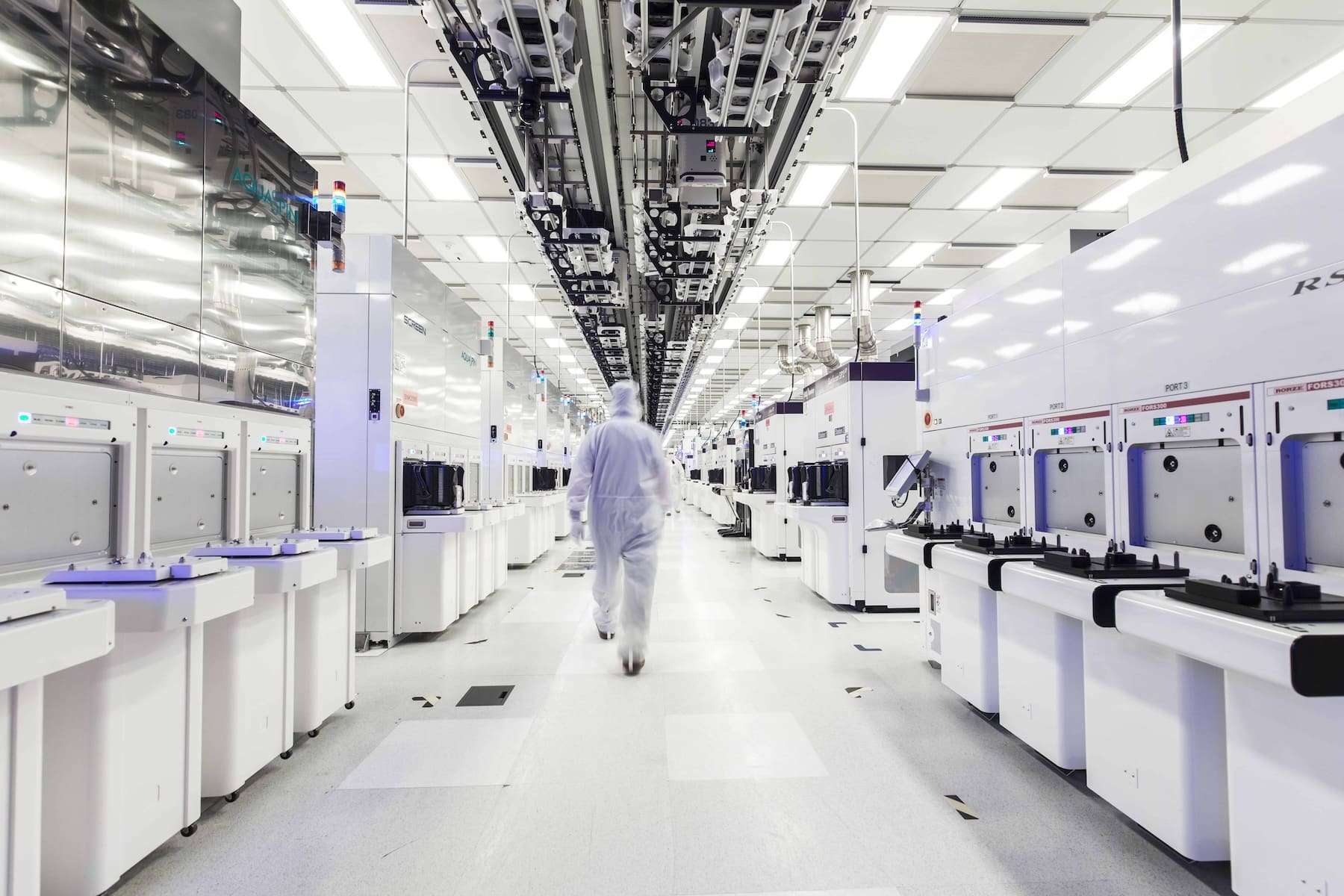
The chip industry is reordering itself around a simple idea: it’s no longer enough to just manufacture transistors; we also need to accelerate the path from design to product. In this context, Synopsys has entered into a definitive agreement to sell its Processor IP Solutions business to GlobalFoundries (GF). Without revealing financial details, this operation aims to reshape the landscape of processor intellectual property (IP) and its integration with manufacturing. The closing is expected in the second half of 2026, pending regulatory approvals and usual conditions.
The transaction means GF will take over a significant IP portfolio: ARC-V (based on RISC-V) and ARC CPU, along with IP for DSP and NPU, as well as development tools like ARC MetaWare and the environments ASIP Designer and ASIP Programmer for automating application-specific instruction set processors (ASIP). Until the sale is finalized, the business will continue to operate within Synopsys, and both companies assure that they will work to ensure a “seamless” transition for customers and partners.
What exactly is GlobalFoundries buying?
The immediate take is that GF isn’t just purchasing “CPU cores,” but a comprehensive package of capabilities for building scalable embedded and edge platforms. In their own announcement, GlobalFoundries details that the agreement includes lines such as ARC-V, ARC-Classic, ARC VPX-DSP, and ARC NPX NPU, along with the ASIP tools. After closing, these assets will be integrated with MIPS, which is described as “a part of GlobalFoundries,” to offer a “suite” of IP especially geared toward Physical AI applications.
This isn’t just marketing fluff: in industry terms, “Physical AI” often refers to systems that interact with the real world — sensors, robots, wearables, automotive, industrial — requiring real-time inference and control with strict energy and latency constraints. GF claims that combining these IPs and engineering teams aims to speed up custom silicon development and improve time-to-market through IP and software licensing.
Why is Synopsys selling such a strategic asset?
Synopsys frames the sale as a focus decision. Its CEO, Sassine Ghazi, states that the company wants to concentrate its IP resources on “interface and foundation IP” and pursue higher-value opportunities driven by AI “from cloud to edge,” while still enabling the processor ecosystem from its dominant position in EDA (electronic design automation tools) optimized for PPA (performance, power, area), verification, and signoff, as well as “digital twins for electronics.”
In plain terms: Synopsys is reinforcing its thesis of “silicon-to-systems engineering solutions” and placing its processor IP business into the hands of an entity that can combine IP + manufacturing + industrial offerings. The company emphasizes it will retain and continue to grow its portfolio of design IP — including logic libraries, embedded memories, interface IP, security IP, and subsystems — a key part for modern SoCs where bottlenecks often lie in interfaces, coherence, security, and subsystem integration.
The underlying trend: “Industrializing” intellectual property
This agreement illustrates an increasingly visible market trend: IP is moving from an isolated catalog to becoming part of an industrial package. Historically, many customers bought IP separately and sourced foundries independently; today, pressure to reduce risk and speed up development favors more integrated solutions, especially in high-volume or time-critical sectors.
For GF, this move makes strategic sense: it shifts perception from mainly a foundry to building a narrative of end-to-end solutions, with IP and software that facilitate the development of application-specific chips. This shift aligns with an industry where the “generic chip” no longer wins everything — more and more companies seek silicon tailored to their products (and energy consumption), even if the node isn’t the most advanced.
What role does RISC-V play in all this?
The inclusion of ARC-V (RISC-V) in the deal is significant for two reasons. First, because RISC-V — an open instruction set architecture — has established itself as an alternative for custom designs, especially in embedded and edge applications, where extending instructions and controlling the stack are as valuable as raw performance. Second, because ARC-V is positioned as a family of RISC-V based processors aimed at energy-efficient embedded systems, a compelling combination for many products that require local inference without high power drain.
Furthermore, GF isn’t approaching this from scratch: their announcement highlights that the integration will be with MIPS, their RISC-V IP and software platform for Physical AI applications. In other words, GF aims to connect two worlds: their own (MIPS) and the acquired portfolio (ARC), to offer a more comprehensive solution.
Implications for customers and the ecosystem
In the short term, the official message is reassuring: ongoing support and a smooth transition. In the medium term, the implications are more intriguing:
- For ARC and ASIP tool customers: roadmap ownership shifts. If GF executes effectively, this could lead to better integration with manufacturing offerings and possibly more direct “IP to chip” pathways.
- For the processor IP market: this operation suggests that IP isn’t just competing on performance but on its ability to participate in an industrial bundle that includes tools, support, and potentially manufacturing.
- For Synopsys: it reinforces their focus on “silicon-to-systems solutions” and places the processor IP business into a setting where IP + fabrication + industrial offerings combine, reinforcing their ecosystem leadership.
None of this eliminates the usual uncertainties linked to pending regulatory approvals and team integration. But it sends a clear signal: the next wave of edge AI chips won’t only be judged by “who has more TOPS,” but by who can better reduce integration risks and shorten the actual time from concept to manufacturable product.
Frequently Asked Questions
What does Synopsys’ sale to GlobalFoundries include in terms of processor IP?
Includes ARC-V (RISC-V) and ARC CPU, as well as IP for DSP and NPU, along with tools like ARC MetaWare, ASIP Designer, and ASIP Programmer.
What is “Physical AI,” and why does GlobalFoundries mention it in this deal?
It refers to AI applications acting in the real world (robotics, wearables, industry, automotive) with strict latency and energy requirements. GF states that this acquisition accelerates its Physical AI roadmap by integrating ARC with MIPS.
When is the expected closing date of the transaction?
Both companies indicate the closing is targeted for the second half of 2026, subject to closing conditions and regulatory approvals.
What does this mean for current ARC/ASIP customers?
Until closing, the business remains within Synopsys. After completion, GF plans to work with Synopsys to ensure a smooth transition for employees, customers, and partners.
via: news.synopsys
