
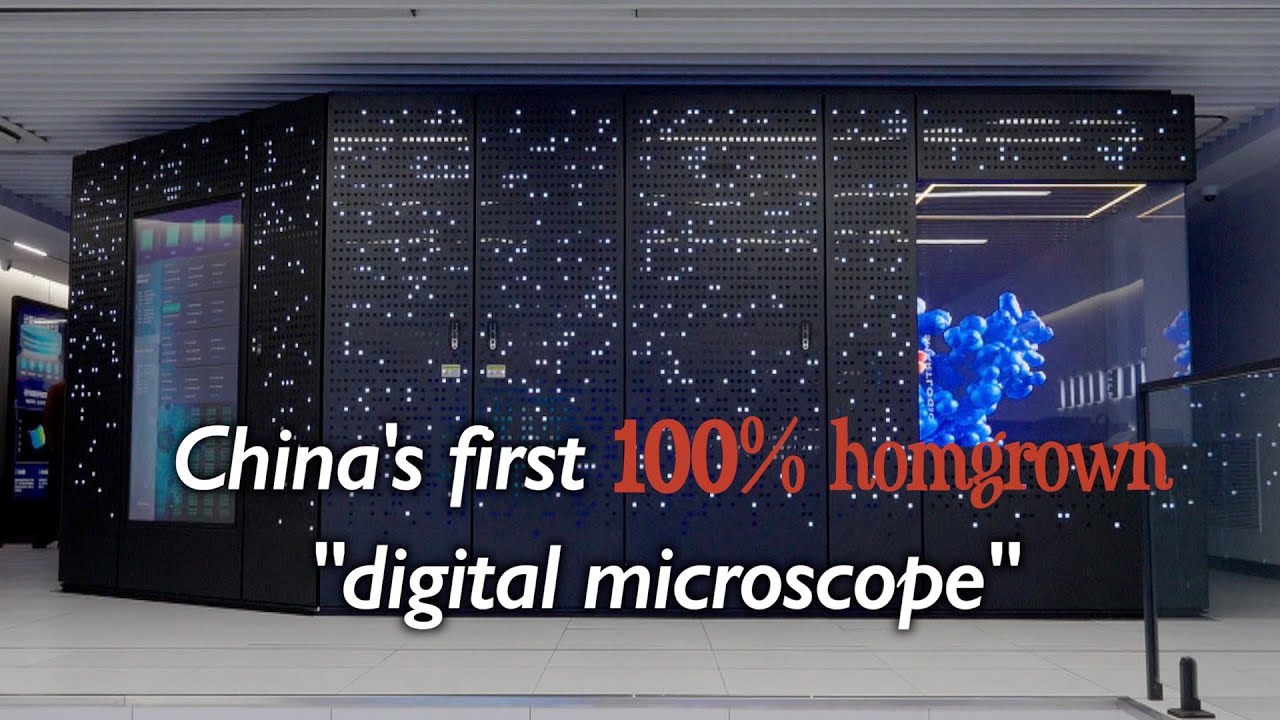
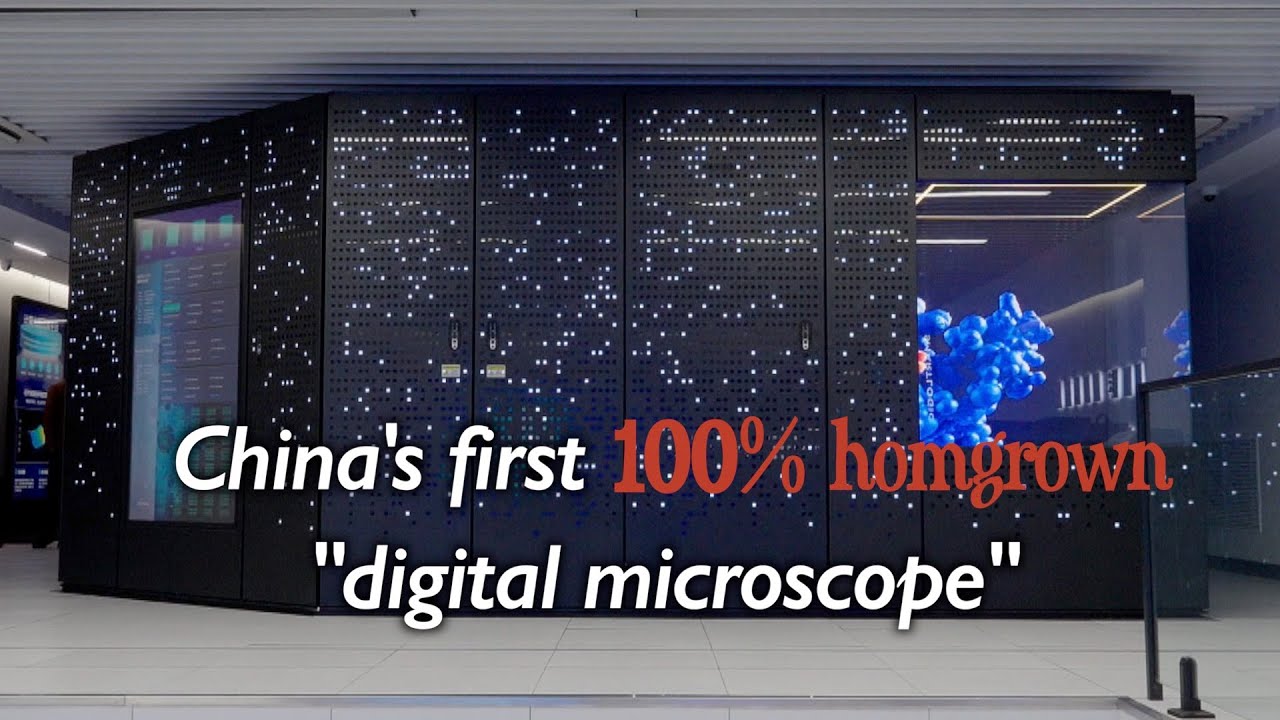
China has kicked off 2026 with a striking milestone in scientific computing: Tianqiong, a system its developers describe as a 3D supercomputer that targets a very specific goal: breaking through simulation bottlenecks — especially in molecular dynamics, computational chemistry, and materials science — without necessarily competing in the same league as general-purpose supercomputers designed to “win” at universal benchmarks.
The project is linked to Shanghai Silang Technology (思朗科技), a company founded in 2016 that has long argued that the main bottleneck in modern scientific computing isn’t always “lack of FLOPS,” but the physical and logical distance between calculation, memory, and internal communications. In other words: moving data costs time and energy, and for certain simulations, that’s what dictates performance.
What “3D” Means (and Doesn’t Mean) in Tianqiong
The term “3D” can be misleading. It doesn’t refer to graphics, rendering, or simply “creating 3D.” Nor is it just “stacking memory” like HBM. The public descriptions convey a different idea: organizing the system as a three-dimensional spatial topology, reducing internal data paths and latencies for workloads where data exchange dominates total execution time.
This approach is crucial in scientific simulations with high particle or molecule interaction, where the cost of “going back and forth” to memory and coordinating among compute units can negate gains from increasing core count, frequency, or even GPU acceleration.
MaPU: An Architecture Designed for Specific Mathematical Patterns
At the core of this approach is MaPU, described as a proprietary architecture focused on algebraic operations and executing recurrent computational patterns efficiently in scientific simulations. According to information released in China, this system aims to strike a middle ground: programmable, but less “general-purpose” than a traditional CPU, with the goal of avoiding inefficiencies when dealing with highly specific problems.
The practical outcome is that Tianqiong is marketed as a system capable of delivering performance boosts for particular tasks, but not necessarily trying to be “the best for everything.” Public messaging emphasizes that performance depends on the domain: where the architecture fits the problem, the improvements are substantial; outside that niche, comparisons lose meaning.
Performance: From “Faster” to “Orders of Magnitude,” but in Specific Cases
One of the most repeated claims in Chinese coverage is that, in certain 3D simulations, the system has achieved improvements of between 2 and 4 orders of magnitude over traditional approaches (the key phrase here is “in specific tasks”). There are also indicative figures for molecular dynamics simulation capacity (microseconds per day), an area with well-known precedents like D. E. Shaw Research’s Anton supercomputers, designed explicitly for molecular dynamics and famous for accelerating such workloads compared to more generalist platforms.
The comparison with Anton is used as a conceptual benchmark: specialized machines for a single science domain where general-purpose benefits diminish due to data movement bottlenecks and internal synchronization.
From Prototype to Deployment: 2022, 2023… and More Visibility in 2025–2026
The public timeline indicates that the first functional prototype was ready in 2022, followed by progress toward deploying in real-world environments. In 2023, a 3D computing center was launched in Xiaogan (Hubei) as a step to provide capacity for research teams and companies, with ambitions to turn it into a hub for advanced scientific simulation services.
This detail matters: Tianqiong’s story is not about a “secret lab” or a demo, but about a research infrastructure seeking users and real applications. And that’s the key: if an ecosystem of software, tools, and methodologies develops around MaPU and its topology, the project shifts from a technical curiosity to a strategic option.
Why This Matters Beyond China: the Shift Toward Specialized Supercomputing
The overarching message is clear: the industry appears to be moving toward a bifurcation.
- General HPC/AI, driven by GPUs, with ever-faster interconnections, high-bandwidth memory, and “integrated” racks for massive training and inference.
- Specialized scientific HPC, where the goal isn’t top rankings but more science per watt and euro in a narrow but critical domain: materials, pharmaceuticals, chemistry, structural biology, etc.
Tianqiong aligns with the second path. In a context of technological restrictions, geopolitical tensions, and the race for semiconductor independence, it also sends an industrial message: if you can’t (or don’t want to) compete solely in the traditional scaling race, you can change the architecture.
The Real Challenge: Software, Adoption, and “Technology Transfer”
The less glamorous — and arguably more critical — aspect isn’t the hardware. It’s the software: toolchains, libraries, portability, scientific validation, reproducibility, and, most importantly, the ability for labs to migrate methods without “breaking” results.
In pharmaceuticals and materials science, platform jumps aren’t just “compile and run”: calibration, validation, literature comparison, and operational risks come into play. If Tianqiong aims to become a standard infrastructure, it will need to demonstrate more than speed — it must show consistency, traceability, and ease of adoption.
Frequently Asked Questions
What kind of research benefits most from a 3D supercomputer like Tianqiong?
Especially molecular dynamics, computational chemistry, and materials science, where data movement and internal synchronization often become bottlenecks.
How does a specialized system differ from a traditional CPU and GPU supercomputer?
Instead of maximizing “average” performance across many workloads, it aims to optimize specific patterns (operations and internal communication) for a narrow set of problems with highly increased efficiency.
Can Tianqiong compete with GPU-based infrastructures for generative AI?
Not primarily. Its public positioning focuses on scientific simulation. For generative AI, the ecosystem and software (plus GPU economies of scale) usually matter more.
Why is Anton often cited as a reference in molecular dynamics?
Because Anton is a well-known example of domain-specific supercomputing (molecular dynamics) with enormous advantages in that field over more general platforms.
