
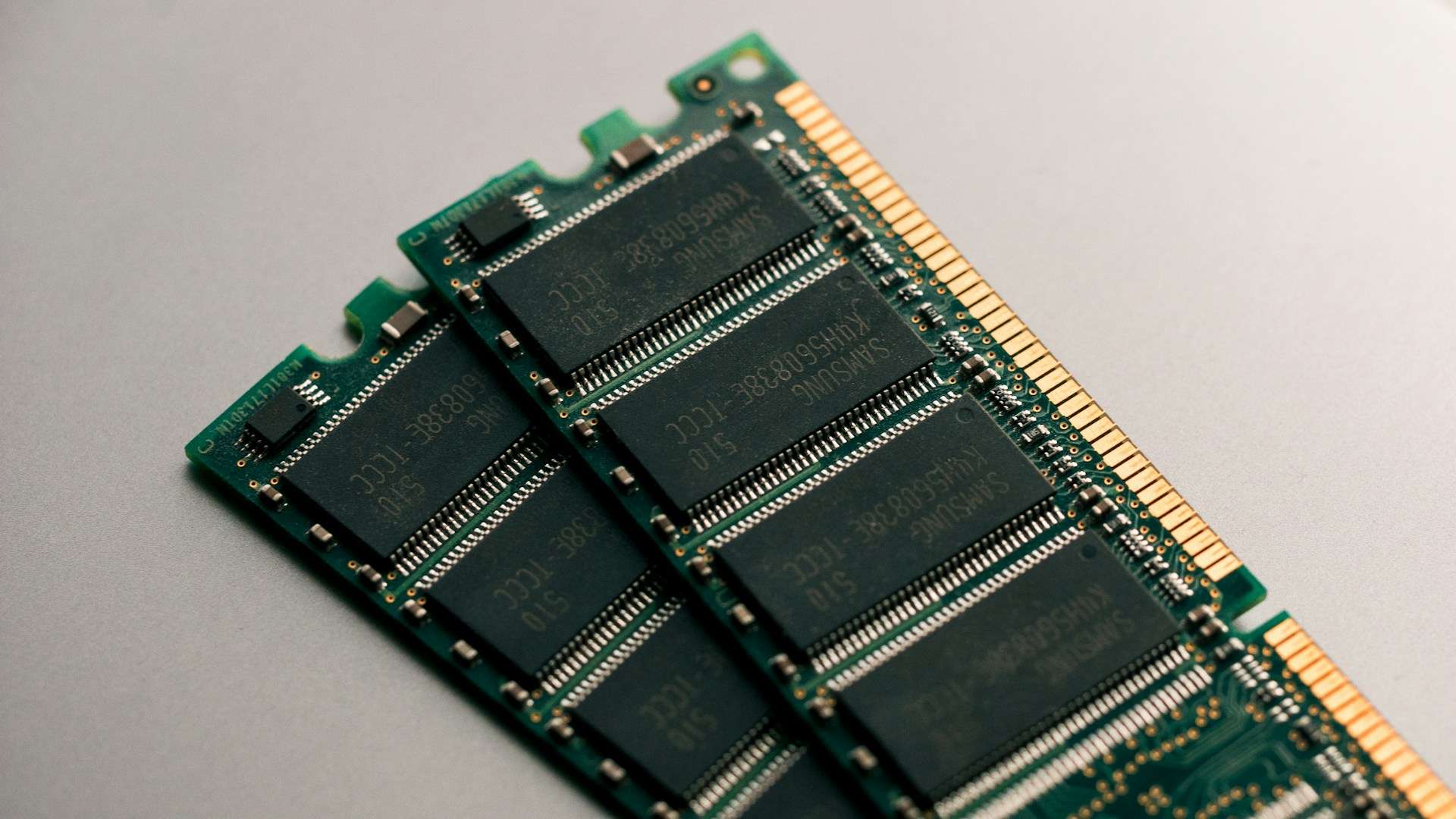
For years, RAM was one of those “boring” PC components: important, yes, but relatively stable and predictable. That has changed. As the industry shifts focus to artificial intelligence — and, above all, to HBM memory that accompanies AI accelerators — conventional DRAM begins to face its own storm: less capacity available for the consumer market, rising prices, and manufacturers seeking alternatives that until recently were considered unlikely.
In this context, a movement has emerged that, if confirmed, could be significant: HP is exploring the addition of memory modules from ChangXin Memory Technologies (CXMT), a Chinese DRAM supplier, to ease supply restrictions in certain markets. The information comes from financial analyses cited by sector media, attributed to a Bank of America report and analyst Tae Kim, suggesting that the measure might be limited to specific models (“SKUs”) destined for Asia and Europe.
The Origin of the Issue: DRAM “Competing” Against HBM Fever
The bottleneck isn’t new, but it’s accelerating. Major memory manufacturers are prioritizing higher-margin products related to servers and AI, especially HBM and data center DRAM. This reduces supply for PCs, laptops, and consumer devices. TrendForce sums it up bluntly: demand for memory for AI and servers is pulling the market and driving notable price increases at the start of 2026, with projected increases that, depending on the category, could be quite sharp. (TrendForce)
The practical consequence for PC manufacturers is twofold: greater difficulty securing volume and worse purchasing conditions. When a large OEM hits its negotiation limits, the temptation to open the supplier pool grows, even if it involves entering a sensitive geopolitical and regulatory terrain.
CXMT, the “Uncomfortable” Supplier Gaining Ground
CXMT isn’t as well-known as Samsung, SK Hynix, or Micron, but it has been climbing the ranks for some time. Various public reports suggest it’s preparing an IPO in Shanghai to raise funds and expand production capacity, at a time when China seeks to strengthen its technological autonomy. (Yahoo Finance)
The market’s takeaway is clear: if the giants are focusing more resources on HBM and premium products, an actor still operating in “conventional” DRAM could be attractive to ease tensions, at least in specific segments. In fact, circulating rumors suggest HP is considering this route to “move product” in regions where availability and pricing have become particularly problematic.
Nonetheless, it’s important to emphasize: these are currently reports based on analysis notes, not an official HP announcement or a publicly confirmed agreement. While this shapes the headline, it doesn’t erase the background: the industry is entering a phase where memory supply is once again a strategic factor.
The Elephant in the Room: U.S., Regulation, and Fragmented Supply Chains
This is the “but” that complicates everything. The debate over CXMT isn’t just technical or capacity-related: it’s political. In the United States, the regulatory framework and restrictions related to the tech supply chain to China have tightened over time. Notably, discussions are underway around the implementation of Section 5949 of the NDAA (National Defense Authorization Act), which restricts Department of Defense purchases involving semiconductors from certain Chinese entities, including CXMT, based on legal analyses and regulatory documents. (varindia.com)
This doesn’t automatically mean a consumer laptop can’t use DRAM from CXMT. However, it introduces an obvious risk: the regulatory perimeter could expand, and any large OEM engaging with this line must do so aware that the regulatory landscape could shift.
That’s why the “only Asia and Europe” hypothesis within the rumor seems plausible: it would be a way to limit U.S. regulatory exposure while gaining logistical flexibility in other markets. Still, even in that scenario, managing reputation and compliance isn’t trivial.
What Does This Mean for Users? Prices, Availability, and “Tiered” PCs
For consumers, this story matters for two reasons.
The first is price. If memory costs rise, the PC becomes more expensive or has specs cut. The market is already under pressure from the surge of “AI-ready” devices and other component stresses.
The second is segmentation: different configurations for different markets. This isn’t new — it’s been happening for years with panels, SSDs, or Wi-Fi — but memory can be especially sensitive due to concerns over sustained performance, compatibility, and validation.
Meanwhile, analysts and consultancies warn that PC manufacturers are under pressure from rising component costs, including memory, at the start of 2026. (reginfo.gov)
A Sign of the Times: AI Not Only Changes Software but Also Reshapes Hardware
Beyond whether HP will do it or not, the underlying message is powerful: AI is reshuffling industrial priorities. What was once a relatively stable market (consumer DRAM) now competes against a highly profitable one (AI/server memory). When that imbalance appears, OEMs adapt: renegotiate, redesign, and if needed, seek alternative suppliers.
And this ushers in a new era for the PC: less homogeneous, more geopolitical, with supply decisions that previously remained within procurement offices… and now can directly impact the exact models arriving in stores in Madrid, Berlin, or Singapore.
Frequently Asked Questions
Could it affect Europe if HP uses CXMT memory?
If it happens, it’s most likely to result in variations in supply for specific models, not a wholesale change. The actual impact would depend on availability, validation, and whether other brands follow suit.
Will the price of laptops increase due to DRAM shortages?
It’s a plausible risk: when memory costs rise and AI demand tightens supply, OEMs have less margin. Adjustments might come through higher final prices or more limited configurations.
Are there quality or performance differences switching DRAM providers?
In commercial laptops, key factors are typically the validation of the entire setup (motherboard, BIOS, modules) and supply consistency. It’s not possible to generalize by brand; what matters is how each configuration is integrated and certified.
Could U.S. restrictions expand to affect manufacturers using Chinese memory?
The regulatory landscape is evolving. Some restrictions focus on government procurement, but debates around supply chains and security could tighten over time.
Sources: TrendForce; Wccftech; Tom’s Hardware; Evertiq; Morrison Foerster; GovInfo / NDAA documentation; Yahoo Finance; Zawya.
