
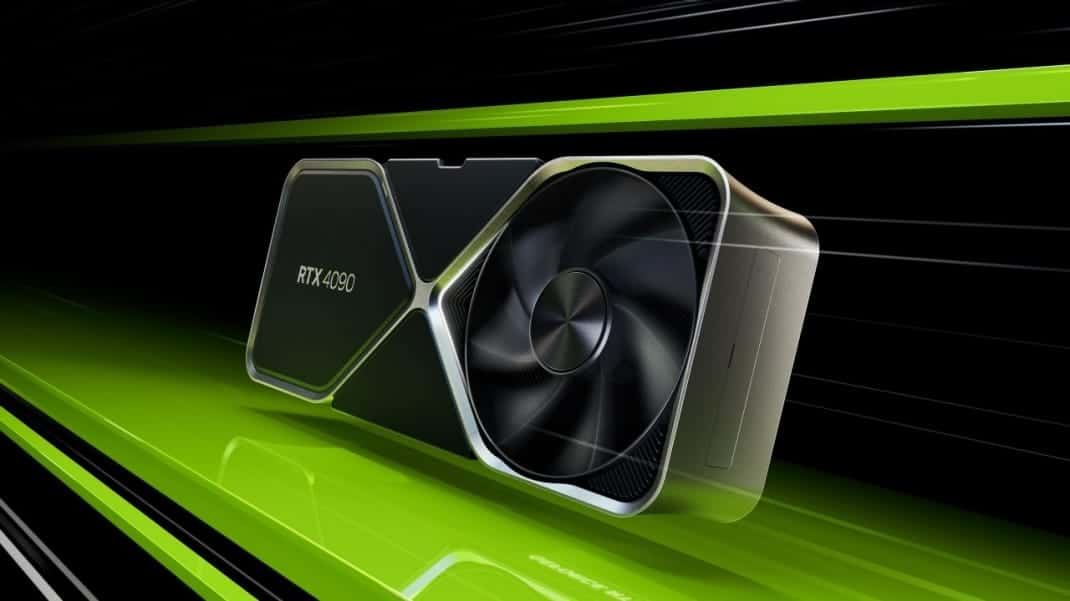
The scene took place in an unusual setting to discuss “looking back in time.” At CES 2026 in Las Vegas, where the anticipation among PC enthusiasts centered on whether new consumer graphics cards would be announced, NVIDIA chose not to introduce new GeForce models and instead focused its major message on AI infrastructure. In this context, a direct question about prices, shortages, and potential solutions resulted in an unexpected headline: Jensen Huang did not rule out reactivating production of older generations—including RTX 30 and even RTX 20—and even exploring whether some of the latest AI technology could be adapted to those architectures.
The statement was made during the Q&A session after the keynote. Paul Alcorn, a journalist from Tom’s Hardware, asked whether it made sense “to restart” older GPUs on earlier manufacturing nodes (which have greater availability) or, alternatively, to increase supply of models with less memory. Huang’s response was deliberately cautious—he didn’t announce a specific plan—but he outlined the framework: “possibly” it could be feasible, and depending on the generation, “we might also bring the latest AI technology to previous-generation GPUs,” though “it would require quite a bit of engineering.” He concluded with a phrase that has sparked a lot of discussion on forums and in stores: “I will revisit it… it’s a good idea.”
The core issue: memory is king, and AI pays more
To understand why a company that thrives on selling “new” products would suggest a “controlled rollback,” it’s essential to look at the bottleneck that recurs across the industry: memory. In recent months, various outlets have pointed to a tense supply chain scenario, with rising demand from AI data centers competing for manufacturing capacity and components. In the gaming segment, this translates into rising prices and irregular availability, just as consumers perceive that the latest—and most desired—hardware is also the hardest to obtain.
This is where the industrial logic of resurrecting “old friends” comes into play. Some reports suggest that NVIDIA could restart production of the RTX 3060 (launched in 2021), because it relies on GDDR6 memory and older manufacturing processes, potentially less pressured than cutting-edge lines associated with products using newer memories. TechSpot, for example, reported in early January 2026 a rumor attributed to an anonymous leaker with a track record of the company’s plans: the RTX 3060 could “return” in the first quarter of 2026, although no official confirmation existed on which variants might come back.
Meanwhile, Tom’s Hardware reported that NVIDIA publicly stated its CES keynote would not include new gaming GPUs, breaking a multi-year streak of regular announcements at the event. This silence on “new” products aligns with the idea that, when memory and manufacturing capacity become scarce resources, the launch schedule ceases to be mere marketing and becomes a logistical issue.
What does “bringing modern AI” to older cards mean?
Huang’s comment—about “bringing the latest-generation AI technology” to previous GPUs—has sparked all sorts of interpretations. In practice, for the average gamer, this often boils down to a clear question: could RTX 20 or RTX 30 series cards benefit from improvements like DLSS or frame generation, even if they’re not the newest generation?
It’s important to differentiate between promise and reality here. NVIDIA announced DLSS 4.5 at CES 2026, with model and image quality improvements available across all RTX cards, but reserved more ambitious features—such as a “Multi Frame Generation” 6× mode—for RTX 50 series GPUs, with a planned release window later in spring 2026. In other words, some improvements can be made “for everyone,” while others depend strictly on hardware and aren’t democratized through software.
Given this, the idea of “modernizing” an older generation doesn’t necessarily mean making it equivalent to the latest. The CEO’s suggestion is more nuanced: if the market requires more sales of older products to keep prices manageable, it makes sense to invest engineering effort into keeping these cards competitive through software improvements, optimizations, or partial features that maximize existing hardware. However, the response also warns of the technical cost: this wouldn’t be just a simple “patch,” but sustained work to adapt technologies designed for more modern cores and accelerators.
A CES focused on the “AI factory” and its collateral effects
The debate also comes at a time when NVIDIA has refocused public attention on its data center platform. At CES 2026, the company promoted the narrative of rack-scale computing with its Rubin platform (Vera CPU + Rubin GPU, along with interconnects and networking), presented as the next major step for more efficient AI model training and inference. This push reinforces the idea that the industrial priority—capacity, packaging, memory, manufacturing—is increasingly driven by the data center market.
From the consumer perspective, the effect is almost psychological: while the big stage discusses exaFLOPS and “AI factories,” the average shopper in a store looks for something much simpler—a “normal” graphics card at an affordable price. In this clash of realities, bringing back veteran models (and trying to keep them current with software) becomes a pragmatic solution—even if it seems contradictory in a sector that profits from selling the future.
Will RTX 20 and RTX 30 really make a comeback?
Currently, the only clear statement is the nuance: NVIDIA hasn’t officially announced plans to reactivate production of the entire RTX 20/30 family, but its CEO has openly acknowledged that it’s a possibility and that the company will review the idea. Meanwhile, solid rumors circulate about the RTX 3060, with several outlets linking the discussion to memory pressure and the absence of new consumer announcements at CES. More than the promise itself, what’s noteworthy is the tone shift: for the first time in a long while, going “backwards” no longer sounds taboo but rather a contingency plan.
Frequently Asked Questions
What does it mean that NVIDIA might “reactivate” an older GPU like the RTX 3060 in 2026?
It means the model could be produced again or have its production expanded—typically using less advanced processes and memories—to improve availability and pricing compared to newer generations.
Can RTX 20 or RTX 30 series cards get modern AI features like improved DLSS?
Some DLSS improvements may extend to older generations, but other features depend on hardware and are limited to newer series. Compatibility is usually partial, not all-or-nothing.
Why does the shortage of DRAM and GDDR significantly affect GPU prices?
Because memory is a critical and costly component in a GPU. When demand outpaces production capacity, costs increase and supplies become irregular.
What should a user consider if they plan to buy a “previous-generation” GPU in 2026?
Primarily, the balance between price, VRAM, power consumption, and the types of games or applications. In a tight market, performance-to-price ratio may be more important than always having the latest tech.
