
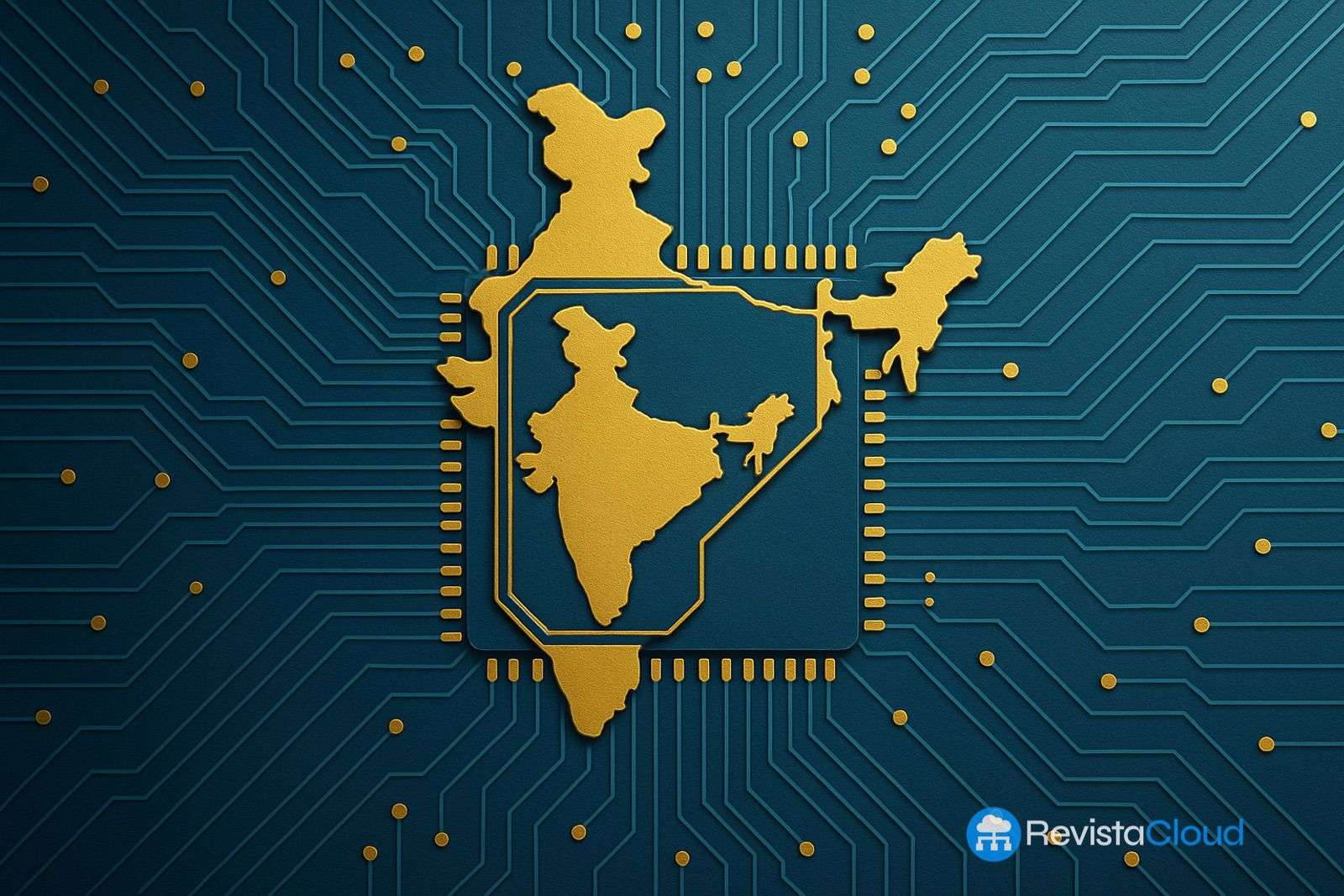
India is once again making a move in a game that is no longer limited to factories, but also involves geopolitics, tariffs, and supply security. The country’s government has approved a package of projects to boost electronic component manufacturing with an investment of 418.630 billion rupees (about $4.640 billion), a step aimed at strengthening local production and reducing reliance on imports in an increasingly strategic sector.
The announcement comes at a time when many multinationals have been trying for years to diversify their supply chains through the well-known “China+1” strategy: keep part of their production in China, but increase capacity elsewhere to mitigate risks. India, due to its size, population, labor costs, and industrial ambitions, emerges as the most frequently cited alternative for credible options.
A plan to stop being just an “assembly factory”
The key to this decision is that it doesn’t focus solely on assembling the final product —the last link, often the least profitable— but on climbing higher in the value chain. According to the Ministry of Electronics and Information Technology, the approved projects are part of the Electronics Component Manufacturing Scheme (ECMS) and include manufacturing parts such as mobile phone casings, camera sub-assemblies, and other components that feed the machinery of global digital consumption.
The scale of the approved package can be better understood with two figures: these projects, spread across eight states in the country, aim to generate a component production valued at 2.58 trillion rupees (approximately $28.620 billion), and create around 34,000 direct jobs. Simultaneously, India’s own goal is even larger: to grow its electronics manufacturing ecosystem from a volume of $125 billion in the fiscal year 2024–2025 to $500 billion by 2030–2031.
Who Benefits: From Global Giants to Local Champions
Among the companies listed as beneficiaries are world-renowned names like Samsung, Foxconn, and Tata Electronics, alongside other industrial groups and suppliers in the sector. The message is clear: India wants to be more than a destination for cheap labor; it aims to become a country where first and second tier suppliers are also nearby, reducing lead times, logistics costs, and uncertainty.
This move aligns with recent trends: large manufacturers need more resilient supply chains, with dual sourcing and regional capacity to respond to shocks — from pandemic-related closures to trade tensions and logistical disruptions. Electronic components are also essential: without them, there are no phones, laptops, connected vehicles, or telecommunications infrastructure.
The U.S.-China Factor: Controls, Suspicion, and “Country Risk”
The international context helps explain why India is accelerating. Washington has progressively tightened export controls on advanced technologies to China, especially semiconductors and manufacturing equipment, with the aim of limiting military use and advances in supercomputing and artificial intelligence. These measures have expanded and been refined over time, increasing pressure on the global tech industry.
Added to this climate are more aggressive trade policies — including tariff episodes that reconfigure costs — and political discourse that, at different times, has prioritized manufacturing “closer to home” or in partner countries. The practical result for many companies is a conclusion: relying on a single country to produce and supply the world no longer seems like a smart bet.
Apple as a thermometer: when the iPhone also changes direction
When it comes to supply chain analysis, no company is scrutinized more like a macroeconomic report than Apple. Its shift toward India has become a symbol of the new cycle. Reports published in 2025 indicated that the company planned for India to manufacture most of the iPhones destined for the U.S. by late 2026, trying to reduce exposure to China and navigate a landscape of potential additional import costs.
This phenomenon doesn’t happen in a vacuum: when the most iconic product of tech consumption starts to move, part of the ecosystem of suppliers typically follows. But for the move to be truly substantial, the recipient country needs more than assembly plants: it needs components, sub-assemblies, materials, machining, technical plastics, precision metallurgy, PCBs, and industrial-grade logistics. That’s where the new project package fits in.
India aims to capture “the value that isn’t seen”
In electronics, value isn’t just in the last screw. It’s in the camera module, the machined casing, the structural parts, the laminate boards, the battery materials, and the ability to produce with consistent quality at scale. That’s why approvals include areas like enclosures, aluminum extrusion facilities, and projects involving battery materials, all aiming at a more localized, deeper supply chain strategy.
The goal is clear: if India manages to produce the key component locally, the country not only gains employment but also industrial muscle, expertise, and bargaining power. In the medium term, it can also attract more investment through a “cluster” effect: when the supplier is nearby, manufacturing becomes more efficient.
Could India be “the new China”? The right question might be another
The comparison with China is unavoidable but also misleading. China did not become a manufacturing power overnight: it did so after decades of infrastructure investment, port development, energy capacity, industrial training, an ecosystem of suppliers, and a monumental production framework.
India, by contrast, advances with clear strengths — enormous domestic market, demographics, competitive costs, growing technological capacity — but also faces classic challenges: uneven infrastructure, regulatory complexity between states, logistics needs, and the challenge of developing and retaining skilled industrial talent in high-precision segments. In short: it can become a major manufacturing hub, yes, but replicating the full “China model” is another story.
That’s why many analysts pose a more realistic question than whether India will become “the new China”: where in the supply chain can India lead, and where will it serve as a complement? The current movement suggests an answer: India wants to be strong in key components for consumer electronics, especially in smartphones and industrial peripherals.
A bet also measured in exports and jobs
India isn’t hiding its goal: to build an ecosystem capable of producing at a global scale and boost its exports. The electronics sector has already shown a growth trajectory and has become a central part of the “Make in India” narrative. This component plan is not an isolated announcement but part of a broader puzzle of incentives and industrial policies aimed at turning tech manufacturing into a sustained engine of employment and export growth.
The financial logic behind the move is also clear: subsidies and incentive schemes are justified by the returns on private investment, job creation, taxes generated by economic activity, and the development of strategic capabilities. And in a world where electronics intersect with defense, communications, and technological sovereignty, the component sector nearly becomes national infrastructure.
The next test: execution, timelines, and quality
The challenge now isn’t the announcement but the implementation. In industry, success is measured by schedules, installed capacity, productivity, quality, and compliance. For India to consolidate this leap, the approved projects need to translate into operational plants, integrated suppliers, certifications, and a steady flow of production that convinces multinationals to move more volume.
If successful, India will not only make headlines but also strengthen its position in the global economy. If it fails, it will remain a partial alternative, useful for diversification but unable to handle the magnitude that is still largely concentrated in China.
What remains clear is that the world is rewriting the map of the electronics industry. India wants to be a key player on that map, not just a footnote but a protagonist.
Frequently Asked Questions
What is India’s Electronics Component Manufacturing Scheme (ECMS)?
It is an incentive scheme driven by the Indian government to promote local manufacturing of electronic components, reduce imports, and strengthen the industrial ecosystem with subsidized projects.
What types of components does India aim to manufacture with this plan?
Components mentioned include mobile phone casings, camera sub-assemblies, and other parts necessary for the electronics industry, with a focus on increasing local content in finished products.
Why are so many companies diversifying production outside China?
Due to a combination of risks: geopolitical tensions, export controls on advanced technology, tariff changes, logistical disruptions, and the need for more resilient supply chains with multiple production centers.
What are the main challenges for India to become a major electronics hub?
Consistent infrastructure and logistics, scalable manufacturing with repeatable quality, regulatory coordination across states, availability of precision suppliers, and training of technical talent for advanced manufacturing.
Source: Reuters
