
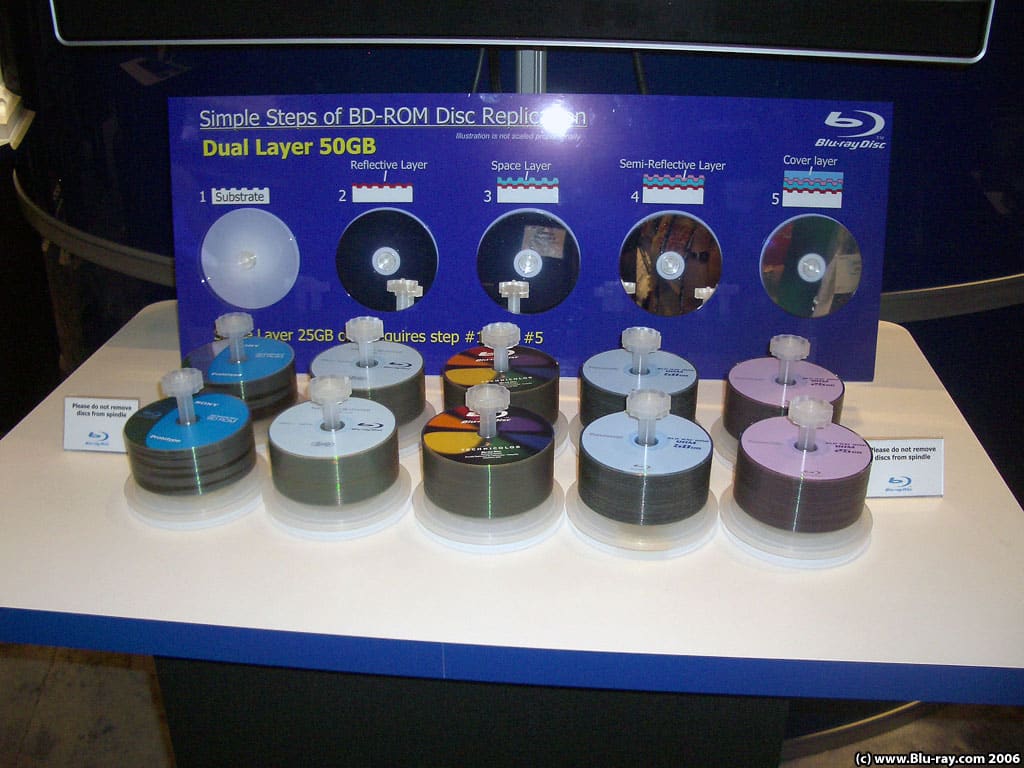
Two decades ago, at CES in Las Vegas in 2006, the industry demonstrated a successor to the DVD that promised something very simple to explain and very difficult to execute: putting high-definition movies on a disk without compromising quality. That format was called Blu-ray, backed by an unusual support for a new standard: manufacturers, consumer electronics, and much of Hollywood aligned to push the transition.
The key was in the name itself. Blu-ray was not just an empty marketing campaign but a technical clue: a violet-blue laser allowed for “drawing” denser information on the disk surface than the red laser used by DVDs. In practical terms, this translated into a capacity leap that, for the time, seemed almost exaggerated: 25 GB per layer in Blu-ray compared to DVD’s scale.
The promise: more capacity, faster speeds, and “true” HD video
BD was created to address the DVD era’s bottleneck: storing and moving data fast enough to support high-definition video with good audio, extras, and advanced menus, without turning compression into a festival of artifacts. Its specification relied on a 405 nm laser, with a performance baseline that raised the bar compared to what the public was used to.

Comparing it with DVD helps understand the leap. The DVD standard popularized digital cinema at home, but its basic data rate was designed for a different generation of screens and bitrates. Blu-ray, on the other hand, came with the goal of making HD viable as a mass product, not just a technological demo.
The format war: when two futures compete, one has no future
What many remember is not only the technical advance but also the commercial battle: Blu-ray vs HD DVD. It was a format war with studios, manufacturers, and consoles taking sides. And, as is often the case, the outcome was not solely decided by engineering—it depended on alliances, catalog, and distribution.
The turning point came when market support clearly shifted toward Blu-ray. In January 2008, key studios decisively backed it, and weeks later Toshiba—main supporter of HD DVD—dropped out: on February 19, 2008, it announced abandonment of the format, paving the way for Blu-ray as the “official” successor to DVD.
2026: Why is Blu-ray “not dead” despite everything being streaming?
The short answer challenges the cloud narrative: because streaming is not always synonymous with maximum quality, ownership, or constant availability. Blu-ray (especially its more modern variants) remains a refuge for:
- Film enthusiasts and home cinema fans who prioritize stable bitrate, fine detail, and uncompromised audio.
- Collectors who don’t want a movie to disappear or change versions due to licensing issues.
- Regions with limited connectivity or where data limits make a 4K night a luxury.

But Blu-ray also has aged visibly. The hardware industry no longer treats it as a strategic front. Recent signs of retreat include: Sony ceased manufacturing certain writable optical discs (including writable Blu-ray), and LG has reduced its presence in players, clear signs of a shrinking and specialized market.
Adding to this is a trend that hampers logistics: digital consumption. Consoles and TVs have pushed towards “all streaming,” and many households no longer buy physical players. The result is an ecosystem where Blu-ray remains relevant but increasingly niche: fewer new releases on shelves, more planned purchases, more imports, and a growing community.
The future: from mass format to “premium edition”
If DVDs were the quintessential family product, by 2026 Blu-ray resembles more a premium edition: for those valuing quality, archiving, and control. Its role, rather than disappearing suddenly, seems destined to follow other physical media: losing volume, maintaining prestige, and surviving through actual utility.
And perhaps that is its merit: celebrating 20 years in an industry that hurriedly discards technologies. Blu-ray is no longer the king of the living room, but it still offers something streaming cannot promise 100%: a movie that works today, tomorrow, and ten years from now, without relying on licenses, servers, or catalog changes.

Frequently Asked Questions
What advantages does Blu-ray have over streaming for home theater?
Mainly, a more stable bitrate and, depending on the edition, better audio, as well as independence from internet connection and changing catalogs.
Why did Blu-ray win over HD DVD?
Because of a combination of industry support, catalog, and market traction. Toshiba abandoned HD DVD in February 2008, which ended the format war.
Does it still make sense to buy a Blu-ray player in 2026?
For collectors and cinephiles with demanding audio/video setups, yes. For casual consumers, the market has shifted toward digital.
Will Blu-ray disappear soon?
It doesn’t seem imminent, but the decline of hardware and writable media continues, pointing to a more niche future.
via: blu-ray
