
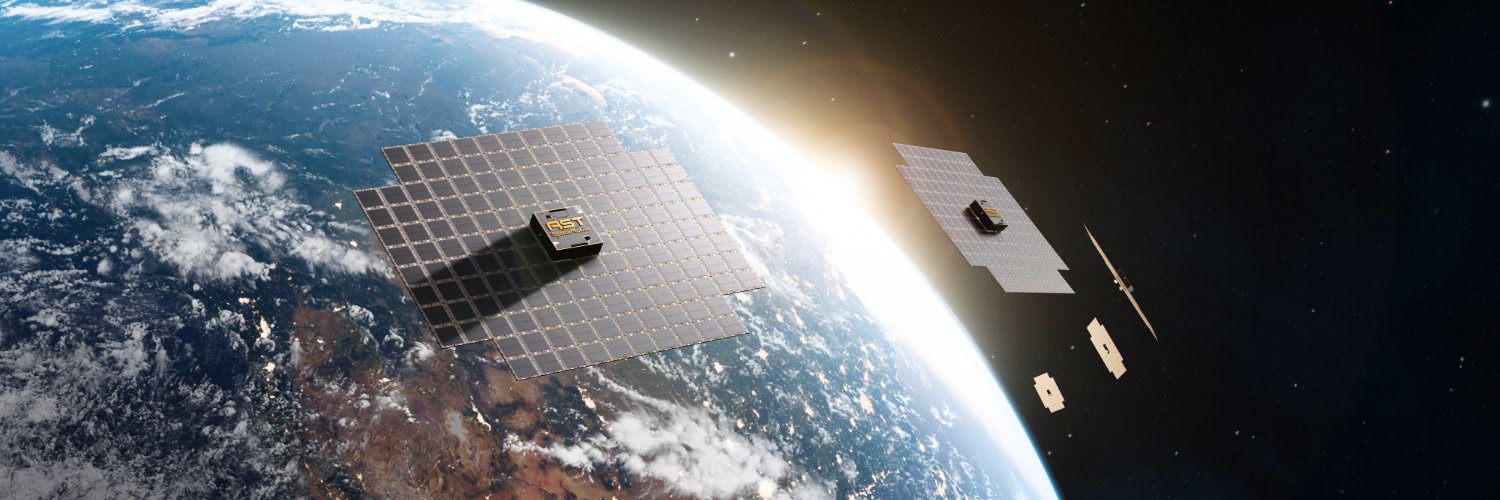
The race to deliver mobile connectivity anywhere on the planet — without towers, terrestrial coverage, or specialized devices — has just taken a significant step. AST SpaceMobile has announced the orbital launch of BlueBird 6, a satellite designed to provide 4G and 5G cellular broadband directly to standard smartphones. The company describes it as the largest commercial communication “array” deployed in low Earth orbit, with an area close to 2,400 square feet (approx. 223 m²).
The launch occurred on December 23 from the Satish Dhawan Space Centre (Sriharikota, India), marking the beginning — according to the organization — of a “scaling deployment” phase for its constellation.
A giant antenna in the sky to talk with “normal” phones
AST SpaceMobile’s approach relies on a simple yet ambitious idea: turning the satellite into a “macroantenna” capable of communicating with unmodified phones, meaning no dedicated satellite terminals. Instead of requiring users to have different hardware, the satellite aims to adapt to the current mobile ecosystem by integrating with carriers and cellular standards.
In its corporate communications, AST states that BlueBird 6 is designed to reach peaks of up to 120 Mbps directly on conventional mobile devices, enabling voice, data, and video services.
This figure alone explains why the launch has garnered interest: if the model scales, the impact extends beyond “internet in remote areas.” It directly addresses scenarios of network resilience, emergencies, maintaining communication during natural disasters, and backup coverage when terrestrial infrastructure fails.
From demonstration to deployment: 45–60 satellites and launches every 1–2 months
The challenge isn’t just “putting a big satellite into orbit.” The real test lies in manufacturing capacity, the cadence of launches, and sustained operation. AST claims it plans to have 45–60 active satellites by the end of 2026, with missions scheduled every one or two months on average.
Meanwhile, the company highlights that BlueBird 6 was assembled, integrated, and tested in Midland, Texas, and that it operates nearly 500,000 square feet (approx. 46,450 m²) of manufacturing and operations facilities, with a workforce of over 1,800 employees.
This industrial scale is crucial: in satellite constellations, technology matters, but the key to success is mastery of “how it’s built”—at scale, at controlled costs, and with repeatable quality.
Regulatory and operator battles: no service without agreements
In this kind of service, the satellite doesn’t operate in isolation: it requires coordination with operators, spectrum rights, approvals, and clear commercial models. AST reports having agreements with more than 50 mobile operators that collectively serve nearly 3 billion subscribers, along with strategic partnerships with major industry players.
The move also has geopolitical and technological sovereignty implications. In November, Vodafone and AST SpaceMobile announced an initiative to develop a “Europe-led” constellation focusing on satellite-to-smartphone connectivity for commercial and government use, with a European operational center and a clear emphasis on security and regional control.
Such initiatives echo an ongoing debate in Europe: it’s not just about “coverage,” but also about who controls the infrastructure, where operations take place, and under what regulatory frameworks.
Actual performance: promises and the limits of physics
Cellular connectivity from low Earth orbit has clear advantages — broad coverage, rapid deployment, crisis resilience — but also inevitable limitations:
- Capacity and congestion: a satellite cannot replace dense urban networks; it’s better suited for extended coverage, continuity, and services in low-infrastructure areas.
- Latency and stability: low orbit reduces latency compared to geostationary satellites, but overall performance depends on the entire architecture (satellite links, ground stations, partnerships).
- Service consistency: moving from demos or a single satellite to dozens involves addressing maintenance, quality, and industrial-scale operations.
Nevertheless, the launch of BlueBird 6 is seen as a sign of maturity: the project aims to move beyond promises toward actual implementation.
A technical milestone… and a business story with volatility
After the launch, markets reacted with typical nervousness: despite the successful deployment, stock prices fluctuated sharply, reflecting the reality that the next step is not just about launching satellites, but about delivering operational service, securing definitive agreements, and meeting the 2026 timeline.
The core idea remains simple: if AST can scale its constellation and agreements, it opens a new segment of connectivity; if not, the costs and complexities of building and launching sophisticated hardware could become a burden.
Frequently Asked Questions
What does “4G/5G directly to mobile from satellite” mean in practice?
It means that users could connect with their smartphones without modification when terrestrial coverage is unavailable, using an integrated satellite link in conjunction with existing mobile networks and agreements with carriers.
Does BlueBird 6 enable fast internet in any city?
The focus is more on coverage in unserved areas, remote regions, service continuity, and emergency backup. In urban environments, dense terrestrial networks will remain the primary infrastructure due to capacity and efficiency.
How many satellites does a constellation need for broad coverage?
It depends on the architecture, orbits, and goals. AST has set a target of 45–60 satellites by the end of 2026, with frequent launches to build coverage and capacity.
What challenges typically slow down commercial deployment of such services?
Main obstacles include regulation and licensing, spectrum coordination, operator agreements, industrial capacity to produce satellites at scale, and real-world performance testing.
Source: (Business Wire)
