
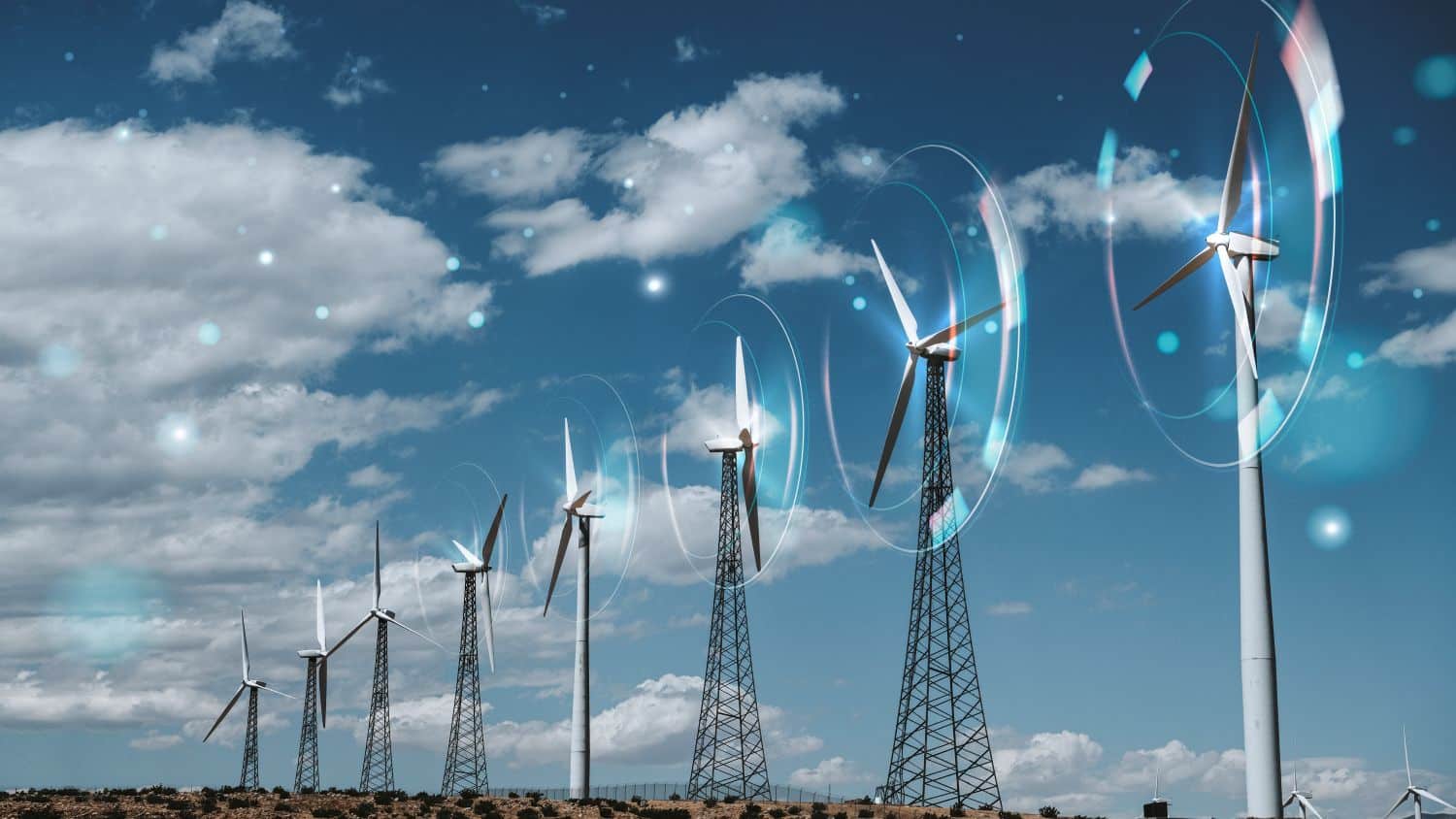
The rapid advancement of artificial intelligence has become one of the major energy challenges in the coming years. As the International Energy Agency points out, the electricity demand related to data processing and the operation of data centers could double before 2030, driven mainly by the surge of generative AI and next-generation digital services. This development requires rethinking energy planning and strengthening the integration of new energy sources.
At the national level, the Ministry for Ecological Transition and Demographic Challenge has emphasized the importance of increasing the energy efficiency of data centers and moving towards more sustainable models through regulations aligned with European legislation. These guidelines call for greater transparency regarding energy consumption and emissions associated with key digital infrastructures for the economy and society.
In this technological change and energy transition scenario, the training center MINT, specialized in Industry 4.0 and renewable energies, examines the real impact of energy consumption derived from the use of artificial intelligence and its direct connection to the development of clean energy, based on insights from two experts associated with its Master’s in Renewable Energies and Energy Efficiency.
The true impact of daily artificial intelligence use
Beyond big numbers, the energy impact of AI begins with each daily query. Rubén Linacero, an engineer in Renewable Energies and an expert from MINT’s Master in Renewable Energies and Energy Efficiency, explains that “every time we use an AI tool, we activate remote servers that consume energy and generate heat, which necessitates highly energy-intensive cooling systems.”
According to industry data, each query can consume around 0.3 Wh, a seemingly low figure that multiplies massively when millions of people use these tools daily. “To match the average consumption of a refrigerator, which is about 300 Wh, you would need roughly a thousand queries, easily surpassed in work environments if we add up all staff usage,” Linacero notes.
Data centers, the energy heart of AI
The majority of energy consumption for artificial intelligence is concentrated in data processing centers, facilities that have expanded rapidly to meet the demands of generative AI. Alberto Martínez, with a Master’s in Engineering and an expert from MINT’s Master in Renewable Energies, highlights that “annually, between 120 and 140 hyperscale data centers are launched, driven directly by the processing power needs of AI.”
Despite this growth, Martínez emphasizes that the energy efficiency of these facilities has improved notably. Specifically, he explains that “the energy efficiency of data centers has significantly improved thanks to the PUE (Power Usage Effectiveness) indicator. While the earliest centers had values above 2.5, current ones are around 1.2. This means that today, more than 80% of the energy consumed is used efficiently for data processing.”
Renewables as allies of the new digital demand
The connection between artificial intelligence and renewable energy is growing closer. Rubén Linacero notes that “data centers are beginning to incorporate self-generation of renewables, especially photovoltaic solar, due to its ease of prediction, although the enormous demand also opens the door to solutions like dedicated wind farms with higher energy density.”
Just as with cryptocurrencies, here energy directly becomes digital wealth. “In the end, the energy sector is a business, and the value of kWh depends on the market and environmental conditions,” Linacero adds.
At the same time, AI demands a very high supply quality. Alberto Martínez underscores that “data centers cannot afford interruptions and require redundancy and backup systems that have traditionally relied on diesel.”
In response, the sector is seeking more sustainable alternatives, such as green hydrogen, biofuels, small nuclear reactors, or the use of hydroelectric and geothermal energy. ‘Green data centers’ are emerging as a key solution, although MINT experts warn that their true sustainability must be assessed considering their entire lifecycle.
The great energy paradox of artificial intelligence
From MINT, it is emphasized that artificial intelligence presents a paradox: it significantly increases electricity demand, yet it is a key tool for optimizing electrical networks, transportation industry, and buildings—sectors that account for nearly 95% of final energy consumption.
“AI is part of the problem and also part of the solution,” conclude the MINT experts. “If oriented towards efficiency and supported by renewable energies, it can accelerate the energy transition, but if it grows unchecked and unplanned, it could jeopardize it,” they summarize.
As a training center specialized in Industry 4.0 and renewable energies, MINT is committed to preparing professionals to manage this balance, equipping them to understand the energy impact of digitalization and to design a sustainable technological future.
