
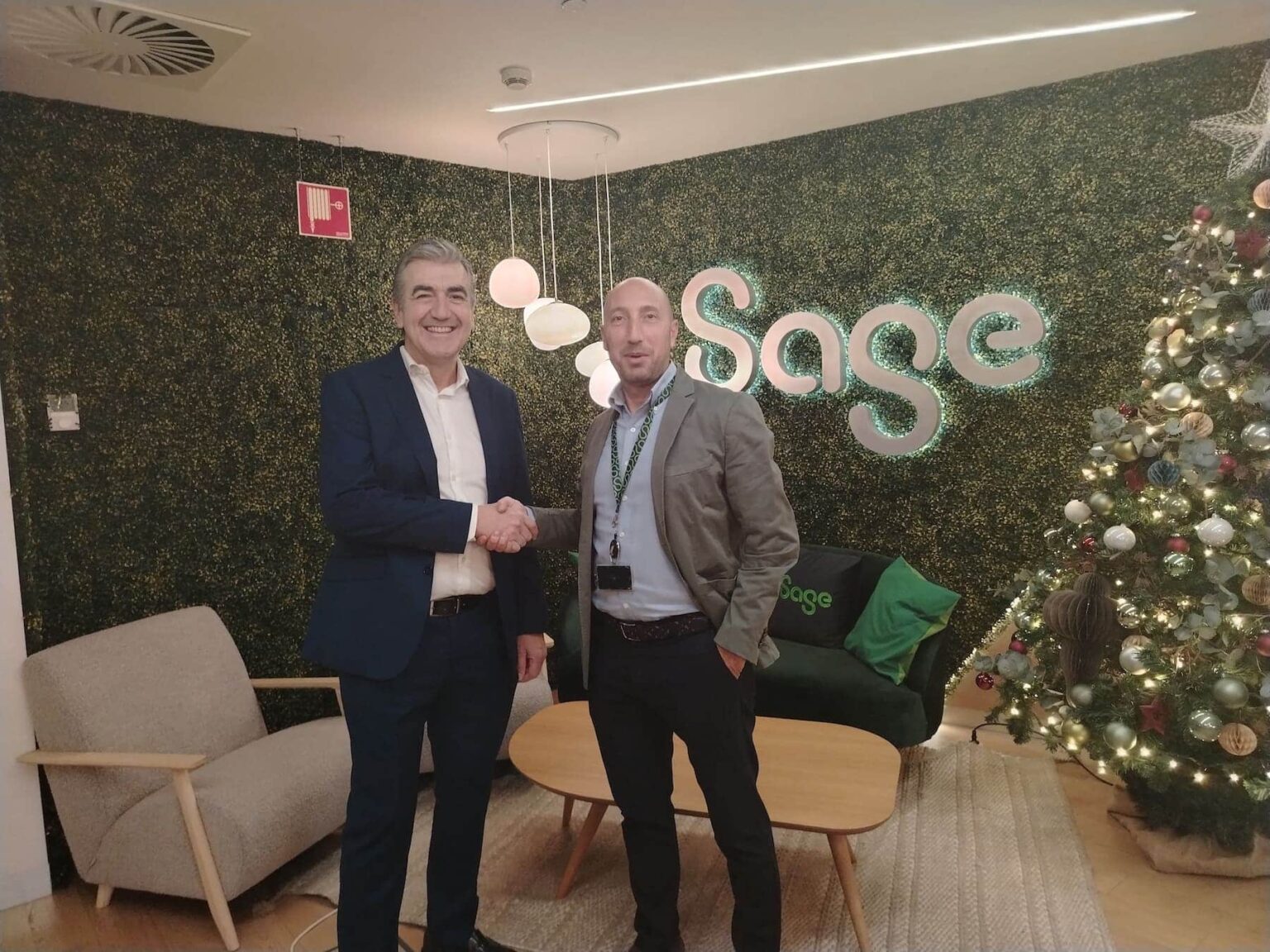
The cloud has been promising for years to “simplify” things for businesses, but in practice, many SMEs remain stuck in the same routine: aging servers, postponed updates out of fear of breaking something, patched remote access, and support that sometimes arrives late. In this context, the agreement announced by Gigas and Sage targets that very friction point: transforming ERP and management applications into a consumable, centralized, and managed service.
According to Gigas, the company has signed a strategic agreement with Sage — a global provider of technology for accounting, finance, HR, and payroll aimed at SMEs — to offer Sage’s ERP solutions in SaaS mode from Gigas’s cloud platform to the Spanish market.
An accessible ERP without “infrastructure” at the office
The proposal, as described in the announcement, relies on a very familiar approach for those who have experienced traditional Sage deployments in SMEs: secure and uniform remote access, but without dependence on local installations, and in a more “turnkey” model.
The collaboration aims to facilitate remote, secure, and centralized access to applications like Sage for Accountants, Sage 50, and Sage 200, through an infrastructure based on Remote Desktop Services (RDS) over Windows Server. The idea is for users to have a consistent experience “from any environment,” while the systems management is no longer on the client side.
In practice, this type of approach tends to be particularly attractive for SMEs that want to maintain their operations with familiar tools — and at the same time, gain mobility and service continuity — without undertaking a complex internal migration project.
Dedicated architecture and custom optional services
Another key point of the agreement is the described architecture: the environment includes dedicated servers for common components in this type of deployment, such as Active Directory, SQL Server, or Terminal Server, along with options to integrate additional services: ISV add-ons, cloud backups, firewalls, and advanced security tools, among others.
Furthermore, Gigas emphasizes its comprehensive managed service model, outsourcing infrastructure management tasks including the operating system, security, monitoring, backups, and support. The clear message is to let the client focus on using the management software, not on maintaining the platform that powers it.
A key detail: “per user” pricing as a commercial lever
In SME ERP projects, many decisions get stuck in the same conversation: “How much does it really cost, and how does it grow?” The announcement highlights as a differentiator the pricing per number of users, designed to simplify both the technical and economic understanding of the service, and to facilitate scalability according to each organization’s needs.
This aligns with a growing market trend: SMEs no longer want to debate CPU sizing, RAM, or component licenses. They want an understandable, predictable cost that grows in line with their actual business pace.
What Sage and Gigas say: “reliable, secure, and easy to deploy”
The announcement includes statements from both parties. From Sage, Hugo Oliveira, Director of Partners & Ecosystem Iberia, frames the agreement around typical SME priorities: reliability, security, and easy deployment. “SMEs seek reliable, secure, and easily deployable solutions. The partnership with Gigas allows us to offer a robust, optimized cloud ecosystem for our products,” he says.
From Gigas, Javier García Ariz, Business Development Director of the Group, emphasizes the “closeness” approach and comprehensive management: “Integrating Sage’s ERP solutions into Gigas’s cloud platform enables us to offer a unique proposal based on proximity, reliability, and a fully managed infrastructure,” he states.
Why are such agreements gaining traction in 2025?
Beyond the headline, there’s a background explaining why these alliances are increasingly appearing on the radar: ERP is a critical tool but has traditionally been a source of technical dependency. When an SME grows (or simply shifts to hybrid working models), local infrastructure becomes a bottleneck: remote access, coordinated updates, verifiable backups, incident support… all add up.
In that scenario, agreements like Gigas and Sage compete with two common options:
- Do-it-yourself: keeping the ERP on-premises or on a self-managed or colocation server, handling operation and security yourself.
- Pure SaaS: migrating to a fully managed solution by the vendor if it aligns functionally and in terms of model.
The announced proposal aims to occupy an intermediate space: maintaining the application ecosystem and user experience but outsourcing the operational part to a cloud provider with managed, packaged services for channel partners and end clients.
Frequently Asked Questions
What does “Sage as a service” in Gigas cloud mean for an SME?
According to the announcement, it entails remote, centralized access to solutions like Sage for Accountants, Sage 50, and Sage 200 through a Windows Server RDS infrastructure, eliminating reliance on local installations.
What infrastructure components are included in the joint architecture?
The release mentions dedicated servers for Active Directory, SQL Server, or Terminal Server, with options to add integrations like add-ons, cloud backups, firewalls, and advanced security tools.
How is scalability and the licensing model addressed?
The agreement highlights pricing based on the number of users, simplifying capacity planning and allowing for scalable growth as needs evolve.
What value does the “managed service” bring in an ERP environment?
According to Gigas, it allows outsourcing the complete management of the system (OS, security, monitoring, backups, support), transforming deployment into a turnkey project for clients, partners, and the Sage ecosystem.
Sources:
- Gigas Blog: “Gigas and Sage connect their technology to offer secure, managed ERP solutions” (12/18/2025).
