
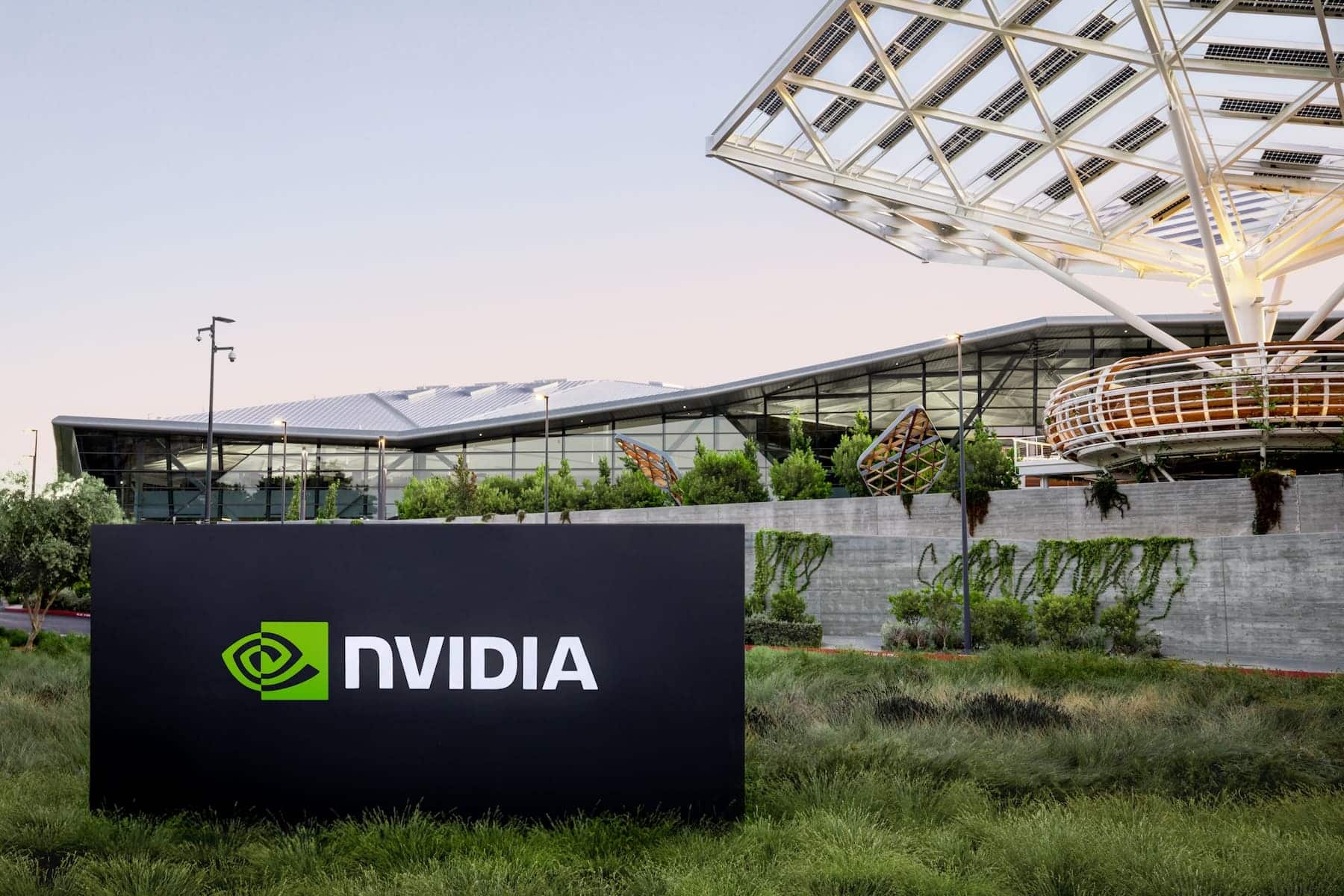
NVIDIA has announced the acquisition of SchedMD, known for being the main developer of Slurm, one of the most widely used workload managers in HPC and increasingly in AI clusters. The official message aims to dispel, from the very beginning, the big question that always arises when a giant acquires a critical piece of the ecosystem: Slurm will remain open source and “vendor-neutral” (neutral regarding providers), ensuring its availability for the community and for heterogeneous environments.
Slurm is the kind of software that rarely appears in photos, but without which almost nothing functions in a modern cluster. In practice, it’s the “conductor” that decides which job runs, when, where, and with what resources (GPUs, CPUs, memory, nodes, queues, priorities, policies…). In a world where training and serving models involve thousands of parallel tasks, poor planning not only increases costs: it can turn a computing center into a permanent bottleneck.
Why does this acquisition matter (more than it seems)
NVIDIA frames the move as a step to strengthen the open source ecosystem and accelerate innovation in research and business. The argument is straightforward: as clusters grow and become more complex, utilization efficiency (and the quality of scheduling policies) becomes a critical factor.
In its statement, the company also highlights a revealing fact about Slurm’s position in the computing elite: it claims that Slurm is used in more than half of the systems in the top 10 and the top 100 of the TOP500 ranking.
This kind of presence explains why Slurm is considered strategic infrastructure by many: it’s not “just another tool,” but a de facto standard in much of HPC.
What NVIDIA gains… and what’s at stake
From an industrial perspective, the fit is clear:
- AI at scale: Major labs and AI platforms don’t just compete for chips; they compete for real performance, training time, inference efficiency, and cluster utilization. The scheduler influences all of these.
- Stack optimization: NVIDIA has been expanding its offerings beyond silicon for years. Acquiring (and promising to continue maintaining) a widely adopted component like Slurm is another way to push a complete “stack,” from hardware to daily operations.
- Credibility in the HPC world: SchedMD is not a trendy name; it’s a company with a track record in a very demanding field. According to Heise, SchedMD was founded in 2010, is based in Utah, and has around 40 employees, with a broad client base in scientific and enterprise environments.
But there’s also an inevitable “B side”: when a critical piece falls into the hands of a dominant player in acceleration, the ecosystem becomes more sensitive to two perceived risks:
- Governance and genuine neutrality: just because software is open source doesn’t guarantee that its roadmap remains balanced among providers. NVIDIA emphasizes its “vendor-neutral” stance, but markets will watch to see if this neutrality translates into sustained technical and community decisions over time.
- Operational trust: universities, national centers, clouds, integrators, and companies with heterogeneous clusters rely on Slurm as a core component. Any sign of bias—even if just in development priorities—can cause friction.
What SchedMD says and what will happen to clients
In the announcement, Danny Auble, CEO of SchedMD, presents the acquisition as a validation of Slurm’s importance in the most demanding environments and assures continuity of the model: Slurm will remain open source, and NVIDIA will contribute investment and capacity to evolve it to meet the demands of the new generation of AI and supercomputing.
NVIDIA also affirms it will continue offering support, training, and development for SchedMD’s customer base (including cloud providers, manufacturers, AI companies, and research labs, among others).
The “tech” perspective: the bottleneck is no longer always the GPU
The usual AI narrative focuses on the number of GPUs available. The reality in 2025–2026 is more uncomfortable: many teams discover that, even with top-tier hardware, perceived performance depends on the “plumbing” of the cluster: poorly designed queues, bad priority policies, resource fragmentation, downtime due to poor allocation, or difficult coexistence between training and inference.
That’s why this acquisition is not just corporate—it’s a reminder that the future of large-scale AI is also decided behind less visible layers. And Slurm—with its extensive deployment—is one of those layers.
Frequently Asked Questions
What is Slurm and how is it used in AI and supercomputing?
Slurm is a workload and resource manager for clusters: it allocates GPUs/CPUs, schedules jobs, applies priority policies, and helps maximize system utilization in HPC and AI workloads.
Will Slurm stop being open source after NVIDIA’s acquisition?
NVIDIA states it will continue developing and distributing it as open source and “vendor-neutral” software.
Why can a scheduler affect cluster performance with powerful GPUs?
Because it decides how resources are distributed and can prevent (or cause) downtime, fragmentation, inefficient queues, and conflicts between different workloads (e.g., training vs. inference).
What changes for organizations using heterogeneous clusters (different hardware)?
Initially, probably nothing immediate: NVIDIA declares compatibility with diverse environments. The industry will be watching how the roadmap evolves and how neutrality is managed in practice.
via: blogs.nvidia
