
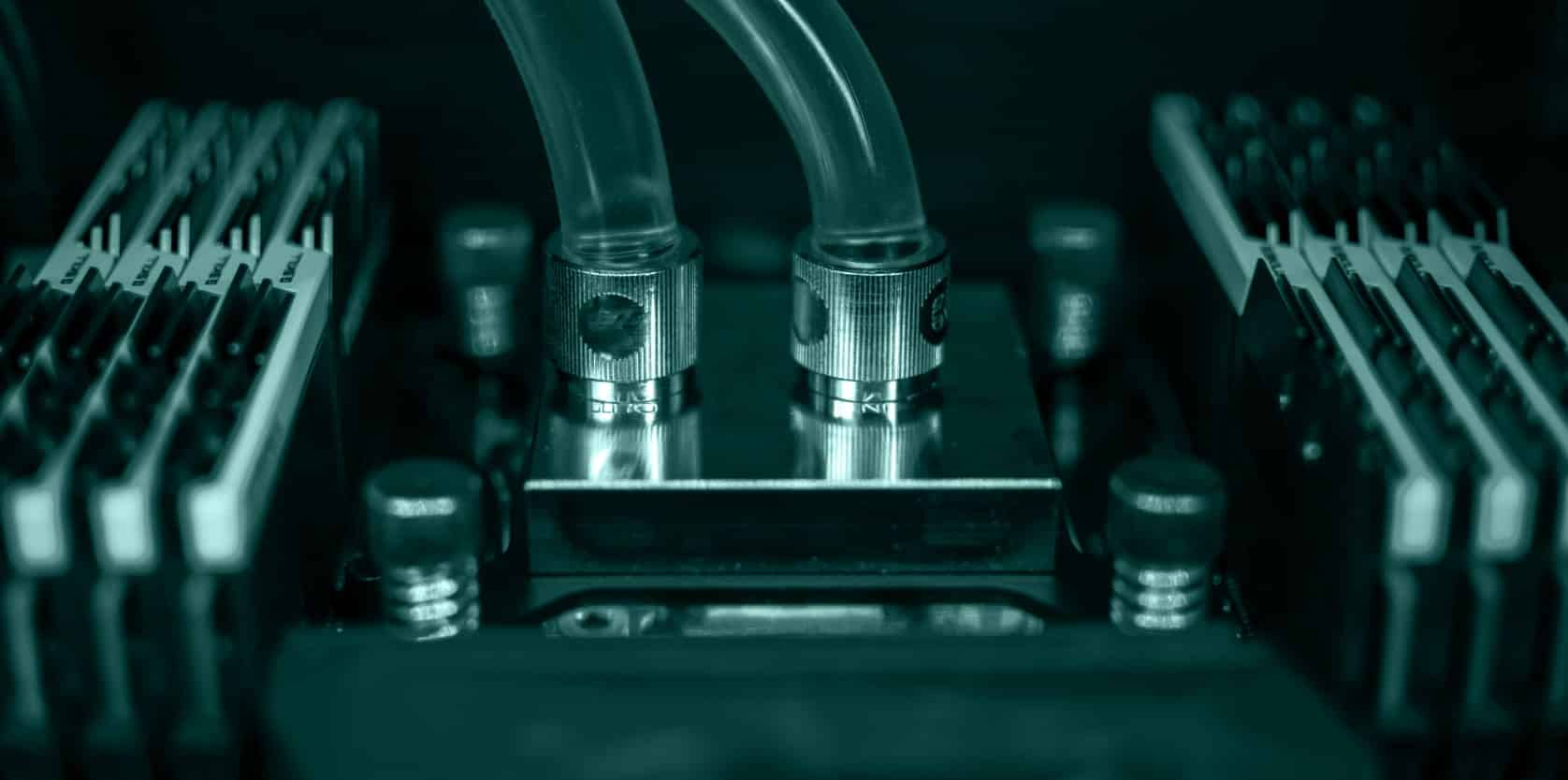
Vertiv Holdings Co. (NYSE: VRT), one of the leading global providers of critical digital infrastructure, has completed its acquisition of Purge Rite Intermediate LLC (PurgeRite), a company specializing in “fluid management” services for data centers and other mission-critical facilities. The deal—valued at approximately $1 billion—aims to expand Vertiv’s capabilities in a strategically important area: liquid cooling, which is increasingly connected to the deployment of high-density computing and AI workloads.
The move comes at a time when data centers are undergoing a paradigm shift. The demand for computing power for training and inference of models, along with the expansion of high-performance computing (HPC) environments, is raising energy density per rack and stressing thermal design of facilities. In this context, liquid cooling—due to its efficiency and heat extraction capacity—gains prominence over traditional air-based approaches, especially when the goal is to sustain performance and reliability continuously.
From “Equipment” to “Services”: The Battle for the Complete Thermal Chain
Vertiv doesn’t just manufacture power and cooling technology: the company has built a catalog that combines hardware, software, analytics, and services, with the goal of providing end-to-end support for critical infrastructure. The acquisition of PurgeRite fits precisely into this “complete thermal chain” strategy: not only installing liquid cooling systems but also ensuring that the circuit operates optimally from day one and throughout its lifecycle.
In high-density data centers, the condition of the cooling fluid isn’t a minor detail. Vertiv emphasizes that maximizing liquid cooling performance requires deploying and maintaining clean circuits: with stable flow, no trapped air, and chemically stable composition. The concept is straightforward but complex to execute at scale: any impurity, bubble, or imbalance can degrade thermal transfer, reduce efficiency, and increase operational risks.
This is where PurgeRite comes in, with mechanical cleaning, purging, and filtration services aimed at critical installations. These tasks, often invisible outside engineering circles, are what “prepare” the circuit to ensure the liquid cooling system performs as expected during commissioning and maintains those conditions over time.
What PurgeRite Brings: From Chiller to CDU, from the Room to the Rack
Based in Houston, Texas, PurgeRite has established a name in critical projects related to data center environments. Vertiv highlights that the company has strong relationships with hyperscalers and large colocation operators (Tier 1), as well as specialized engineering and proprietary technologies capable of adapting to demanding schedules—common in the accelerated deployment of advanced computing capacity.
The integration of these capabilities into Vertiv’s portfolio aims to cover the entire system journey: from plant equipment (such as chillers) to refrigerant distribution units (RDUs), and from the room down to the row and rack. In other words, Vertiv wants its offering not just to sell components but to “tie together” thermal operation end-to-end, with a consistent service standard across the globe.
Less Downtime, More Efficiency: Operational Advantages
The company highlights direct benefits for customers: higher system performance through better heat transfer and equipment efficiency, and reduced risk of outages due to more controlled operational execution. In environments where downtime costs millions and each maintenance window is a negotiation, the value of these services is measured less by the buyer and more by the ability to truly prevent surprises.
Gio Albertazzi, CEO of Vertiv, publicly stated that acquiring PurgeRite strengthens the company’s ability to provide comprehensive support for customers with high-density computing and AI workloads, where thermal management becomes critical to performance and reliability.
An Announcement Weeks Ago with a Focus on 2026
Vertiv had already announced in early November its intention to acquire PurgeRite, with plans to close the deal in Q4 2025. The announcement mentioned that the deal involved cash payment and an additional component tied to performance metrics in 2026. Now, with the transaction completed, the company underscores the strategic fit: reinforcing leadership in liquid cooling services and expanding capacity to support increasingly complex projects.
As is common in such large deals, Vertiv accompanied the announcement with “forward-looking statements,” noting that future performance and integration outcomes could be affected by risks—including technical execution of integration, retention of key personnel, or maintaining relationships with clients and suppliers.
What is clear is the market direction: liquid cooling is transitioning from a “specialized” component to a fundamental element of next-generation data centers. During this transition, services that ensure circuit operation—however unglamorous they may seem—are becoming central to the strategy.
Frequently Asked Questions
What is mechanical cleaning, purging, and filtration in a cold liquid cooling circuit for data centers?
These are services to clean the circuit, remove air and particles, and stabilize the refrigerant fluid. The goal is to ensure proper flow and refrigerant quality to maximize heat transfer and prevent performance degradation.
Why is liquid cooling so relevant in AI and HPC data centers?
Because high-density loads generate more heat per unit of space. Liquid cooling typically extracts heat more efficiently than air in demanding scenarios, helping to maintain performance and reliability.
What does the acquisition of PurgeRite mean for colocation operators or hyperscalers?
In theory, a more “end-to-end” offering: in addition to equipment and thermal solutions, an enhancement of specialized services for circuit commissioning and maintenance, with global consistency ambitions.
What risks are typically monitored in such critical service acquisitions?
Operational integration (processes, equipment, international scaling), retention of key personnel, maintaining service quality during transition, and preserving relationships with strategic clients.
via: vertiv
