
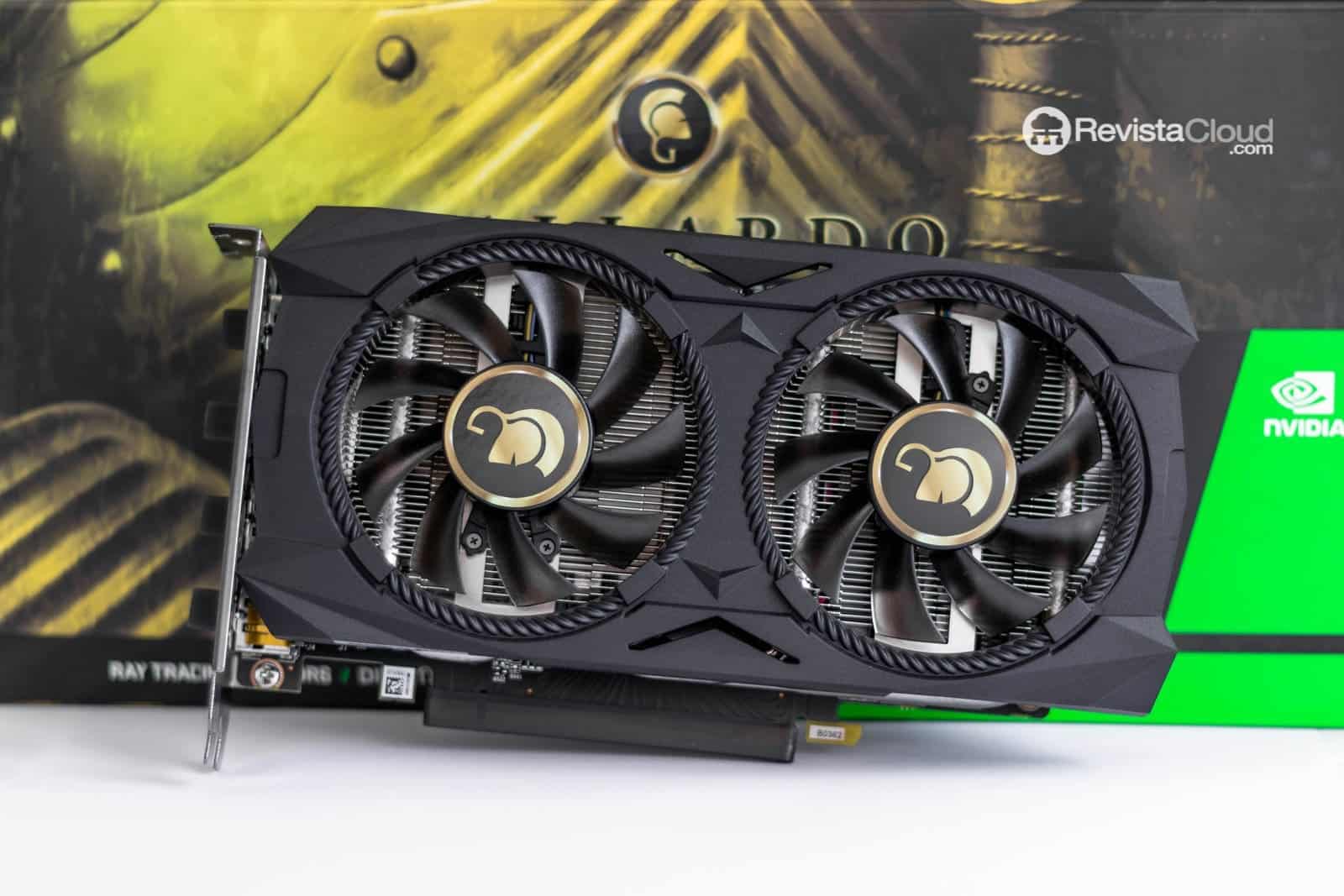
At the peak of artificial intelligence growth and with memory prices skyrocketing, a new rumor is shaking up the graphics card market: NVIDIA may have stopped supplying VRAM along with its graphics chips to its partner manufacturers (AIC, add-in board partners), forcing them to purchase it separately.
If confirmed, this would be a historic change in the company’s business model and could have direct consequences on GPU prices, the variety of available models… and the survival of many small OEMs.
How it worked until now: NVIDIA sold the «almost complete kit»
Traditionally, NVIDIA’s consumer business operated as follows:
- NVIDIA supplies its partners with the graphics chip and the validated VRAM memory (GDDR6, GDDR6X, etc.).
- The manufacturer (ASUS, MSI, GIGABYTE, etc.) designs and builds:
- The PCB.
- The cooling system.
- The case, backplate, lighting, etc.
In other words, the core of the card — GPU + memory — was almost “bundled” from NVIDIA, which managed the VRAM procurement from suppliers (Micron, Samsung, SK Hynix…) and ensured supply continuity.
This approach offered clear advantages to partners:
- Less supply risk: they didn’t need to negotiate directly with memory vendors.
- More predictable prices: they benefited from NVIDIA’s bulk purchasing power.
- Uniform quality: all VRAM went through NVIDIA’s approved vendor list (AVL).
What the rumor suggests: VRAM becomes the OEMs’ problem
In recent days, messages on Chinese social media and industry forums point to a significant shift:
- NVIDIA would continue supplying the graphics chips,
- but stop including memory chips in that “pack” for many partners.
Meaning, AICs would have to:
- Negotiate directly with memory manufacturers.
- Ensure sufficient stock for each model.
- Absorb the price volatility in a market driven by AI demand.
Some industry voices indicate an immediate effect:
- Large manufacturers (top-tier) can adapt: they already have established relationships with suppliers, bulk purchasing, and financial strength.
- Small OEMs or regional brands might be left out:
- They lack a history of VRAM purchasing.
- Suppliers may not prioritize them.
- Without memory, they simply can’t manufacture cards.
On Chinese social media, the issue is summed up bluntly: for small AICs that never negotiated memory directly, “it’s as if they’ve been kicked out of the graphics card business.”
More expensive memory, less competition, and the end of budget ranges
The current context doesn’t help. Memory — both DRAM and GDDR/HBM — has seen months of price increases due to:
- The AI demand explosion, which consumes a large part of production.
- Capacity adjustments by manufacturers, who favor higher-margin products.
If NVIDIA steps back from VRAM supply and shifts that responsibility to the OEMs, several risky effects for consumers could occur:
- Uncontrolled costs: each manufacturer pays a different price for memory depending on their negotiation power, volume, and timing. This will lead to:
- Higher retail prices.
- Greater differences between “premium” and lesser-known brands.
- Reduced genuine competition: if small manufacturers can’t access affordable memory, budget or alternative models will disappear.
- The market will become even more concentrated among a few giants.
- It will be easier to maintain high prices without downward pressure.
- Mid-range and budget segments under threat: when memory is expensive and scarce, it makes little sense to allocate it to GPUs where profit per unit is low.
- Manufacturers will tend to prioritize high-end and enthusiast segments, where the profit margin is higher.
- Future generations of RTX “60” or “50” series might be:
- Very limited in availability.
- Or so expensive that they lose appeal as “entry-level” options.
Within user communities, a sarcastic reaction is already emerging: many say they’ll “use their 5060 for the foreseeable future”, because if the mid-range dies out, upgrading to the next tier becomes unaffordable.
What NVIDIA stands to gain (if this move is confirmed)
Although NVIDIA hasn’t publicly confirmed this change, the rumor fits several strategic motivations:
- Shifting inventory risk: with VRAM prices soaring and gaming GPU demand more volatile, it’s far less attractive:
- To purchase large volumes of VRAM.
- To hold onto expensive stock if sales slow down.
By passing this risk to partners, NVIDIA mainly sells bare chips and reduces exposure to the memory market swings.
- Simplifying the supply chain: delegating VRAM to AICs means:
- Fewer direct contracts with DRAM manufacturers.
- Less logistical complexity.
- More focus on their core business: GPU design and AI platforms.
- Maintaining technical control without bearing the costs: even if partners buy the memory, they would still be bound by NVIDIA’s approved vendor list (AVL).
- Prevents the use of “exotic” chips that could cause issues.
- But outsources commercial and financial work.
Potential short- and medium-term outcomes
If this rumor materializes widely, the end-user scenario could look like this:
- Higher prices across all segments, especially impacting mid-range models.
- Fewer “niche” or alternative models from small manufacturers; shelves will mostly feature big brands.
- A possible chronic shortage of entry-level GPUs, since manufacturing them with such costly memory might no longer be viable.
- Increasing quality gaps between models depending on VRAM (latency, power consumption, temperatures), although always within NVIDIA’s approved specs.
For those expecting a cheap RTX 5060 or a future budget series offering good value, the message is clear: the environment of high memory prices and reduced competition does not favor.
A move that reopens the debate: who is really paying for the AI boom?
The alleged NVIDIA change can’t be viewed in isolation:
- AI is driving the entire supply chain of memory and semiconductors.
- Data centers and compute GPUs are prioritized over the consumer market.
- “Basic” components (like VRAM for gaming) are becoming strategic resources.
By shifting memory costs onto its partners, NVIDIA not only protects itself but also reshapes who bears the burden of the new technological cycle:
- Small OEMs might be excluded from the game.
- Large companies will continue operating, but at higher prices.
- And the end user will see their next GPU become more expensive… or take longer to arrive.
For now, everything is based on rumors, but industry noise is consistent: memory is no longer just a component; it’s the bottleneck that will determine which graphics are produced, who sells them, and at what price gamers are willing to continue investing.
via: WEIBO
