
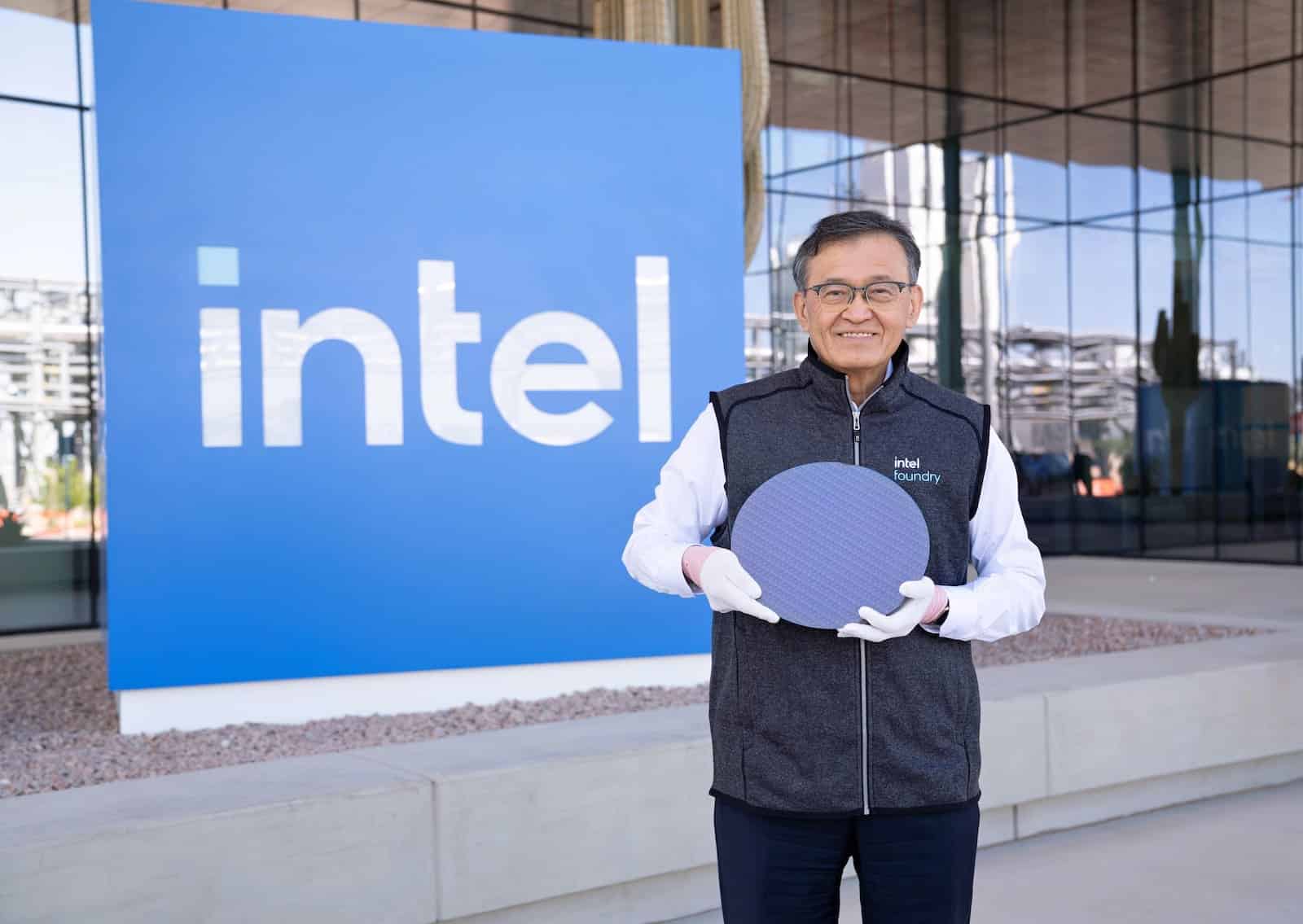
Intel has fully entered a legal and reputational battle that goes far beyond a simple hiring. The American company has confirmed the hiring of Wei-Jen Lo, a former senior executive at TSMC, just after the Taiwanese chip manufacturing giant filed a lawsuit alleging breach of confidentiality agreements. The case highlights three existing tensions: the talent war in semiconductors, the delicate Intel–TSMC relationship, and Washington’s role amid the tech race with China.
What happened: TSMC sues, Intel stands firm
According to information published by The Oregonian/OregonLive, TSMC has sued Wei-Jen Lo, accusing him of breaching a confidentiality agreement by joining Intel as vice president after his retirement from the Taiwanese company.
In an internal communication to employees, Intel CEO Lip-Bu Tan was clear: the company considers the allegations “meritless” and affirms that Lo has “our full support.” The executive will work in advanced manufacturing and packaging, which is at the heart of Intel’s push to regain technological leadership.
Intel itself confirmed the hire in a statement, emphasizing that Lo had spent 18 years with the company before moving to TSMC, always focused on wafer processing technology development. In other words, he’s not a stranger but a veteran returning home, having inside knowledge of how the world’s most advanced chip manufacturer operates.
The company also insists it maintains “rigorous policies and controls” that expressly prohibit the use of confidential information or intellectual property from third parties. In simple terms: Intel is trying to clarify that it recruits talent, not stolen trade secrets.
Who is Wei-Jen Lo and why does he matter so much?
At first glance, it might seem like just another executive switching companies. But in the semiconductor industry, profiles like Wei-Jen Lo’s are highly sensitive.
- He has worked on advanced chip manufacturing processes, an area where every nanometer counts.
- He has insider experience of two very different engineering cultures: Intel’s, a historic industry benchmark, and TSMC’s, now the undisputed leader in third-party foundry manufacturing.
- He joins precisely when Intel is repositioning itself as a serious alternative to TSMC for manufacturing chips for NVIDIA, Apple, AMD, and other giants… while still outsourcing some of its own advanced production to TSMC.
This mix makes TSMC’s demand not just a defensive move but also a signal to the entire industry: there are red lines in talent movement when it comes to cutting-edge nodes.
Freedom of movement vs. protection of secrets
In his internal message, Lip-Bu Tan appeals to one of Silicon Valley’s classic principles: engineers’ freedom to change companies as a driver of innovation. And he’s not wrong historically. Much of today’s tech ecosystem has been built on continuous mobility of talent between giants like Intel, AMD, NVIDIA, Apple, and Google.
But this ideal clashes with another equally important principle: protecting trade secrets and key know-how. This isn’t the first time the industry has been caught between these forces:
- Ten years ago, Intel, Apple, Adobe, and Google paid hundreds of millions in a settlement over “no-poach” agreements designed to limit employee movement between them.
- Now, the pendulum has swung the other way: regulators scrutinize any attempts to restrict labor mobility, while companies strengthen confidentiality agreements and litigation when their competitive advantage is at risk.
The Lo case thus becomes a symbol of how the transition toward fierce competition for leadership in 2 nm and smaller nodes is reopening old wounds around talent, intellectual property, and fair competition.
The uncomfortable angle for Washington
The conflict isn’t just between Intel and TSMC; it also puts Washington in a delicate position.
On one hand, the U.S. is promoting its domestic manufacturing revival through the CHIPS Act and other policies, with Intel as a key strategic player. Regaining semiconductor sovereignty is an explicit priority in U.S. industrial policy vis-à-vis China.
On the other hand, TSMC is a critical partner for the technological security of the West: it produces the world’s most advanced chips, including those for NVIDIA, Apple, and many American design firms. Additionally, it’s building factories on U.S. soil with strong political and financial backing.
Within this context, Intel hiring a high-profile TSMC executive and triggering a confidentiality lawsuit:
- Increases friction in an already complex relationship because Intel aims to compete with TSMC as a foundry… but still relies on it as a supplier.
- Forces Washington to balance its support for Intel with the message that it respects the intellectual property and trust of partners like Taiwan, a key piece against China in chip geopolitics.
- Reinforces the “total war” perception over talent in advanced nodes, a resource almost as strategic as the factories themselves.
This isn’t merely a contractual dispute; it’s another symptom of how the race for semiconductor leadership is starting to strain even the alliances between collaborators.
What’s at stake for the chip industry
Beyond the specific case, the episode raises uncomfortable questions for the entire sector:
- How far can the talent war go?
Recruitments like Wei-Jen Lo’s are highly valuable for any technological roadmap. But if every move results in lawsuits, the collaboration and mobility climate that has historically fueled innovation could deteriorate. - What role should regulators play?
If confidentiality agreements are interpreted too broadly, they can effectively become “no-compete” clauses, which are heavily restricted in many markets. Conversely, ignoring the risk of industrial secrets leaking is equally unacceptable in such a sensitive industry. - Can fierce competition coexist with strategic partnerships?
Intel wants to dethrone TSMC as the leader in advanced foundry manufacturing but continues to rely on the Taiwanese firm for some of its most advanced chips. The Lo case reminds everyone that this symbiotic relationship has boundaries and friction points. - What message does this send to engineers and young talents?
The industry needs to attract thousands of new skilled profiles in fabrication, design, and packaging. High-profile lawsuits against executives can create doubts about career freedom in critical nodes.
For now, Intel fully supports Wei-Jen Lo, and TSMC insists its confidentiality agreement has been breached. The legal outcome will take time, but the message is already clear: in the race to control the most advanced nodes amid the AI era, every key person, factory, and process line has become a strategic asset.
And when talent moves between the two most powerful poles of global chip manufacturing, the ripple effects inevitably reach Taipei, Santa Clara… and Washington.
