
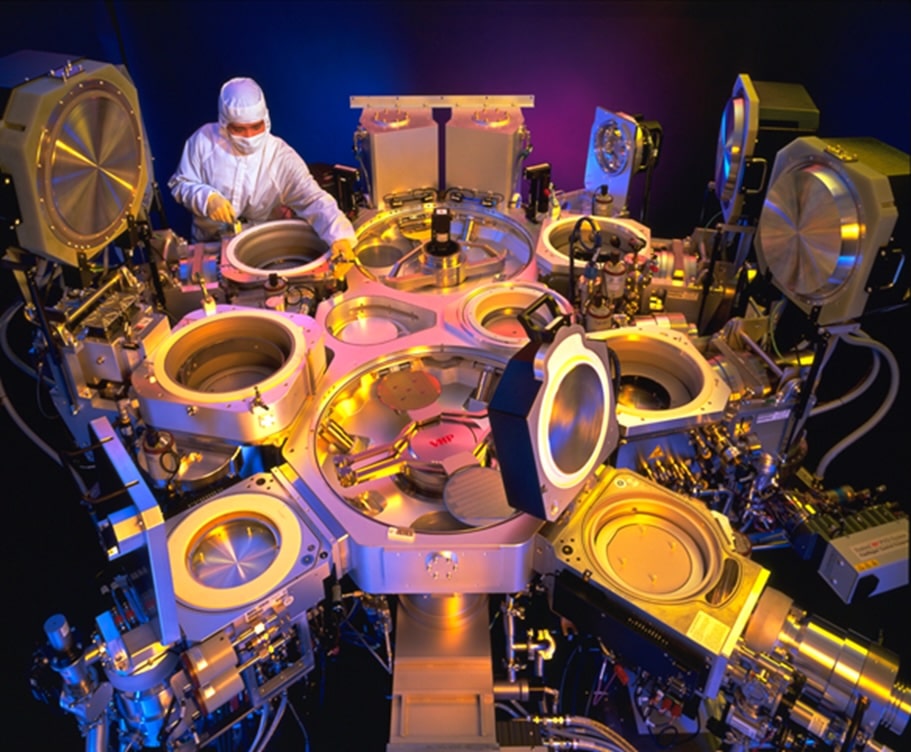
Hewlett Packard Enterprise (HPE) and a consortium of eight leading organizations have announced the creation of the Quantum Scaling Alliance, a global initiative with a clear mission: making quantum computing scalable, practical, and transformative for real-world sectors beyond laboratory prototypes. The project will be led by HPE Labs under Masoud Mohseni, systems architect for quantum systems and responsible for coordinating work among members; co-chairing the leadership are John Martinis, Nobel Prize 2025 for pioneering advances in quantum computing, and today cofounder and CTO of Qolab.
The alliance presents a concrete promise: to design and develop a “useful and cost-effective quantum supercomputer”, leveraging the accumulated experience of the current supercomputing and semiconductor ecosystem. The ambition is bold: transition from “proofs of concept” to industrial-scale applications, combining quantum + traditional HPC and utilizing advanced networks to accelerate scientific discovery, business innovation, and simultaneously prepare organizations for the challenge of post-quantum security.
Who’s Who: A Whole-Stack Consortium
The list of founding members reveals an “end-to-end” strategy:
- 1QBit — Design and simulation of fault-tolerant error correction, algorithm compilation, and automatic resource estimation.
- Applied Materials — Materials engineering and semiconductor fabrication.
- HPE — Full-stack quantum-HPC integration and software development.
- Qolab — Qubit and circuit design.
- Quantum Machines — Hybrid quantum-classical control for scalable systems.
- Riverlane — Quantum error correction (QEC).
- Synopsys — Simulation and analysis, EDA, and semiconductor IP.
- University of Wisconsin — Algorithms and benchmarks.
This division of roles is no accident. Quantum computing faces bottlenecks that cannot be solved by a single player: high-quality devices, precise control and readout, error correction that scales with system size, software, and hybrid orchestration with supercomputing. In Mohseni’s words, the alliance offers a “full-stack solution” with horizontal integration, as opposed to more closed vertical approaches: “For quantum to succeed long-term, it must scale by integrating with classical supercomputing systems,” he emphasizes.
Why Now: From Demonstration to Practical Use
John Martinis condenses the potential and challenge: “Quantum computers hold the key to transforming industries by tackling intrinsically quantum problems. From semiconductor manufacturing to sustainable fertilizer production, we can achieve advances once thought unattainable.” But to make that leap, scale and reliability are essential.
Error correction has moved from an academic challenge to product engineering: how many logical qubits are needed, what error rates does the system tolerate, how do you orchestrate the quantum-classical flow without sacrificing performance? This is where the alliance’s “building blocks” come in: materials and fab, qubit/circuit design, hybrid control, QEC, simulation/EDA, and importantly, HPC to properly link the quantum subsystem with the surrounding classical computing infrastructure.
HPE: The Missing HPC Piece for Scaling
With a strong background in high-performance computing, HPE assumes the role of full-stack integrator: combining quantum capabilities and supercomputing into hybrid solutions, supported by network fabric and software that enable low latency, smart scheduling, and workload management. The pragmatic goal is not replacing HPC, but adding quantum accelerators where they provide an advantage.
This approach opens doors to drug discovery, materials research, complex optimization problems, or secure data processing. Simultaneously, it trenches companies and organizations for a future where current cryptography must coexist with post-quantum solutions. HPE notes that the alliance not only expedites research and innovation today but also supports organizations through upcoming transitions.
What Changes with a “Quantum Scaling Alliance”
- From lab to industrial roadmap. It’s not merely about more qubits but about more useful qubits. The alliance promises to rigorously size resources, automate estimates, and measure progress via clear benchmarks (University of Wisconsin).
- Design with manufacturing in mind. With Applied Materials on board, the discussion shifts from abstract concepts to tangible: materials, fab processes, and device variability are factored in from the start.
- Scalable hybrid control. Quantum Machines and HPE advocate for controlled and coordinated quantum-classical control and planning, critical when synchronizing millions of operations at speeds that leave no room for improvisation.
- Error correction as a product. Riverlane and 1QBit address QEC and its real hardware cost; Synopsys applies EDA and simulation tools necessary to design at scale, similar to traditional chip manufacturing.
- Governance and scientific leadership. With Martinis managing co-leadership and Mohseni at the technical helm, the initiative balances academic vision and industry delivery.
Short- and Medium-Term Expectations
- Prototypes with limited but measurable utility. Before massive applications, the focus is on targeted cases where quantum has a clear advantage (e.g., materials chemistry, specific optimizations) and can be integrated seamlessly into HPC pipelines.
- Integration milestones rather than qubit record-breaking. The emphasis will be on hybrid architectures, latency, bandwidth, and software that operationalizes the combination.
- Progress in tools for quantum engineers and HPC developers: simulators, compilers, resource estimators, and EDA that narrow the gap between papers and deployable systems.
Sectors with the Most Potential
- Semiconductors: quantum modeling of materials and processes to improve yields and reduce defects.
- Energy and Chemistry: more efficient synthesis routes (e.g., fertilizers), catalysis, and energy storage.
- Health and Pharmaceuticals: drug discovery and molecular simulation with high precision hard to replicate with pure HPC.
- Logistics and Finance: large-scale optimization in supply chains or portfolios, employing hybrid schemes that divide work between HPC and quantum processing.
- Cybersecurity: preparation for post-quantum cryptography and secure data processing.
Challenges That Can’t Be Ignored
- Fidelity and error correction. QEC incurs costs (physical qubits per logical, latencies, energy). The alliance aims to lower these numbers, but progress remains steep.
- Standardization of the stack. Coordinating hardware, control, QEC, compilation, and HPC without creating proprietary “silos” will be key for enterprise adoption.
- Talent and tools. Building teams that combine hardware, software, and HPC expertise, along with design/ simulation tools comparable to the chip industry but centered on quantum physics.
A Collective Roadmap
Mohseni’s message summarizes the approach: “horizontal and full-stack”. Quantum won’t arrive alone; it will fit into existing data centers and supercomputers, with software that opportunistically offloads parts of the problem to quantum accelerators and feeds results back into classical workflows. This is the standardization the industry has sought for years, which this alliance intends to accelerate.
Martinis offers a vision of impact: if the alliance succeeds in making routine what is today craftsmanship — from qubit design to hybrid control and QEC — then quantum computing will start moving out of labs and sit alongside supercomputers in the production centers of knowledge and innovation.
Frequently Asked Questions
What is the Quantum Scaling Alliance and who leads it?
It’s an international consortium created to scale quantum computing toward industrial uses, integrating hardware, control, error correction, software, and HPC. It is led by HPE Labs (Masoud Mohseni) and co-led by John Martinis (Qolab).
How does it differ from other quantum initiatives?
It is built on horizontal integration from day one (materials, qubit design, hybrid control, QEC, EDA, HPC) with an explicit goal: a useful, cost-effective quantum supercomputer designed to connect with existing supercomputers and networks.
What practical applications are expected first?
Likely early applications include materials chemistry, optimization, and drug discovery, where quantum advantage is clear and can integrate smoothly into HPC workflows. The alliance also aims to strengthen readiness for post-quantum security.
How can institutions and companies participate or collaborate?
Opportunities for collaboration are open—offering expertise, aligning challenges, or evaluating use cases. More info and contacts are available on the Quantum Scaling Alliance website.
Sources
- HPE — HPE and partners launch Quantum Scaling Alliance to accelerate quantum computing breakthroughs (official release, 11/10/2025).
