
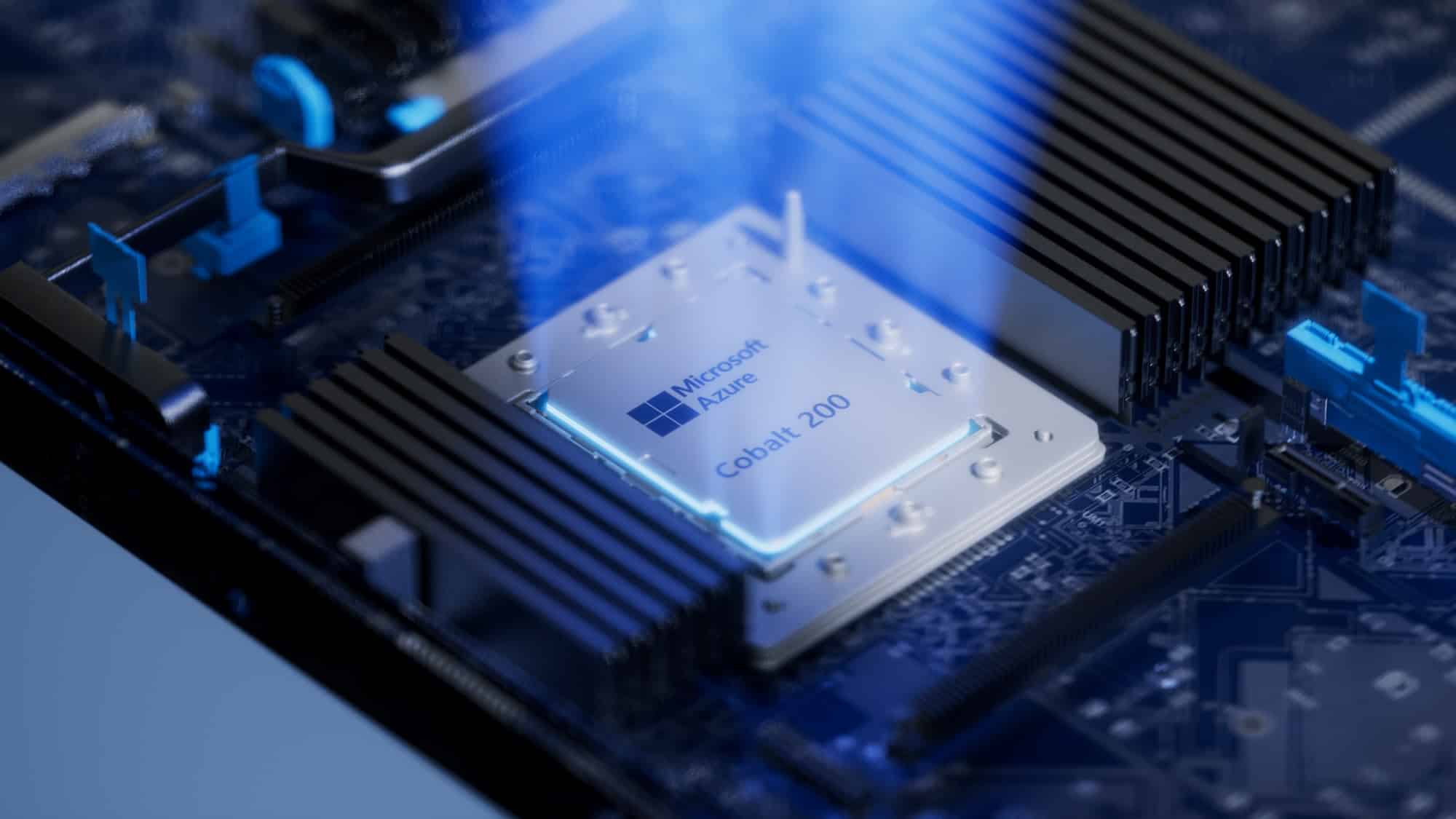
Microsoft has just unveiled Azure Cobalt 200, its next-generation Arm CPUs designed specifically for “cloud-native” workloads. This is not simply a hardware refresh: it’s another step in Redmond’s strategy to control every layer of the stack, from silicon to the Kubernetes running above.
According to the company, Cobalt 200 promises up to 50% more performance than the first generation (Cobalt 100), maintaining a focus on energy efficiency, security, and a very specific goal: enabling more customer workloads — and Microsoft’s own workloads — to migrate to cloud-optimized Arm processors.
The first Cobalt 200 machines are already in internal production stages within Azure data centers, with a general availability expected in 2026.
From Cobalt 100 to Cobalt 200: What’s Really Changing
The journey began with Cobalt 100, Azure’s first in-house processor for cloud-native workloads, now available in 32 regions. In just a year, Microsoft has managed to get major data clients like Databricks and Snowflake to adopt these instances for their analytical platforms, seeking better performance per euro and lower power consumption.
Microsoft itself has been its best “test client”:
- Microsoft Teams has achieved up to 45% more performance compared to the previous platform.
- For tasks such as media processing, migrating to Cobalt 100 has enabled using 35% fewer cores to deliver the same service.
Building on this foundation, Cobalt 200 is a successor that scales not only in raw power but is also tuned based on real telemetry from Azure, not synthetic benchmarks.
Microsoft has built an internal battery of more than 140 benchmark variants reflecting how Azure customers use the platform: databases, web servers, caches, network transactions, data analytics, etc. This telemetry has been combined with extensive simulation work:
- Over 2,800 parameter combinations (cores, caches, memory, rack topologies, etc.).
- More than 350,000 configurations evaluated digitally before finalizing Cobalt 200’s design.
The result, according to Microsoft, is the optimal point between performance, consumption, and operational cost for typical cloud workloads.
Cobalt 200 specs: 132 cores, 3nm, and dedicated accelerators
At the heart of each Cobalt 200 server is the Azure Cobalt 200 SoC, based on the new Arm Neoverse CSS V3 generation, Arm’s high-performance compute subsystem for data centers:
- 132 active cores per SoC.
- 3 MB of L2 cache per core, keeping data as close to the CPU as possible.
- 192 MB of shared L3 cache, intended for workloads with high memory traffic.
- Manufactured on a TSMC 3nm node, key to improving energy efficiency.
One of the distinguishing elements of Cobalt 200 is its focus on fine energy management:
- Implementing per-core DVFS (Dynamic Voltage and Frequency Scaling), allowing each core to operate at different frequencies and voltages based on load.
- This enables each of the 132 cores to work at different voltages and frequencies depending on demand, avoiding excess energy use when the workload doesn’t require it.
Practically, this makes Cobalt 200 the most energy-efficient platform in Azure, a key point in a data-center landscape increasingly influenced by AI workloads.
Security: Memory encryption by default and confidential computing
Security is another major design vector. With Cobalt 200, Microsoft has opted for a custom memory controller and adopts the latest Arm extensions for confidential computing:
- Memory encryption always active, with a negligible impact on performance, according to Microsoft.
- Support for Arm Confidential Compute Architecture (CCA), enabling memory isolation for virtual machines from the hypervisor and host OS, facilitating confidential computing scenarios.
Additionally, Cobalt 200 servers include the Azure Integrated HSM (Hardware Security Module), integrated with Azure Key Vault for cryptographic key management, offering high availability and compliance with FIPS 140-3 Level 3 for use cases requiring maximum protection.
Accelerators for the Most Used Tasks: Compression and Encryption
When analyzing their internal workloads, Microsoft identified a recurring pattern:
more than 30% of cloud workloads heavily utilize compression, decompression, or encryption.
Instead of relying solely on more CPU or cache, Cobalt 200 includes:
- Dedicated hardware accelerators for compression and cryptography integrated into the SoC itself.
This offloads these tasks from general-purpose cores, freeing capacity for actual business logic. An example provided by the company:
- Azure SQL can offload compression and encryption tasks to these dedicated blocks, reducing core usage and prioritizing computation for customer queries.
In data- and traffic-intensive workloads, this approach can lead to a significant reduction in cost per transaction or query.
More Than Just a CPU: Integrated Networking, Storage, and HSM
Microsoft emphasizes that Azure Cobalt is not just a processor but a comprehensive platform optimized end-to-end. In Cobalt 200:

- The platform integrates with the latest Azure Boost capabilities, which offloads critical network and remote storage tasks to specialized hardware.
- This translates into more network bandwidth, lower latency, and improved performance with shared storage systems, which is critical for distributed databases, microservices, and global SaaS applications.
The focus is on ensuring that improvements are reflected not only in “CPU benchmarks” but also in real-world scenarios where network, disk, and CPU are constantly interacting.
Arm in the Cloud: The Competitive Landscape
Cobalt 200 directly competes within the landscape dominated by other major providers with their own Arm chips for cloud:
- AWS has long featured its Graviton line, now in its third generation, as a benchmark for purpose-built instances with cost savings.
- Google Cloud recently announced its Axion CPUs, also based on Arm, focusing on improving performance and efficiency for cloud-native workloads.
With Cobalt 200, Microsoft reinforces its message:
it aims to reduce dependence on third parties (Intel, AMD) for its data center cores and seeks greater control over performance, efficiency, and costs, especially as AI demands skyrocket computing needs.
What It Means for Azure Customers
Although Cobalt 200 is currently in initial deployment phases in data centers and will be generally available in 2026, the message to Azure customers is clear:
- Cloud-native workloads, based on containers, microservices, and modern databases, will increasingly run on Arm.
- Customers who have already migrated to Cobalt 100 will be able to benefit from Cobalt 200 with full workload compatibility, according to Microsoft.
- The goal is to offer a combination of better performance, lower consumption, and improved price per core compared to traditional x86 platforms across many workloads.
At the same time, the integration of Cobalt 200 with other Azure technologies (Boost, Key Vault, HSM, CCA) emphasizes that performance and security optimizations will come “out of the box” for those choosing these new instances.
Next Steps
Microsoft is already “rack-building and stacking” Cobalt 200 servers within its labs and data centers worldwide. The company promises to share more details about:
- Specific VM types based on Cobalt 200.
- Public benchmarks comparing Cobalt 200 with Cobalt 100 and other Azure families.
- Use cases focused on analytics, databases, web services, and possibly some lighter AI and inference workloads.
In a landscape dominated by high-end GPUs grabbing headlines, Cobalt 200 underscores a fundamental aspect:
the future cloud won’t rely solely on AI accelerators but on extremely efficient CPUs capable of handling millions of microservices, HTTP requests, transactions, and data pipelines at the lowest possible cost.
Frequently Asked Questions (FAQ)
What exactly is Azure Cobalt 200?
It’s Microsoft’s new generation of custom Arm CPUs for Azure, based on Arm Neoverse CSS V3, with 132 cores per chip, manufactured on a 3nm process, designed for cloud-native workloads with a focus on performance and energy efficiency.
How does Cobalt 200 differ from Cobalt 100?
Cobalt 200 promises up to 50% more performance than Cobalt 100, with more cores, larger cache, an advanced manufacturing node, and dedicated accelerators for compression and encryption, while maintaining compatibility with existing workloads.
Which workloads will benefit most from Azure Cobalt 200?
Primarily microservices, high-traffic web applications, databases, data analytics, and SaaS services that heavily utilize network, storage, and compression/encryption operations. Microsoft’s internal services like Teams have already shown significant improvements with the previous generation.
When will customers be able to use Cobalt 200 in Azure?
Initial servers are already deployed in Azure data centers for internal testing and validation. General availability for customers is expected from 2026, with new VM types specifically designed for this platform.
