
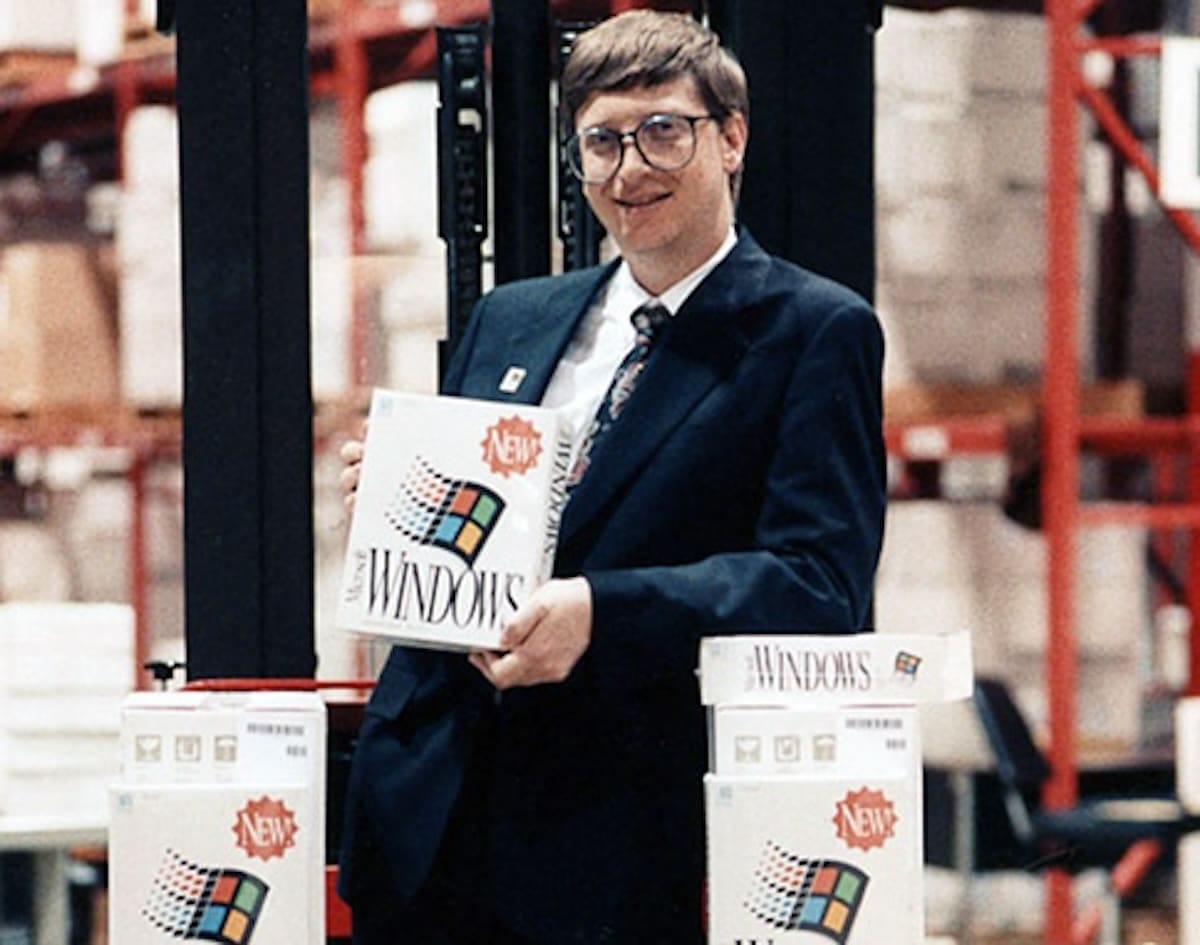
William Henry Gates III, better known as Bill Gates, is one of the most influential and recognized figures in the world of technology. His journey, from humble beginnings to becoming the founder of Microsoft and one of the wealthiest men in the world, is a testament to the impact that a clear vision and determination can have on transforming an industry and global society.
## **Early Years**
Bill Gates was born on October 28, 1955, in Seattle, Washington, to a upper-middle-class family. His father, William H. Gates Sr., was a prominent lawyer, and his mother, Mary Maxwell Gates, was a prominent executive and board member of several organizations, including United Way. From a young age, Gates showed an unusual interest in technology and computers.
At the age of 13, Gates was enrolled at the prestigious Lakeside School. It was there that Gates had his first encounter with a computer: a teletype from General Electric (GE) connected to a computer through a time-sharing terminal. This encounter sparked his fascination with programming.
Along with other students, Gates became deeply involved in using the teletype and learned to program in BASIC. Soon, he and his friends formed the “Lakeside Programmers Club” and began seeking opportunities to enhance their skills and access more computer time.
## **The Birth of Microsoft**
In 1973, Gates enrolled at Harvard University, where he met Steve Ballmer, who would later become the CEO of Microsoft. Despite his promising academic career, Gates was more interested in the opportunities that computer science offered. In 1975, after reading an article about the Altair 8800 in Popular Electronics magazine, Gates and his childhood friend, Paul Allen, saw a business opportunity.
They contacted Micro Instrumentation and Telemetry Systems (MITS), the creators of the Altair 8800, and claimed to have developed a BASIC interpreter for the new device. Although they hadn’t written a single line of code at that time, they managed to pique MITS’ interest. Within a few weeks, they developed the BASIC interpreter, presented it to MITS, and it was a success. This led Gates to drop out of Harvard and, along with Allen, they founded “Micro-Soft” (a combination of “microcomputer” and “software”) in Albuquerque, New Mexico.
## **Growth and Market Dominance**
Microsoft relocated to Bellevue, Washington, in 1979, and reincorporated as Microsoft Inc. Gates and Allen focused on developing software for operating systems and applications. In 1980, Microsoft landed a crucial contract with IBM to provide an operating system for their new personal computers, the IBM PC.
Although they didn’t have an operating system ready, they purchased one called 86-DOS from Seattle Computer Products, adapted it, and rebranded it as MS-DOS. This deal was a turning point for Microsoft, as IBM allowed Microsoft to retain the rights to the software, enabling the company to license MS-DOS to other hardware manufacturers.
Throughout the 1980s, Microsoft solidified its position as the leader in operating system and software applications. In 1985, they released Microsoft Windows, a graphical interface for MS-DOS that revolutionized the personal computer market. In 1986, Microsoft went public, and Bill Gates, at just 31 years old, became a billionaire.
## **Expansion and Diversification**
In the 1990s, Microsoft continued its expansion and diversification. In 1990, they launched Microsoft Office, a suite of productivity applications that included Word, Excel, and PowerPoint. Office quickly became the industry standard for office software.
In 1995, Microsoft released Windows 95, which featured significant improvements in user interface and networking support, helping popularize the use of the Internet. During this period, Gates aggressively promoted the vision of “A computer on every desk and in every home,” leading to the domination of the personal computer market.
However, this success also attracted scrutiny. Microsoft faced multiple antitrust lawsuits in the United States and Europe, accused of engaging in anticompetitive business practices. In 1998, the US Department of Justice filed a lawsuit against Microsoft, alleging that the company had abused its dominant market position to crush competition. The case culminated in a settlement in 2001 that imposed restrictions on Microsoft’s business practices.
## **Philanthropy and the Bill and Melinda Gates Foundation**
In 2000, Bill Gates and his wife, Melinda, founded the Bill and Melinda Gates Foundation, an organization dedicated to improving global health, reducing extreme poverty, and expanding educational opportunities and access to technology. The foundation has donated billions of dollars to various causes, including vaccination programs, health research, education, and digital technology access.
In 2008, Gates announced that he would step down from his full-time role at Microsoft to focus on his philanthropic work. Despite retiring from Microsoft’s day-to-day operations, Gates continued to play a role as board chairman and technology advisor.
## **Innovation and Continued Leadership**
Throughout his career, Gates has been a staunch advocate for innovation and technology. He has written several books on technology and business, including “The Road Ahead” (1995) and “Business @ the Speed of Thought” (1999). In these books, Gates outlines his visions for the future of technology and how it can transform businesses and society.
In the past decade, Gates has continued to influence the world of technology and beyond. Through the Bill and Melinda Gates Foundation, he has promoted research in clean energy, the eradication of diseases like malaria and polio, and improvement of education worldwide.
## **Controversies and Criticisms**
Throughout his career, Gates has not been immune to controversies. In addition to the antitrust lawsuits, he has faced criticisms for the labor practices of Microsoft, his stance on intellectual property, and his role in shaping the software market. Despite this, many recognize his positive impact on technology and philanthropy.
## **Legacy and Future**
Bill Gates’ legacy in the technology industry is undeniable. As a co-founder of Microsoft, he has been a pioneer in democratizing technology, making personal computers accessible to millions worldwide. His focus on innovation and efficiency has transformed not only technology but also the way we live and work.
Through his philanthropic work, Gates has shown that business success can go hand in hand with social commitment. His dedication to improving global health, education, and equal opportunities has had a significant and lasting impact.
Today, Bill Gates remains an influential figure in technology and philanthropy. His vision and leadership continue to inspire new generations of innovators and entrepreneurs. As the world faces increasingly complex challenges, the combination of technology and philanthropy that Gates embodies may be crucial in finding sustainable and equitable solutions.
## **In Summary: Walking into the Future**
Bill Gates is an iconic figure whose influence extends far beyond technology. From his early days as a programming prodigy to his role as a global philanthropist, Gates has left an indelible mark on the world. His ability to anticipate and shape the future of technology, along with his commitment to humanitarian causes, makes him a true visionary. As the world progresses, Bill Gates’ legacy will continue to be an inspiration for those seeking to change the world through innovation and positive impact.
